COMMUNITY INTEGRATION SERVICES PROVIDER IN ARKANSAS
By Fatumata Kaba · 2025-07-04 · 5 min read
Community Integration Services in Arkansas provide essential support for individuals with developmental disabilities to engage in their local communities through goal-oriented, inclusive, and skill-building activities. Operating under the Community and Employment Supports (CES) Waiver, these services are designed to foster independence and social participation by aligning daily activities with the specific objectives outlined in each participant's Individualized Service Plan (ISP).
What is the Role of Governing Agencies in Arkansas?
The delivery of Community Integration Services is a highly regulated process overseen by a hierarchy of state and federal entities. The Arkansas Department of Human Services (DHS), specifically the Division of Developmental Disabilities Services (DDS), serves as the primary regulatory body responsible for approving providers and ensuring that services delivered under the CES Waiver meet state standards and the unique needs of the populations served.
Parallel to the programmatic oversight of the DDS, the Division of Medical Services (DMS) within Arkansas Medicaid manages the financial components of the program. This includes provider enrollment, reimbursement processing, and the administration of Medicaid funding. At the federal level, the Centers for Medicare & Medicaid Services (CMS) provides the overarching regulatory framework, ensuring that all Arkansas waiver activities maintain compliance with the federal Home and Community-Based Services (HCBS) Final Rule, which mandates that individuals receive services in the most integrated settings possible.
How Are Community Integration Services Delivered to Participants?
Community Integration Services are designed to break down barriers to participation in everyday life. By assisting individuals in accessing community venues—such as libraries, recreational centers, public events, and volunteer sites—providers help participants build the practical skills necessary for autonomy. These services are delivered via one-on-one support or in small groups, depending on the specific requirements of the participant's ISP.
Approved providers focus on functional skill-building that translates to real-world success. This includes coaching on navigation of public transportation, effective communication strategies, personal safety awareness, and financial literacy. Every service encounter requires documentation to track progress against ISP goals, ensuring that each outing is purposeful and contributes to the individual's long-term independence.
- Providing one-on-one or group-based support in community settings.
- Assisting participants in accessing volunteer work, educational classes, and recreational events.
- Coaching on essential skills like using public transportation, money management, and interpersonal communication.
- Building social interaction skills and ensuring personal safety during public outings.
- Maintaining daily documentation to verify service delivery and progress toward ISP objectives.
- Coordinating transportation services when specifically authorized within the participant's plan.
What Are the Prerequisites for Provider Licensing and Approval?
Establishing an agency to provide Community Integration Services requires a multi-step compliance process. Before beginning service delivery, a business must be properly registered with the Arkansas Secretary of State. Following legal formation, the agency must secure a federal Employer Identification Number (EIN) from the IRS and an NPI (Type 2) to identify the business within the healthcare system.
Beyond administrative setup, prospective providers must prepare comprehensive internal infrastructure, including a robust policy and procedure manual. This documentation must clearly outline how the agency will manage intake, maintain safety during community outings, report incidents, and supervise staff. Once these policies are finalized, the agency must successfully navigate the Medicaid provider enrollment process and gain specific approval from the DDS to operate under the CES Waiver.
How Do Agencies Navigate the Provider Enrollment Process?
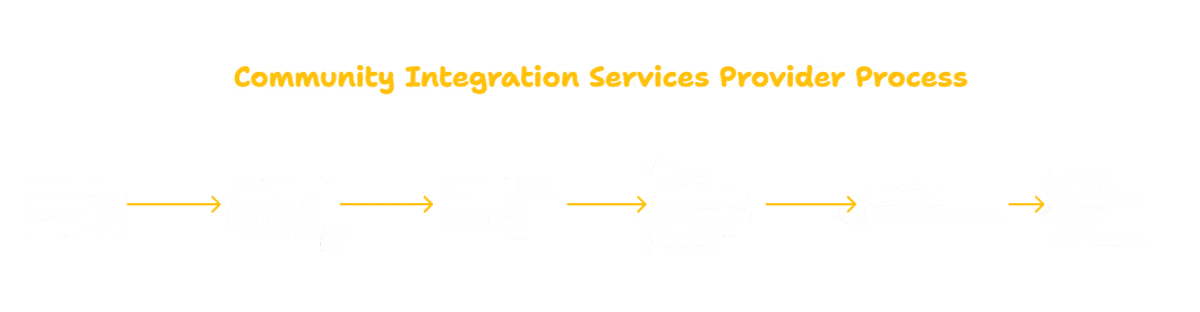
The enrollment journey is segmented into three distinct phases. First, the provider must enroll through the Arkansas Medicaid Provider Portal. During this phase, the applicant will select "Community Integration" as their service category under the CES Waiver provider types. This stage focuses on formalizing the business entity within the state’s fiscal system, including the submission of electronic funds transfer (EFT) details.
The second phase involves the specific DDS CES Waiver Provider Application. The agency must submit a detailed portfolio containing their policy manual, training protocols for staff, and templates for service logs. Following the review and approval of these materials, the final phase is referral activation. Once approved, the agency will be positioned to receive referrals from DDS Support Coordinators, allowing the provider to begin the intake process with participants and initiate service delivery.
- Submission of business credentials and EFT information via the Arkansas Medicaid Portal.
- Development and submission of operational policies, including safety plans and ISP alignment procedures.
- Formal review and approval by the Division of Developmental Disabilities Services (DDS).
- Activation of referral access to begin coordinating care with Support Coordinators.
What Are the Staffing and Training Mandates?
The quality of Community Integration Services depends heavily on the competence and training of the staff. Agencies are required to appoint a Community Integration Coordinator or Supervisor who possesses direct experience in disability services or case coordination. For the Direct Support Professionals, the minimum requirements include a high school diploma or GED, valid CPR/First Aid certification, and successful completion of comprehensive background checks and registry clearances.
Training is an ongoing requirement rather than a one-time event. All staff must be well-versed in person-centered planning to ensure that the support provided remains faithful to the participant's ISP. Additionally, staff must undergo training in documentation accuracy, confidentiality laws, behavior support strategies, and emergency preparedness. Annual refreshers are mandatory to maintain compliance with evolving state and federal standards for community engagement.
Frequently Asked Questions
What is the typical timeline for launching a Community Integration agency?
The entire startup process generally spans several months. Business formation usually takes 1-2 weeks, while the Medicaid and CES Waiver enrollment process typically requires 45-90 days. Subsequent hiring and training take 30-45 days, with final referral activation occurring 2-4 weeks after all administrative milestones are met.
How does the ISP influence daily services?
The Individualized Service Plan (ISP) is the blueprint for all community integration activities. Every service provided must directly support a goal established within this plan, and documentation must clearly reflect how the community outing or skill-building activity contributes to the participant's progress.
What happens during a state audit of service logs?
During an audit, state representatives review whether the services billed match the documentation provided. Auditors look for consistency between the service delivered, the goals in the ISP, and the daily logs maintained by the provider. Maintaining organized, accurate records of incident reports and progress notes is vital to passing these reviews.
Key Takeaway: Successfully operating a Community Integration Services agency in Arkansas requires strict adherence to both DDS and Medicaid regulations. By focusing on compliant administrative structures, thorough staff training, and a person-centered approach to community engagement, providers can effectively support individuals with developmental disabilities in achieving greater independence and integration.
Last verified: 2024. The information provided is for educational purposes and should not be considered legal or financial advice; providers are encouraged to consult directly with the Arkansas Department of Human Services for specific regulatory guidance.