COMMUNITY INTEGRATION SERVICES PROVIDER IN ARIZONA
By Fatumata Kaba · 2025-07-01 · 5 min read
Community Integration Services in Arizona are specialized, person-centered programs designed to empower individuals with developmental and physical disabilities by facilitating meaningful participation in their local communities. By leveraging funding through the Arizona Long Term Care System (ALTCS) and Home and Community-Based Services (HCBS) Waivers, approved providers coordinate supports that foster independence, social connectivity, and personal growth in non-institutional settings.
What Are the Governing Agencies and Regulatory Requirements for Providers?
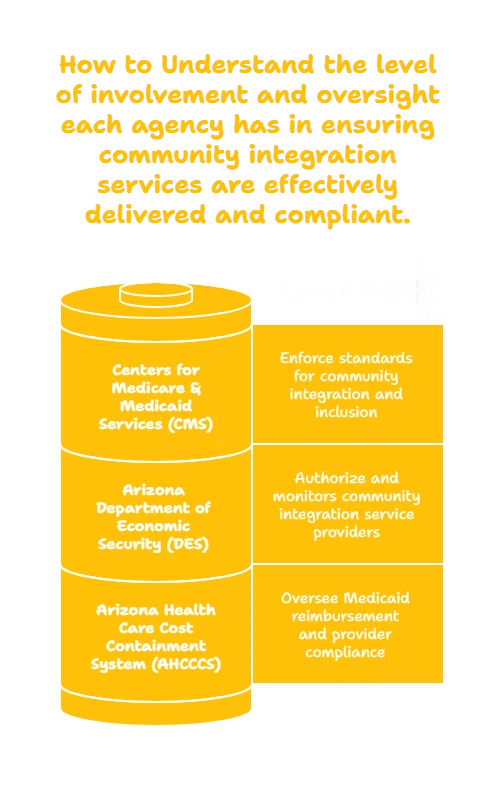
Operating a Community Integration service in Arizona requires strict adherence to oversight from both state and federal authorities. The Arizona Health Care Cost Containment System (AHCCCS) serves as the primary entity managing Medicaid reimbursement and ensuring ongoing provider compliance with state standards. Providers must align their service delivery models with the regulatory framework set forth by the Arizona Department of Economic Security (DES) – Division of Developmental Disabilities (DDD), which acts as the lead agency for authorizing and monitoring community-based services for eligible individuals with developmental disabilities.
At the federal level, the Centers for Medicare & Medicaid Services (CMS) enforces the HCBS Final Rule. This mandate is central to all community integration initiatives, as it dictates that services must be provided in settings that support full access to the greater community. Compliance with these standards is not optional; providers must demonstrate that their activities foster inclusion and honor the individual’s person-centered service plan.
- AHCCCS: Manages Medicaid reimbursement and provider compliance.
- DES/DDD: Authorizes and monitors local community integration providers.
- CMS: Sets the national HCBS Final Rule standards for inclusion and person-centered practices.
How Do Community Integration Services Facilitate Client Independence?
Community Integration Services are goal-oriented by design, moving beyond simple supervision to provide active coaching and skill-building. These services are delivered in everyday community settings, such as recreational facilities, cultural centers, or educational environments, allowing participants to build confidence in real-world scenarios. Providers help bridge the gap between isolation and active citizenship by assisting members with navigation, social interaction, and the utilization of public resources.
The scope of service includes a wide array of activities tailored to the specific needs identified in the member’s Planning Document. Whether through one-on-one support or small group engagements, staff must ensure that every hour billed is documented against the member’s specific goals. This includes logging progress in social skill development, participation in volunteer opportunities, and successful navigation of community transit or public spaces.
What Are the Essential Steps for Qualified Vendor Enrollment?
The path to becoming a provider begins with the formal establishment of a business entity. Founders must register their business with the Arizona Corporation Commission and secure an Employer Identification Number (EIN) from the IRS, along with a Type 2 National Provider Identifier (NPI). Once the legal foundation is laid, the provider must utilize the Qualified Vendor Application and Directory System (QVADS) if they intend to serve DDD members. This portal is the primary gateway for submitting service delivery models and organizational protocols for state review.
The application process requires a commitment to transparency and preparedness. Providers should anticipate a thorough review of their internal policies, including their approach to community inclusion, staff training protocols, and safety measures. Before final contract execution, applicants must attend the mandatory DDD Qualified Vendor orientation, which provides critical insights into the contractual expectations and reporting obligations inherent in serving the Medicaid population.
- Register with the Arizona Corporation Commission, IRS, and NPI.
- Complete the mandatory DDD Qualified Vendor orientation.
- Submit the comprehensive QVADS application, including service plans and safety protocols.
- Sign the Qualified Vendor Agreement upon successful review.
What Documentation and Staffing Standards Must Providers Maintain?
Documentation is the backbone of Medicaid compliance. A provider’s internal policy and procedure manual must be robust, covering every aspect of agency operations from intake and service planning to incident reporting and participant rights. Agencies are required to keep detailed logs of all activities, including evidence of progress toward ISP goals, which serves as the primary verification during audit processes. Furthermore, providers must maintain clear transportation policies and risk management plans, especially when staff are providing off-site support.
Staffing requirements are equally stringent to ensure the safety and efficacy of the services. Community Support Specialists or Direct Support Staff must possess at least a high school diploma or GED and successfully complete all mandated training, such as CPR, First Aid, and Article 9 training, which covers the prevention and reporting of abuse, neglect, and exploitation. Regular training on person-centered planning and community safety is essential to maintaining high-quality service delivery standards.
Frequently Asked Questions
What is the typical timeline to launch a new community integration program?
The launch process generally follows a multi-phase trajectory: 1–2 weeks for business formation, 60–90 days for QVADS application and policy development, 30–45 days for hiring and staff training, and 45–60 days for AHCCCS enrollment and billing setup.
What specific roles must be filled within the organization?
Organizations typically require a Community Integration Coordinator to oversee program delivery and case management, alongside Community Support Specialists who provide the direct, hands-on engagement with participants in community settings.
Where can potential providers find help with the enrollment and setup process?
Providers can contact the DES Division of Developmental Disabilities at (602) 542-6874 or visit the official AHCCCS and QVADS portals for direct guidance on registration, requirements, and current policy updates.
Key Takeaway for New Providers
Successfully operating as a Community Integration Service provider in Arizona requires a firm grasp of both the clinical goals of person-centered care and the administrative rigors of Medicaid billing. By focusing on meticulous documentation, thorough staff training in DDD-mandated areas, and strict adherence to the HCBS Final Rule, providers can establish a sustainable agency that effectively supports individuals in achieving their community-based goals. Always prioritize the alignment of daily activity logs with the specific objectives outlined in the member's individualized plan to ensure consistent compliance and quality outcomes.
Last verified: October 2023. This content is for informational purposes only and does not constitute legal or professional advice. Always consult with the Arizona Department of Economic Security (DES), the Division of Developmental Disabilities (DDD), and the Arizona Health Care Cost Containment System (AHCCCS) for the most current regulations and program guidelines.