CHORES SERVICES PROVIDER IN UTAH
By Fatumata Kaba · 2026-04-01 · 6 min read
Understanding Chores Services for Utah Medicaid Waivers
Chores Services in Utah are specialized, intermittent supports designed to maintain a clean, safe, and sanitary living environment for individuals with disabilities who face functional limitations. Administered by the Utah Department of Health and Human Services (DHHS) through the Division of Services for People with Disabilities (DSPD), these services provide heavy-duty household assistance that is critical to health and safety, ensuring individuals can successfully remain in their homes rather than transitioning to institutional settings.
Unlike ongoing homemaker or personal care services, Chores Services are episodic and non-routine, functioning as a vital intervention for environmental safety. They are strictly authorized under select 1915(c) Home and Community-Based Services (HCBS) waivers only when the participant has no other household support to perform these heavy tasks. By providing targeted interventions—such as deep cleaning after an illness or clearing hazards that impede mobility—providers play a critical role in the long-term health and stability of Utah's HCBS participants.
Defining the Scope and Purpose of Chores Services
The primary purpose of Chores Services is to address specific environmental hazards or sanitation issues that a participant cannot manage independently due to their disability. Because these services are governed by federal guidelines from the Centers for Medicare & Medicaid Services (CMS), they are narrowly defined to ensure they remain distinct from routine daily housekeeping. Providers must ensure that all services rendered are strictly necessary for the health and safety of the individual, serving as a protective measure to mitigate risk within the home environment.
Providers must maintain meticulous documentation that justifies why a task was requested and how it directly impacts the participant’s safety. Because these services are episodic, they are not intended to replace regular cleaning tasks that a participant—or their natural supports—could otherwise manage. The distinction between "chores" and "homemaking" is fundamental; providers who fail to distinguish these categories risk audit findings and potential clawbacks of billing.
- Deep cleaning of unsanitary or hazardous living environments that pose health risks.
- Heavy lifting or non-hazardous trash removal necessary for sanitary living.
- Cleaning following an infestation, provided by non-licensed, non-professional support staff.
- Decluttering or reorganizing living areas to remove fire or fall hazards.
- Sanitizing living spaces following a significant medical event or acute infection.
- Shifting heavy furniture to improve accessibility for mobility devices and assistive equipment.
- Limited yard work, such as clearing pathways, to ensure safe ingress and egress for the participant.
Navigating the DSPD Provider Enrollment Process
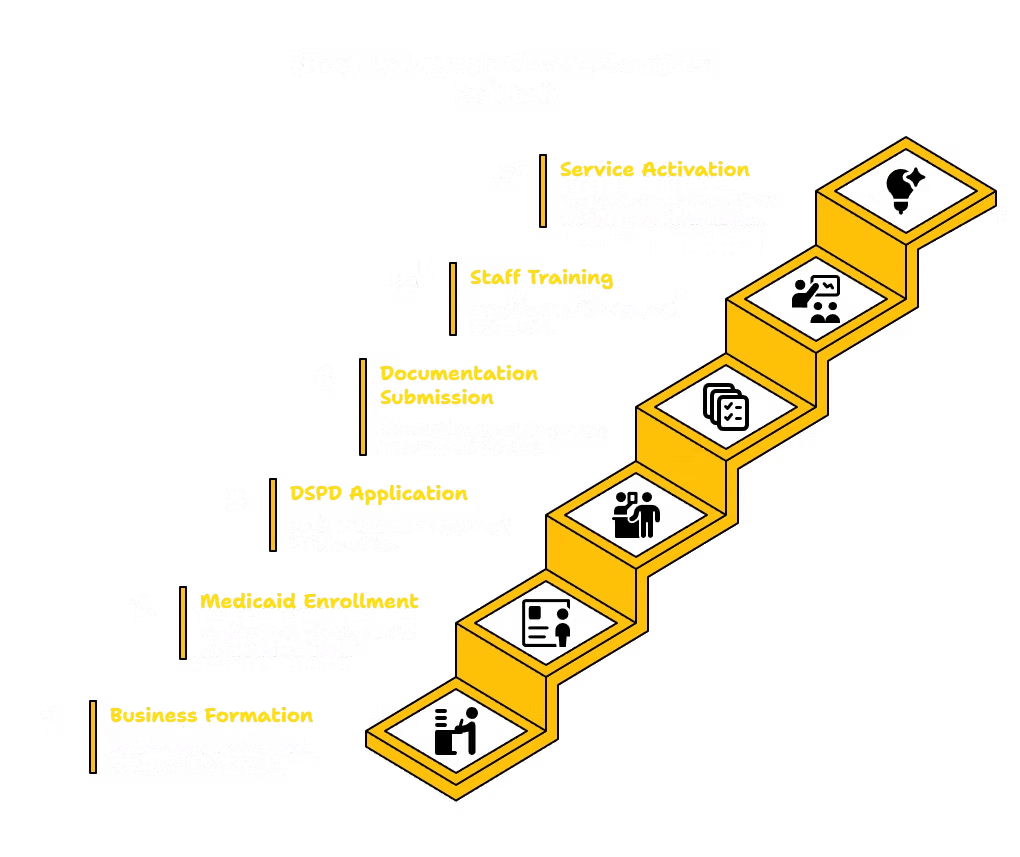
To operate as a Chores Services provider in Utah, an agency must navigate a multi-stage enrollment process that validates their capacity to meet rigorous state and federal standards. This begins with the formation of a legal business entity registered with the Utah Division of Corporations. Prospective providers must secure all necessary federal documentation, including a valid Employer Identification Number (EIN) and a Type 2 National Provider Identifier (NPI), as these are mandatory requirements for all Medicaid-related billing and identification in state systems.
Once the legal foundation is established, the applicant must enroll with Utah Medicaid and subsequently apply for status as a contracted DSPD provider. The application process requires the submission of a comprehensive policy and procedure manual, proof of professional and general liability insurance, and documented worker’s compensation coverage. Prospective providers should anticipate a thorough review of their operational plans to ensure they can manage sensitive, in-home service delivery in accordance with state-mandated safety expectations.
Establishing Essential Operational and HIPAA Protocols
Operational excellence is mandated by the DSPD to ensure consistent quality of care and participant safety. A primary component of this compliance is the development of a Chores Services Policy & Procedure Manual. This document must explicitly detail how the agency handles the intake process, assesses environmental safety risks, and documents the completion of specific tasks. Furthermore, the agency must demonstrate that it has implemented robust HIPAA and data protection policies to safeguard participant health information during the course of providing in-home services.
Agencies are responsible for implementing internal controls that verify services are provided only within the scope of the participant’s authorized care plan. This includes tracking the hours spent on specific tasks and ensuring that these activities align with the intermittent, non-routine nature of the service. By standardizing these operational procedures, agencies create a consistent audit trail that supports long-term enrollment and service delivery, reducing the risk of administrative errors during state oversight reviews.
Staffing, Training, and Regulatory Compliance
Staffing requirements for Chores Services are specifically tailored to the physically demanding nature of the work. While formal professional licensure is not required for the Chores Services worker, individuals must meet baseline criteria: they must be at least 18 years old, successfully pass a comprehensive background check, and possess the demonstrated physical ability to perform heavy-duty tasks safely. Agencies are held accountable for the conduct and competence of their staff, necessitating a proactive approach to hiring and oversight.
Before beginning work, all staff must undergo mandatory training to ensure they understand their obligations regarding participant safety and state reporting requirements. This training must be documented and accessible for review by the DSPD or other regulatory bodies. Essential training modules include:
- Comprehensive HIPAA training to ensure client confidentiality standards are maintained.
- Mandatory reporting training for Abuse, Neglect, and Exploitation Prevention (ANEP).
- Standardized safety protocols regarding deep cleaning techniques and heavy lifting ergonomics.
- Emergency preparedness and basic infection control practices.
- Proper incident reporting procedures as required by the state of Utah.
Identifying Applicable Medicaid Waiver Programs
Chores Services are not universal across all Medicaid programs; they are specific to certain HCBS waivers where the participant's plan of care dictates that such assistance is a clinical or safety necessity. Providers must remain familiar with the specific requirements of each waiver, as eligibility, authorization caps, and documentation processes can vary. Aligning services with the appropriate waiver is essential to ensuring accurate billing and program compliance.
The current waivers in Utah that include Chores Services coverage are the Community Supports Waiver (CSW) for adults with intellectual disabilities or developmental disabilities, the Acquired Brain Injury (ABI) Waiver, and the Physical Disabilities Waiver (PDW) when the service is functionally justified by the participant's team. In limited, specific instances, the Medically Complex Children’s Waiver (MCCW) may also cover these services, provided they are explicitly approved by the participant’s multidisciplinary care team as a safety intervention.
Frequently Asked Questions
Can Chores Services be used for daily housekeeping?
No. Chores Services are intended exclusively for heavy-duty, infrequent, or one-time tasks that are critical to health and safety. They are not a substitute for ongoing, routine housekeeping or homemaker services provided under other, separate waiver categories.
Is a professional license required for staff?
General Chores Services workers do not require professional licensure. However, they must pass a comprehensive background check, meet minimum age requirements, and complete all required state-mandated training modules, including ANEP and emergency safety protocols.
How long does the provider enrollment process take?
The timeline typically spans several months. Business formation and the drafting of policy manuals usually take 1–2 months, followed by 2–3 months for the Medicaid and DSPD enrollment process, and an additional 30–45 days for staff onboarding and training before active service can begin.
Key Takeaway
Successful entry into the Utah Chores Services market requires meticulous attention to the regulatory requirements set forth by the Utah DHHS and DSPD. By aligning your business operations, policy manuals, and staff training protocols with these specific HCBS standards, providers can effectively support individuals with disabilities while ensuring long-term program compliance and high-quality service delivery.
Last verified: October 2023. Disclaimer: This information is for educational purposes and does not constitute legal or professional advice. Always consult the official Utah Department of Health and Human Services (DHHS) and the Division of Services for People with Disabilities (DSPD) websites or an authorized representative for the most current regulations and program requirements.