CHORE SERVICES PROVIDER IN CONNECTICUT
By Fatumata Kaba · 2025-07-08 · 5 min read
Helping individuals maintain safe and sanitary homes to support independent living and dignity.
Chore services in Connecticut provide critical, one-time or occasional heavy-duty household assistance to individuals who are elderly or have disabilities and are otherwise unable to maintain a safe, clean living environment. These services are authorized and reimbursed through the Connecticut Home Care Program for Elders (CHCPE) and various state-funded or Medicaid Home and Community-Based Services (HCBS) waiver programs administered by the Department of Social Services (DSS).
Understanding the Governing Agencies and Regulatory Framework
The provision of chore services is overseen by a multi-layered regulatory environment designed to ensure participant safety and fiscal accountability. The Connecticut Department of Social Services (DSS) serves as the primary authority, managing the authorization and reimbursement process for services delivered through CHCPE and associated HCBS waivers. All providers must operate within the parameters set by the Centers for Medicare & Medicaid Services (CMS), which provides federal oversight to ensure state programs adhere to established Medicaid waiver guidelines.
Beyond DSS and CMS, providers must navigate state-specific consumer protection requirements. The Connecticut Department of Consumer Protection (DCP) plays a pivotal role by registering Homemaker-Companion Agencies (HCAs). Because chore providers frequently enter the private homes of vulnerable populations, this registration acts as a necessary safeguard for quality of care and business legitimacy.
Defining the Scope of Chore Services
Chore services are distinct from standard routine housekeeping or personal care assistance. These services are intended to mitigate immediate health or safety risks that prevent a participant from aging in place or remaining in their own home. By addressing environmental hazards, chore providers play a vital role in preventing hospitalizations and institutionalization.
Approved providers typically perform the following types of heavy-duty labor:
- Deep cleaning of kitchens, bathrooms, and living spaces to resolve sanitation issues.
- Heavy-duty decluttering and the removal of accumulated waste that poses a fire or trip hazard.
- Moving heavy furniture to improve accessibility and clear paths for mobility aids.
- Essential exterior yard work, such as clearing walkways, to ensure safe ingress and egress.
- Preparing the home for professional pest control services and performing post-cleanup waste removal.
- Maintaining thorough documentation of services performed and the documented improvement in home conditions.
Licensing and Enrollment Requirements for New Providers
Establishing a business to provide chore services requires a rigorous approach to compliance. Before seeking reimbursement, a provider must formalize the business entity and obtain the necessary credentials. This includes registering the business with the Connecticut Secretary of the State, obtaining an Employer Identification Number (EIN) from the IRS, and securing a Type 2 National Provider Identifier (NPI) for organizational billing.
Because the work involves entering private residences, the provider must register as a Homemaker-Companion Agency (HCA) with the Department of Consumer Protection (DCP). Once the business entity is fully registered and licensed, the provider must enroll in the Connecticut Medical Assistance Program (CMAP) through the DSS provider enrollment portal. Maintaining general liability insurance is a non-negotiable prerequisite, as are internal policies regarding staff safety, supervision, and rigorous documentation practices.
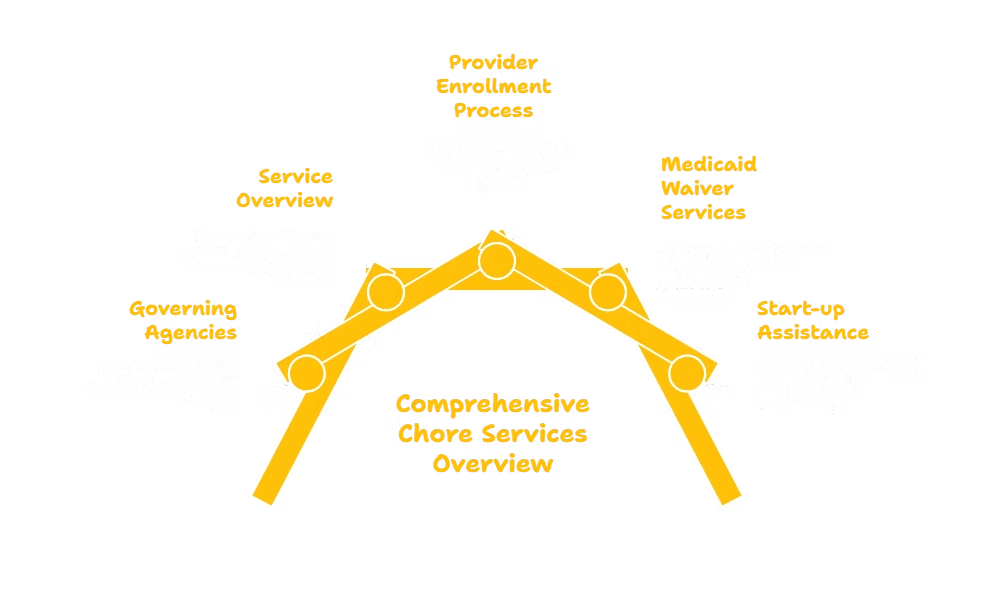
Step-by-Step Provider Enrollment and Launch Timeline
The path to becoming an approved provider is structured into sequential phases that can take several months to complete. The first phase focuses on business formation, which typically takes one to two weeks. Once established, the provider moves to DCP HCA registration, which generally requires a two-to-four-week window to process documentation and verify insurance.
Following DCP registration, the provider must complete the Medicaid enrollment process through the DSS provider portal, which can take anywhere from 30 to 60 days. The final phase involves recruiting qualified staff and conducting service onboarding, requiring an additional two to four weeks. Coordination with DSS and local Area Agencies on Aging (AAA) is essential during this time to establish clear channels for referrals and service authorizations once the provider is fully enrolled.
Staffing, Training, and Operational Documentation
The quality of service relies heavily on the competence and reliability of the staff performing the work. Chore workers and environmental services aides should have a demonstrated background in housekeeping, janitorial work, or property maintenance. Agencies are responsible for performing comprehensive background checks, conducting TB screenings, and verifying that employees are physically capable of performing labor-intensive tasks.
Agencies must maintain a comprehensive policy and procedure manual that covers several critical areas, including:
- Standardized intake forms and environmental risk assessment tools.
- Detailed service logs and completion checklists to verify work performed.
- Safety protocols regarding proper lifting, disposal of hazardous waste, and infection control.
- Incident reporting procedures and emergency escalation paths.
- Client rights, confidentiality, and procedures for addressing complaints.
Frequently Asked Questions
What is the difference between chore services and homemaker services?
Homemaker services are typically recurring, routine tasks such as cooking, cleaning, and laundry. Chore services are specialized, often one-time or infrequent, heavy-duty tasks that address significant health or safety hazards in the home.
Is CPR/First Aid training mandatory for chore staff?
While specific requirements may vary, it is strongly recommended that all staff maintain current CPR and First Aid certifications to ensure they can respond appropriately to medical emergencies while working in a client's home.
How do I receive referrals for chore service clients?
Referrals for CHCPE-eligible individuals are managed through the Department of Social Services and local Area Agencies on Aging. Providers must maintain active, professional relationships with these entities to ensure they are on the list of available providers when service authorizations are issued.
Key Takeaway: Successfully launching a chore service provider agency in Connecticut requires a methodical approach to business formation, adherence to DCP and DSS regulatory requirements, and the implementation of robust safety and documentation systems. By aligning operations with the state’s HCBS waiver standards, providers ensure they can effectively serve at-risk populations while maintaining the integrity of their Medicaid enrollment.
Last verified: October 2023. This information is intended for educational purposes and does not constitute legal or professional advice. Requirements for Medicaid waiver providers may change; always consult with the Connecticut Department of Social Services and official state portals for the most current regulations and policy bulletins.