CASE MANAGEMENT SERVICES PROVIDER IN VIRGINIA
By Fatumata Kaba · 2026-04-07 · 5 min read
Case Management Services in Virginia serve as the foundational support system for individuals with complex needs, facilitating access to essential home and community-based services while ensuring person-centered care coordination. Providers of these services act as critical intermediaries between participants and the Medicaid system, authorized through the Department of Medical Assistance Services (DMAS) and facilitated by Community Services Boards (CSBs) or Managed Care Organizations (MCOs) to promote independence, health, and social integration.
Establishing a case management agency in Virginia requires navigating a rigorous regulatory landscape defined by state oversight and specific waiver requirements. This article serves as a professional guide for agency founders and administrators looking to understand the operational standards, enrollment pathways, and administrative responsibilities inherent in providing high-quality support coordination across the Commonwealth.
What Are the Governing Bodies and Regulatory Frameworks in Virginia?
Operating a case management service provider in Virginia requires adherence to standards set by several key governing agencies. The Department of Medical Assistance Services (DMAS) acts as the primary authority, defining the standards for service delivery, managing provider enrollment, and overseeing the claims process for Medicaid reimbursement. Understanding DMAS regulations is the first step in ensuring long-term compliance and financial stability for an agency.
Beyond DMAS, the Virginia Department of Behavioral Health and Developmental Services (DBHDS) plays a vital role in licensing and monitoring providers, particularly those involved with intellectual and developmental disability (IDD) waivers. Furthermore, day-to-day service delivery is often coordinated through local Community Services Boards (CSBs) for CL and FIS waivers, or through private Managed Care Organizations (MCOs) for the CCC Plus waiver. Agencies must maintain strong, collaborative relationships with these entities to ensure proper participant referrals and adherence to regional service expectations.
How Do You Develop a Robust Case Management Service Model?
A successful case management model is built upon the principle of person-centered planning. This approach requires that providers shift from a traditional medical model to one that empowers the individual to define their own goals and service preferences. Effective agencies prioritize the development of an Individual Support Plan (ISP) that serves as the blueprint for an individual’s care, ensuring all services are medically necessary and aligned with the participant's unique functional needs.
Core service delivery involves constant monitoring of the participant’s environment and health status. Case Managers must maintain proactive contact with their clients, identifying service gaps, coordinating with medical professionals, and establishing crisis management protocols. By maintaining detailed, compliant documentation of these interactions, providers demonstrate their commitment to both regulatory standards and the quality of life of the populations they serve.
- Conducting comprehensive person-centered assessments to identify unique service needs.
- Facilitating the development and ongoing maintenance of the Individual Support Plan (ISP).
- Assisting participants in navigating both Medicaid-funded and non-Medicaid community resources.
- Establishing and executing crisis planning to ensure immediate access to emergency support.
- Monitoring the quality of services delivered to ensure compliance and participant satisfaction.
What Are the Essential Prerequisites for Provider Approval?
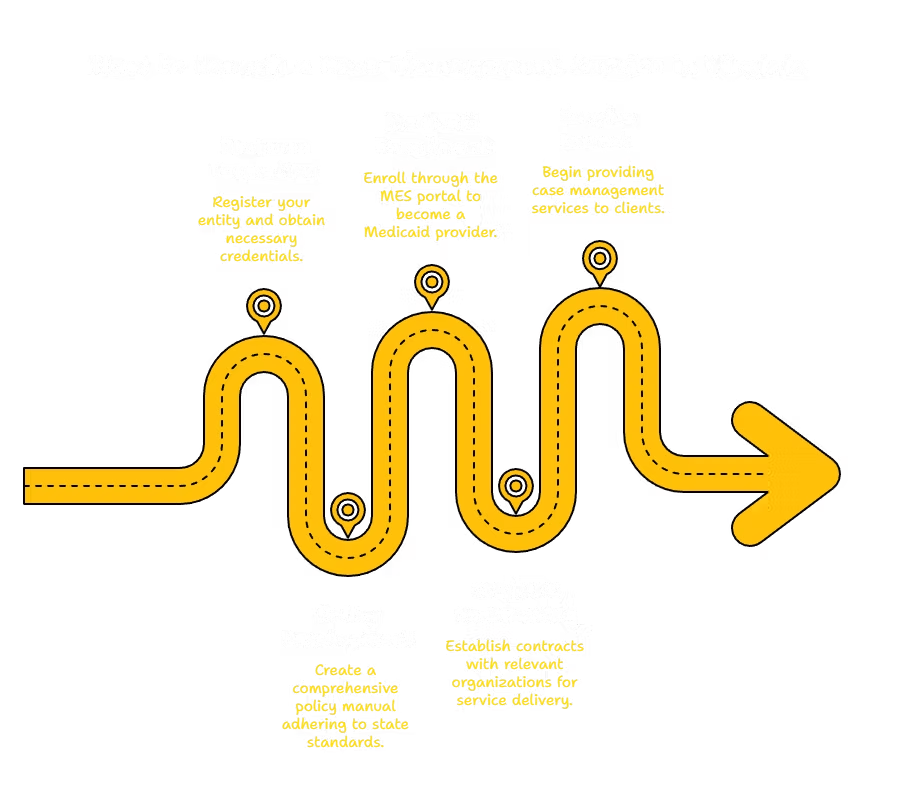
The journey toward becoming an authorized Medicaid provider begins with formal business entity establishment. Founders must register their business with the Virginia State Corporation Commission (SCC) and obtain an Employer Identification Number (EIN) alongside a Type 2 National Provider Identifier (NPI). These administrative milestones are mandatory prerequisites for all subsequent steps in the enrollment pipeline.
Once the legal structure is in place, the agency must focus on operational infrastructure. This involves creating a comprehensive Policy & Procedure Manual that reflects both DMAS and DBHDS standards. Because the state requires strict adherence to privacy and human rights laws, applicants must also secure affiliation with the Virginia DBHDS Human Rights Office and ensure all internal policies regarding HIPAA compliance and client grievances are fully documented and ready for state review.
What Does the Enrollment and Contracting Roadmap Look Like?
The enrollment process is a sequential journey that demands attention to detail. Initially, providers must navigate the DMAS MES Provider Portal, which acts as the centralized system for Medicaid credentialing. Upon successful enrollment, the agency must secure contracts with the appropriate CSBs—which oversee CL and FIS waiver services—or private MCOs, which manage the CCC Plus waiver program. This contracting phase is often the most critical, as it determines the agency's ability to receive referrals.
Timeline management is essential during this phase. Founders should anticipate that the business formation and initial staff recruitment may take two to three weeks, followed by four to six weeks for manual development and Medicaid portal enrollment. The final phase involves CSB or MCO contracting and readiness reviews, which can add another two to three weeks before the agency is positioned to launch services. Being prepared for these timeframes allows for better financial planning during the pre-revenue startup phase.
How Do You Manage Staffing and Training Compliance?
Case management is a personnel-intensive service. The state mandates specific qualifications for staff members, typically requiring a bachelor’s degree in a human services field combined with at least one year of professional experience working with the target population. Agency administrators are responsible for verifying these credentials, conducting thorough background checks, and ensuring that all staff are trained in CPR and First Aid.
Continuous education is a regulatory requirement for ongoing provider status. Staff must complete mandatory training on person-centered thinking, DBHDS Human Rights, HIPAA, and crisis de-escalation. By establishing an internal culture of documentation excellence and professional development, providers reduce the risk of audit findings and ensure that participants receive consistent, high-quality support throughout their tenure with the agency.
Frequently Asked Questions
What is the difference between a CSB and an MCO regarding case management?
CSBs (Community Services Boards) primarily manage case management for individuals enrolled in the Community Living (CL) and Family and Individual Supports (FIS) waivers. MCOs (Managed Care Organizations) generally coordinate case management for participants enrolled in the CCC Plus waiver.
Is a Policy and Procedure Manual required for Medicaid enrollment?
Yes, a robust Policy and Procedure Manual is a mandatory component for provider approval. It must detail intake, assessment protocols, ISP development, crisis management, HIPAA compliance, and client grievance procedures as required by DMAS and DBHDS.
What happens after the agency is enrolled with DMAS?
Once enrolled with DMAS, the agency must seek specific contracts with the CSBs or MCOs operating in their service area. Services can only officially launch once these contracts are signed and the agency receives its first participant referral and service authorization.
Key Takeaway
Successfully launching a Case Management Services agency in Virginia requires a strategic balance between legal administrative compliance, rigorous adherence to DMAS and DBHDS policy, and a commitment to person-centered service delivery. By securing necessary credentials, building a comprehensive manual, and fostering strong relationships with regional CSBs and MCOs, providers can effectively bridge the gap between complex health needs and the Medicaid services required to support independent, community-based living.
Last verified: October 2023. Disclaimer: This article is provided for informational purposes only and does not constitute legal or professional consulting advice. Regulations regarding Medicaid waivers and state-specific requirements are subject to change. Always refer to the official Virginia Department of Medical Assistance Services (DMAS) and Department of Behavioral Health and Developmental Services (DBHDS) websites for the most current regulatory updates.