CASE MANAGEMENT SERVICES PROVIDER IN VERMONT
By Fatumata Kaba · 2026-04-09 · 6 min read
Case Management services in Vermont are essential for individuals with disabilities, complex health needs, or age-related challenges to successfully navigate the Medicaid HCBS landscape. By serving as the central point of coordination between families, service providers, and state programs, Case Managers ensure that participants receive the necessary supports to remain safely and independently within their chosen home or community setting.
Administered through the Department of Disabilities, Aging and Independent Living (DAIL) and the Department of Vermont Health Access (DVHA), these services are foundational to Vermont's commitment to person-centered care. Providers play a critical role in facilitating these supports, ensuring that all interventions align with the individual’s person-centered support plan to promote choice, independence, and overall quality of life.
How Do Governing Agencies Regulate Vermont HCBS Case Management?
The regulatory framework for Case Management in Vermont is tiered, involving oversight from state departments and operational delivery through local entities. The Department of Disabilities, Aging and Independent Living (DAIL) serves as the primary authority, overseeing HCBS waivers and maintaining contractual relationships with Designated Agencies (DAs) to ensure the standard of service delivery. Their oversight ensures that all care coordination adheres to state-mandated quality standards and participant safety protocols.
The Department of Vermont Health Access (DVHA) acts as the fiscal and administrative gatekeeper, managing Medicaid funding and enrollment for both participants and providers. Designated Agencies (DAs) act as the operational backbone of the system; they are responsible for coordinating Individual Support Plan (ISP) development, approving and monitoring individual case managers, and ensuring that all waiver-authorized services are delivered efficiently and compliantly. Understanding the intersection of these three entities is the first step for any provider looking to establish a presence in the state.
What Are the Core Responsibilities of a Case Management Provider?
Case Management is distinct from direct care; it is an administrative and relational service focused on the logistics of an individual's support system. A provider’s primary goal is to empower participants to direct their own care by developing and overseeing an comprehensive Individual Support Plan (ISP). This plan acts as the blueprint for the individual's services and is continuously monitored to ensure it remains responsive to the participant's changing needs.
The responsibilities of a Case Management provider are wide-ranging and require a high level of organization and advocacy. Key tasks include:
- Conducting functional and needs-based assessments to determine eligibility and required support levels.
- Developing, updating, and reviewing ISPs in collaboration with the participant and their broader support team.
- Coordinating a diverse range of services, including personal care, respite, specialized therapies, and employment supports.
- Monitoring the delivery of services to ensure they are high-quality, effective, and align with participant satisfaction.
- Making referrals and connecting families with necessary community resources.
- Facilitating seamless transitions between settings, such as moving from schools, hospitals, or institutions back into the community.
- Advocating for the individual’s goals, rights, and autonomy throughout the service delivery process.
What Are the Licensing and Provider Approval Requirements?
Becoming an approved Case Management provider in Vermont is a structured process that emphasizes compliance and professional readiness. Before providing services, an agency must register the business with the Vermont Secretary of State and obtain an Employer Identification Number (EIN) and a Type 2 National Provider Identifier (NPI). This foundational step ensures the business is legally recognized and prepared to interface with federal and state billing systems.
Affiliation is the next critical requirement. Most independent providers must apply through a local Designated Agency to become an affiliated Case Management provider. This process involves proving that the agency is capable of maintaining rigorous liability insurance and adhering to strict confidentiality protocols. Furthermore, agencies must develop a comprehensive Case Management Services Policy & Procedure Manual. This document must explicitly detail how the agency handles intake, assessment, ISP development, incident reporting, and HIPAA compliance. Only after these internal systems are vetted by the DA or DAIL can an agency move forward with Medicaid enrollment.
How Can Providers Successfully Navigate the Enrollment Process?
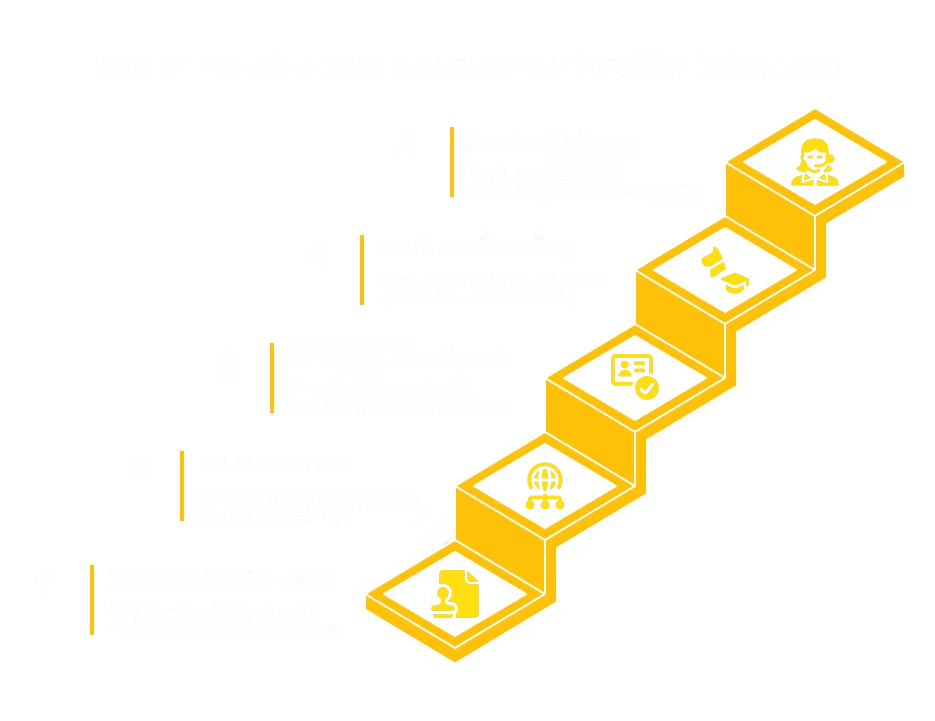
The journey from start-up to service delivery follows a clear, sequential path. The first phase centers on infrastructure, where a provider registers the business entity and secures all necessary tax and identification numbers. Once the administrative shell is established, the provider must establish a formal affiliation with a local Designated Agency. This affiliation is vital, as it governs the provider's ability to operate within specific catchment areas.
The subsequent steps involve formalizing operational protocols. Providers must submit their staff qualifications and their Policy & Procedure Manual to the appropriate oversight body for approval. After this, they must complete the Medicaid enrollment process through the DVHA if they intend to bill the state directly. Finally, all staff members are required to attend mandatory case management training provided by DAIL or the DA. Only once the agency has received its official approval and the provider is assigned an ISP can service delivery officially commence.
What Are the Essential Staffing and Training Requirements?
The quality of Case Management is entirely dependent on the caliber of the staff. For the role of Case Manager or Service Coordinator, the state generally requires a Bachelor's degree in human services, social work, psychology, or a related field. Along with educational credentials, a candidate should possess 1–2 years of experience working within disability services or community-based support programs. Exceptional documentation, communication, and advocacy skills are mandatory, as the Case Manager is the primary link between the participant and their service network.
For larger agencies, a Case Management Supervisor is highly recommended to oversee quality assurance and staff development. Supervisors are expected to possess advanced knowledge of HCBS standards and a track record of supervisory experience. All staff, regardless of their role, must participate in ongoing training. This includes specialized instruction on HIPAA, incident response protocols, and the nuances of the ISP documentation process. Regular professional development and annual performance evaluations are vital to maintaining compliance with state requirements.
Frequently Asked Questions
Is Case Management considered a direct care service in Vermont?
No, Case Management is classified as an administrative and coordination-focused service. It is designed to facilitate access to direct care services rather than provide them directly.
What is the role of a Designated Agency (DA) in the enrollment process?
Designated Agencies act as the primary oversight bodies that coordinate the ISP development, approve individual case managers, and ensure that waiver-authorized services are delivered according to state standards.
What happens if a participant's needs change after an ISP is approved?
Case Managers are responsible for the ongoing monitoring of the ISP. If a participant's needs change, the Case Manager must facilitate a review and revision of the ISP to ensure it continues to accurately reflect the participant's goals and required supports.
Key Takeaway
Establishing a Case Management agency in Vermont requires a rigorous commitment to state-specific regulations, the development of robust internal policies, and the maintenance of strong ties to local Designated Agencies. By ensuring that staff are adequately trained and that documentation practices remain compliant with DAIL and DVHA requirements, providers can effectively bridge the gap between complex Medicaid waiver programs and the individuals who rely on them for independence.
Last verified: October 2023. Disclaimer: This information is for educational purposes only and does not constitute legal or professional advice. Always verify current requirements with the Vermont Department of Disabilities, Aging and Independent Living (DAIL) or the Department of Vermont Health Access (DVHA) before launching or expanding programs.