CASE MANAGEMENT SERVICES PROVIDER IN NORTH DAKOTA
By Fatumata Kaba · 2025-09-18 · 6 min read
Becoming a Case Management Services provider in North Dakota allows agencies to play a pivotal role in supporting individuals with disabilities, chronic conditions, and age-related challenges. By facilitating access to Home and Community-Based Services (HCBS) waiver programs, providers ensure that participants receive person-centered care that promotes independence, safety, and long-term well-being within their own communities.
This guide serves as a foundational resource for healthcare entrepreneurs and agency administrators navigating the regulatory landscape of North Dakota’s Medicaid system. Understanding the specific oversight roles, documentation standards, and enrollment phases is essential for establishing a compliant and sustainable service delivery model.
Understanding the Regulatory Landscape and Governing Agencies
The delivery of Case Management Services in North Dakota is subject to rigorous oversight by both state and federal authorities. These agencies ensure that Medicaid funding is utilized effectively and that service providers adhere to the highest standards of care, participant safety, and ethical practice. Familiarity with the hierarchy of these organizations is the first step in successful agency operations.
The North Dakota Department of Human Services (NDDHS) serves as the primary governing body, administering the Medicaid waiver funding and overseeing the entire lifecycle of provider enrollment and reimbursement. Working in tandem, the North Dakota Medical Services Division (MSD) manages specific waiver operations and ensures that enrolled providers meet the necessary requirements for Medicaid participation. For specialized populations, the North Dakota Division of Aging Services provides additional oversight to ensure the quality and integrity of care delivery for elderly individuals and adults with disabilities.
On a national level, the Centers for Medicare & Medicaid Services (CMS) sets the overarching framework for all Medicaid-funded services. CMS requires that states provide evidence-based, person-centered support. Providers must align their internal policies with these federal mandates to maintain compliance during state audits and quality reviews.
Core Responsibilities of a Case Management Provider
Case Management is a multifaceted discipline centered on the individual’s unique needs. Approved providers are responsible for a comprehensive suite of services that bridge the gap between a participant’s current health status and their long-term goals for independent living. This process is inherently dynamic, requiring ongoing communication between the participant, their family, and the clinical team.
Effective care coordination requires a structured approach to service delivery, beginning with an exhaustive assessment of a participant's preferences and requirements. This leads to the development of an Individualized Service Plan (ISP), which serves as the blueprint for all subsequent support. Providers must be adept at balancing immediate crisis intervention with long-term monitoring, ensuring that the participant’s care plan evolves alongside their changing health or social circumstances.
- Comprehensive Assessment: Evaluating individual needs, preferences, and available supports.
- Care Planning: Developing personalized service plans in collaboration with participants and families.
- Resource Coordination: Connecting individuals with community services and supports.
- Service Monitoring: Tracking the effectiveness of care plans and making adjustments as needed.
- Crisis Intervention: Providing immediate support during emergencies or changes in health status.
- Advocacy: Ensuring that individuals receive necessary services and support.
- Referral Services: Linking to healthcare providers, behavioral health services, and community resources.
- Documentation and Reporting: Maintaining accurate records of care coordination and outcomes.
- Care Transitions Support: Facilitating smooth transitions from hospitals or other care settings back to the community.
Navigating Licensing and Provider Enrollment Requirements
Before an agency can begin serving participants, it must achieve full Medicaid enrollment. This process confirms that the entity is legally registered, financially sound, and capable of meeting the stringent demands of the Medicaid system. Founders should approach this as a systematic phase of business development, ensuring all prerequisites are met before attempting to submit the formal application.
Agencies must first establish their formal business entity with the North Dakota Secretary of State and secure a unique Employer Identification Number (EIN) and a Type 2 National Provider Identifier (NPI). Once these credentials are in place, the agency must enroll as a Medicaid Waiver Case Management provider through the North Dakota Medicaid Management Information System (MMIS). This system serves as the gateway for all billing, authorization, and communications with the NDDHS.
Successful enrollment also mandates that the agency develops a robust suite of internal policies. These documents must cover everything from client advocacy protocols to staff training and HIPAA compliance. Because North Dakota performs a Program Readiness Review to evaluate these internal procedures, agencies should treat policy development as an investment in operational durability rather than just a paperwork exercise.
Establishing Staffing and Documentation Standards
The quality of case management is inherently tied to the qualifications and training of the staff. North Dakota requires that agencies maintain a clear hierarchy, typically involving a Program Director to oversee the administrative and clinical direction of the service, supported by qualified Case Managers and Support Coordinators. These individuals act as the face of the agency, making staff retention and continuous professional development critical factors for success.
Documentation is the backbone of the Medicaid audit process. Every interaction, from a routine check-in call to a significant change in a participant’s health, must be recorded according to strict guidelines. These records must verify that services are being delivered in accordance with the participant’s ISP and state regulations. Staff members must be trained not only in clinical care coordination but also in the technical nuances of documentation and HIPAA-compliant record keeping.
- Program Director: Bachelor’s or Master’s degree in social work, human services, or healthcare administration with relevant supervisory experience.
- Case Managers: Bachelor’s degree in social work, psychology, or a related field; case management certification preferred.
- Training Requirements: All staff must complete training in person-centered planning, HIPAA, emergency response, and professional ethics.
- Ongoing Compliance: Agencies must perform annual competency evaluations and maintain records of all training hours.
Frequently Asked Questions
Which Medicaid waiver programs allow for Case Management Services in North Dakota?
Case Management Services are specifically authorized under several key programs, including the Aged and Disabled Waiver, the Technology Dependent Waiver, the Developmental Disabilities Waiver, and the broader Home and Community-Based Services (HCBS) Waiver framework.
What is the typical timeline for an agency to launch these services?
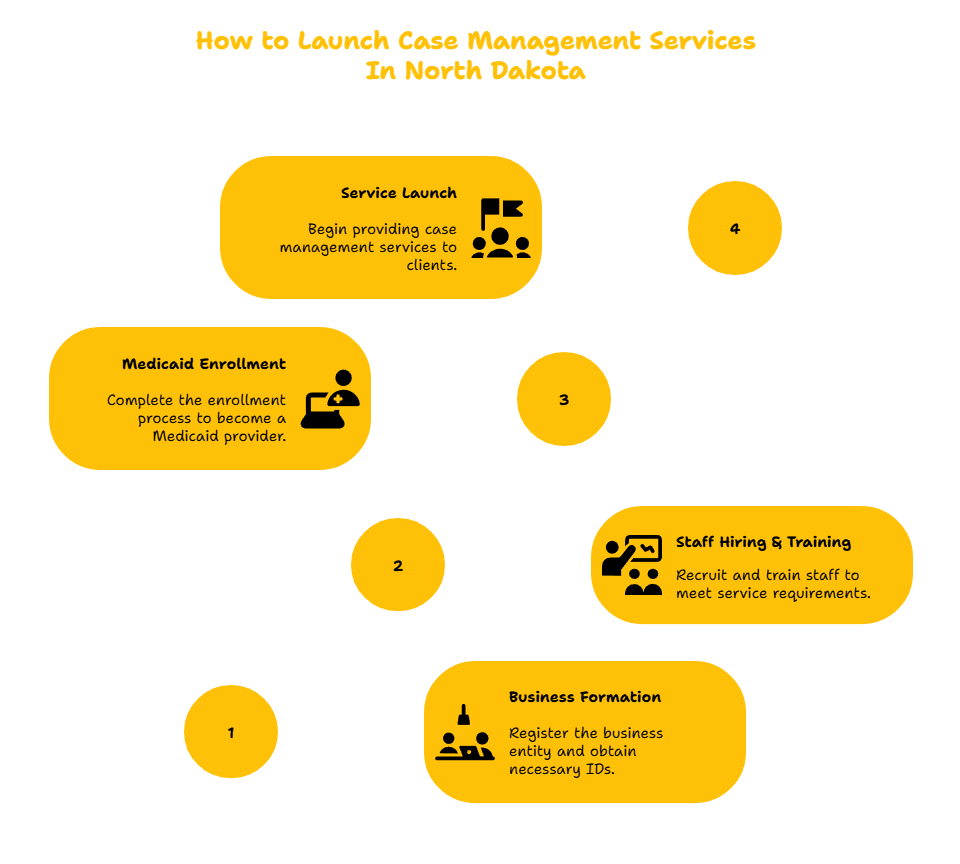
The timeline varies based on administrative preparedness, but generally follows this path: 1–2 months for business formation, 2–3 months for staffing and internal development, 60–90 days for state readiness reviews and enrollment, and 30–45 days for final billing system setup.
What documentation is critical for the Program Readiness Review?
Agencies must present articles of incorporation, proof of professional and liability insurance, and a comprehensive Policy and Procedure Manual. This manual must detail intake procedures, HIPAA compliance, staff credentialing, crisis management protocols, and quality assurance strategies.
Strategic Considerations for Long-Term Sustainability
Success as a Case Management provider in North Dakota requires balancing administrative efficiency with a genuine commitment to person-centered care. Agencies should prioritize the development of clear Quality Assurance systems early in their inception. By regularly auditing their own records, staying updated on NDDHS guidance, and fostering strong relationships with local healthcare providers, agencies can ensure they remain compliant and capable of providing high-quality support to the populations they serve.
Waiver Consulting Group (WCG) assists agencies in launching Medicaid-compliant Case Management Services by providing support in business registration, Medicaid enrollment, policy manual development, staff training templates, and the setup of billing and quality assurance systems. Through these structured efforts, new providers can navigate the complex regulatory environment with confidence and clarity.
Last verified: August 2024. This information is intended for educational purposes and should not be considered legal or financial advice. Regulations regarding North Dakota Medicaid HCBS waivers are subject to change. Consult the official North Dakota Department of Human Services (NDDHS) and North Dakota Medicaid Management Information System (MMIS) websites for the most current program guidelines and updates.