CASE MANAGEMENT SERVICES PROVIDER IN NEW YORK
By Fatumata Kaba · 2025-09-04 · 6 min read
How Do Case Management Services Support New York Medicaid Participants?
Case Management Services in New York act as the central nervous system for Medicaid Home and Community-Based Services (HCBS), providing the essential coordination required for individuals with disabilities, chronic health conditions, or age-related limitations to thrive in their own homes. By bridging the gap between clinical healthcare and community-based support, case managers facilitate person-centered care, advocate for participant needs, and ensure consistent access to vital resources. These services are authorized under various New York Medicaid HCBS waiver programs and are designed to promote participant independence, safety, and overall well-being through professional oversight and strategic resource navigation.
At the core of these services is the Individualized Service Plan (ISP), a living document that guides every intervention performed by the provider agency. Case management professionals work directly with participants, their families, and their broader care teams to assess needs and monitor outcomes, ensuring that every service delivered is aligned with the specific goals of the individual. This collaborative approach not only stabilizes the participant’s living situation but also significantly reduces the risk of institutionalization, making case management a cornerstone of modern, community-centric Medicaid delivery.
Who Provides Oversight for New York Medicaid Case Management?
The delivery of Case Management Services in New York is governed by a multi-layered regulatory framework designed to ensure quality, fiscal accountability, and participant safety. The New York State Department of Health (NYSDOH) serves as the primary administrative authority, managing Medicaid waiver funding, overseeing the provider enrollment process, and setting the standards for service authorization and reimbursement. Because these services are funded through federal-state partnerships, the Centers for Medicare & Medicaid Services (CMS) provides federal oversight, ensuring that state programs maintain compliance with national standards for person-centered planning and participant protections.
Beyond general oversight, specialized state agencies provide the clinical and programmatic monitoring necessary for diverse populations. The Office for People With Developmental Disabilities (OPWDD) is responsible for regulating services tailored to individuals with developmental disabilities, while the New York State Office of Mental Health (OMH) provides the necessary oversight for behavioral and mental health-focused case management. Providers must navigate these regulatory bodies simultaneously, ensuring their operations satisfy both the general Medicaid billing requirements set by the NYSDOH and the population-specific clinical standards mandated by OPWDD or OMH.
What Are the Core Functions of a Case Management Provider?
Approved Case Management agencies are tasked with a diverse array of responsibilities that span the entire lifecycle of a participant’s care journey. The process typically begins with a comprehensive assessment to identify the individual's unique needs, preferences, and existing support systems. Once the needs are established, case managers engage in active care planning, working in partnership with the participant to build an ISP that is both actionable and goal-oriented. This plan serves as the roadmap for all subsequent support and coordination efforts.
Ongoing provider responsibilities include the following essential tasks:
- Resource Coordination: Connecting participants with necessary community services, including medical, social, and housing supports.
- Service Monitoring: Regularly tracking the effectiveness of the current care plan and adjusting strategies as the participant’s health status changes.
- Crisis Intervention: Offering immediate support during emergencies or acute changes in physical or mental health status.
- Care Transitions Support: Facilitating smooth, safe transitions for individuals moving from hospitals or long-term care facilities back into the community.
- Advocacy and Documentation: Maintaining rigorous records of all care coordination activities to support Medicaid billing and demonstrate compliance with state standards.
What Are the Requirements for Provider Enrollment and Compliance?
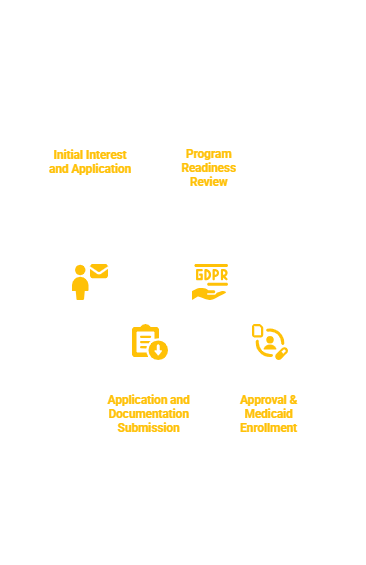
Launching a Case Management agency in New York requires meticulous adherence to both business entity formation and Medicaid-specific enrollment protocols. Before a provider can bill for services, they must be properly registered with the New York Department of State and obtain an Employer Identification Number (EIN) from the IRS, as well as a Type 2 National Provider Identifier (NPI). This foundational work is followed by enrollment via the New York Medicaid Provider Enrollment Portal (eMedNY), where the agency’s credentials, insurance coverage, and organizational capacity are vetted by the state.
Beyond the administrative paperwork, providers must develop a robust internal policy infrastructure. This includes creating comprehensive manuals that address HIPAA compliance, participant rights, grievance procedures, and emergency safety protocols. During the program readiness review, the NYSDOH, along with relevant oversight agencies like OPWDD or OMH, will evaluate the agency’s ability to conduct thorough assessments and maintain accurate documentation. Only after successfully passing this readiness review is a provider granted authorization to bill Medicaid for services using the designated billing codes.
How Do Staffing Requirements Impact Program Quality?
The quality of a case management program is fundamentally tied to the qualifications and training of its personnel. Agencies must hire leadership capable of overseeing complex regulatory requirements, such as a Program Director with a Bachelor’s or Master’s degree in social work, human services, or healthcare administration, along with proven experience in clinical supervision. Similarly, Case Managers and Support Coordinators must meet specific educational benchmarks, typically a Bachelor’s degree in a human services-related field, paired with a commitment to ongoing professional development.
Staff development is a continuous obligation, not a one-time onboarding requirement. All personnel must complete mandatory training in person-centered planning, participant rights, HIPAA standards, and emergency response protocols. Agencies are expected to conduct regular competency evaluations and maintain detailed records of these training sessions. By prioritizing rigorous staff credentialing and background clearances, providers ensure that their personnel are fully prepared to navigate the sensitive and often complex needs of the individuals they support in the community.
Frequently Asked Questions
Which Medicaid waiver programs allow for Case Management Services?
Case Management Services are integrated into several key New York waivers, including the OPWDD Comprehensive Waiver, the Children’s Waiver, the Traumatic Brain Injury (TBI) Waiver, the Nursing Home Transition and Diversion (NHTD) Waiver, and general HCBS waiver programs.
What is the typical timeline for establishing a new agency?
The launch process generally spans 6 to 9 months, consisting of phases for business formation (1–2 months), staffing and program development (2–3 months), the Medicaid Provider Enrollment and Readiness Review (60–90 days), and final billing setup (30–45 days).
What documents must be ready for the readiness review?
Providers must be prepared to submit Articles of Incorporation, proof of NPI/EIN, evidence of professional and general liability insurance, and a comprehensive Policy and Procedure manual covering intake, assessment, staff credentialing, quality assurance, and emergency protocols.
Waiver Consulting Group’s Start-Up Assistance
Waiver Consulting Group (WCG) provides comprehensive start-up assistance for agencies looking to enter the New York Medicaid market. This includes guidance on business registration, Medicaid enrollment, and the complex process of program readiness. WCG supports providers in developing standardized Policy and Procedure manuals for care coordination and client advocacy, designing staff training programs, and implementing quality assurance systems. By assisting with the technical aspects of Medicaid billing setup and audit-prepared financial management, WCG helps providers build a compliant, sustainable foundation for delivering essential community-based services.
Key Takeaway: Establishing a successful Case Management Services provider in New York requires a disciplined approach to state and federal regulatory compliance, a commitment to rigorous staff training, and the creation of a strong organizational infrastructure to support person-centered care. By strictly adhering to the requirements set by the NYSDOH, OPWDD, and OMH, providers can ensure they remain fully authorized to serve vulnerable populations while maintaining the integrity of their Medicaid billing operations.
Last verified: October 2023. Disclaimer: This information is for educational purposes only and does not constitute legal or professional advice. Requirements for Medicaid provider enrollment in New York are subject to change. Please consult the official eMedNY, NYSDOH, and relevant state agency portals for the most current regulations and guidelines.