CASE MANAGEMENT SERVICES PROVIDER IN NEW MEXICO
By Fatumata Kaba · 2025-09-05 · 5 min read
Becoming a Medicaid HCBS Case Management Services provider in New Mexico requires a structured approach to clinical compliance, administrative organization, and regulatory adherence. Agencies in this sector act as the primary link between individuals with disabilities or chronic health conditions and the essential Medicaid waiver services they require to live independently in their communities.
To successfully launch and operate a Case Management agency, providers must navigate the specific requirements set forth by the New Mexico Human Services Department (HSD) and the Developmental Disabilities Supports Division (DDSD). This process involves rigorous documentation, the development of robust person-centered service policies, and strict adherence to the standards established by the Centers for Medicare & Medicaid Services (CMS).
What Are the Governing Bodies Overseeing New Mexico Case Management?
The regulatory framework for Case Management in New Mexico is hierarchical, ensuring that federal standards are upheld at the state level. The New Mexico Human Services Department (HSD) serves as the primary authority, managing Medicaid waiver funding, provider enrollment, and the critical reimbursement processes that keep the agency financially solvent. Understanding the HSD’s requirements is the first step in successful provider activation.
Complementing the HSD, the Developmental Disabilities Supports Division (DDSD) focuses on the ground-level quality of service delivery. They ensure that agencies remain in compliance with HCBS standards and are responsible for monitoring the actual care coordination provided to participants. Finally, the Centers for Medicare & Medicaid Services (CMS) provides the federal mandate that governs the person-centered planning process and participant protection requirements across all Medicaid-funded waiver programs.
- Human Services Department (HSD): Manages Medicaid waiver funding, provider enrollment, and reimbursement.
- Developmental Disabilities Supports Division (DDSD): Oversees quality standards, service delivery, and program compliance.
- Centers for Medicare & Medicaid Services (CMS): Provides federal oversight for HCBS quality and person-centered planning standards.
What Essential Services Must Case Management Providers Deliver?
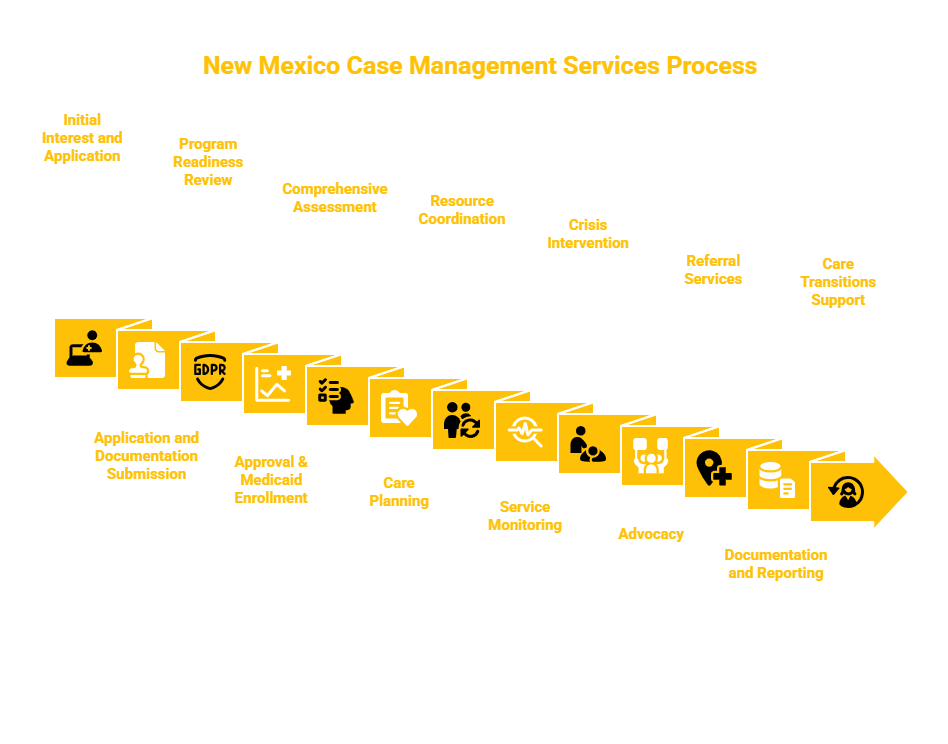
Case management is fundamentally about advocacy and resource coordination. Approved providers are tasked with creating, maintaining, and updating the Individualized Service Plan (ISP) for each participant. This document serves as the roadmap for the care a participant receives and must be developed in close collaboration with the individual and their family to ensure it remains person-centered and reflects their unique needs.
Beyond planning, providers are responsible for the ongoing monitoring of care effectiveness and crisis intervention. If a participant’s health status changes or they face an emergency, the case manager must facilitate immediate support and adjustments to the plan. This role extends to linking individuals to necessary healthcare providers, therapists, and community-based social services, ensuring that the participant has a cohesive support network.
- Comprehensive Assessment: Evaluating the individual's unique needs, preferences, and support requirements.
- Care Planning: Developing and managing personalized service plans in collaboration with the participant.
- Crisis Intervention: Providing immediate support during emergencies or acute changes in status.
- Advocacy & Referral: Supporting individual rights and facilitating connections to external medical and social resources.
- Documentation: Maintaining meticulous records of all care coordination activities to support Medicaid billing.
What Are the Prerequisites for Licensing and Provider Approval?
Before an agency can begin serving participants, it must achieve organizational readiness. This starts with formal business entity registration through the New Mexico Secretary of State, followed by obtaining an Employer Identification Number (EIN) from the IRS and a Type 2 National Provider Identifier (NPI). These foundational steps allow the agency to enter the formal enrollment process within the state's systems.
Financial and operational stability are also required. Agencies must secure comprehensive general and professional liability insurance to protect against service-related risks. Furthermore, a detailed Policy and Procedure Manual must be authored, detailing how the agency handles intake, HIPAA compliance, grievance procedures, and emergency management. Failure to present a complete and compliant policy manual is a frequent barrier to initial application approval.
How Do Agencies Navigate the New Mexico Enrollment Process?
The enrollment process is a sequential journey that begins with the submission of the Provider Enrollment Application via the New Mexico Medicaid Provider Enrollment Portal. Applicants must be prepared to provide extensive documentation, including legal business articles, proof of insurance, and detailed staff training curricula. Each document is reviewed not only for accuracy but for alignment with current state regulations.
Once the initial application is filed, the HSD and DDSD conduct a Program Readiness Review. This phase is critical, as state auditors evaluate the agency’s capacity to execute its stated policies. They will examine the agency's assessment procedures, documentation standards, and the qualifications of the proposed staff. Only after the agency passes this readiness audit is it authorized to bill for services under the designated Medicaid billing codes.
How Are Staffing and Training Requirements Regulated?
The credibility of a Case Management agency rests on the expertise of its staff. The Case Management Program Director is required to hold at least a Bachelor’s or Master’s degree in a relevant field such as social work, human services, or healthcare administration, along with demonstrable experience in case management supervision. This leader is responsible for ensuring the entire team meets the stringent competency standards expected by state regulators.
Case Managers and Support Coordinators are required to possess specific academic backgrounds and undergo rigorous screening, including full background clearances. Beyond initial hiring, all staff members must complete mandatory training in person-centered planning, participant rights, HIPAA compliance, and emergency safety protocols. The agency is responsible for documenting these trainings and conducting annual competency evaluations for every member of the care coordination team.
WAIVER CONSULTING GROUP’S START-UP ASSISTANCE SERVICE — NEW MEXICO CASE MANAGEMENT SERVICES PROVIDER
WCG supports agencies in launching Medicaid-compliant Case Management Services in New Mexico, offering:
- Business registration, Medicaid enrollment, and licensing assistance.
- Policy manual development for care coordination and client advocacy.
- Staff credentialing, training program templates, and compliance documentation.
- Medicaid billing setup and audit-prepared financial management.
- Branding, website development, and client outreach strategies.
- Quality assurance systems for service coordination and compliance monitoring.
- Collaboration with healthcare providers and community organizations.
Frequently Asked Questions
What waivers allow for Case Management Services in New Mexico?
Case Management Services are authorized under the Developmental Disabilities (DD) Waiver, Mi Via Waiver, Medically Fragile Waiver, Supports Waiver, and the broader Home and Community-Based Services (HCBS) Waiver programs.
What is the typical timeline to launch a Case Management agency?
The launch process generally spans several months, including 1–2 months for business formation, 2–3 months for staff hiring and credentialing, 60–90 days for Medicaid enrollment and readiness review, and 30–45 days for final billing system setup.
What documents are essential for the Medicaid provider application?
Key documents include your Articles of Incorporation, IRS EIN confirmation, Type 2 NPI, proof of liability insurance, and a comprehensive Policy & Procedure Manual covering HIPAA compliance, intake, crisis management, and staff training protocols.
Key Takeaway: Successful operation as a New Mexico Medicaid Case Management provider hinges on strict adherence to HSD and DDSD regulatory standards. By establishing robust internal policies, ensuring staff meet high-level educational and training requirements, and meticulously documenting all care coordination activities, agencies can provide essential support to vulnerable populations while maintaining long-term program compliance.
Last verified: October 2023. Disclaimer: This article is for informational purposes only and does not constitute legal or professional medical advice. Always consult with the New Mexico Human Services Department or a qualified legal professional regarding specific state regulations and requirements.