CASE MANAGEMENT SERVICES PROVIDER IN NEW JERSEY
By Fatumata Kaba · 2025-09-05 · 5 min read
Becoming a Case Management Services provider in New Jersey requires a structured approach to meeting the rigorous standards set by the Department of Human Services (DHS) and the Division of Developmental Disabilities (DDD). These providers serve as the essential bridge for individuals with disabilities or chronic health conditions, ensuring they receive person-centered care through the state’s Home and Community-Based Services (HCBS) waiver programs.
What Are the Core Responsibilities of a New Jersey Case Management Provider?
Case Management Services are designed to enhance an individual’s independence by orchestrating a diverse array of community-based supports. As a provider, your primary role is to serve as an advocate and navigator, ensuring that each participant receives services that are both high-quality and consistent with their Individualized Service Plan (ISP). This involves a continuous cycle of assessment, planning, and monitoring to adapt to a participant’s evolving needs.
Providers are expected to maintain constant communication with both the participant and the service delivery network. By facilitating access to healthcare, social services, and financial resources, your agency ensures that the participant remains safely integrated within their community. Effective case management minimizes the risk of institutionalization and fosters a higher quality of life through diligent follow-up and proactive crisis intervention.
- Needs Assessment: Conducting comprehensive, evidence-based evaluations to identify specific care requirements.
- Service Planning: Developing and maintaining an Individualized Service Plan (ISP) tailored to each participant’s unique preferences.
- Care Coordination: Arranging and managing a network of healthcare, social, and community-based services.
- Monitoring and Follow-Up: Regularly reviewing participant progress and modifying care plans in response to changing health or social status.
- Advocacy: Representing participant interests to ensure equitable access to rights and necessary community support.
How Do You Navigate the Provider Enrollment Process?
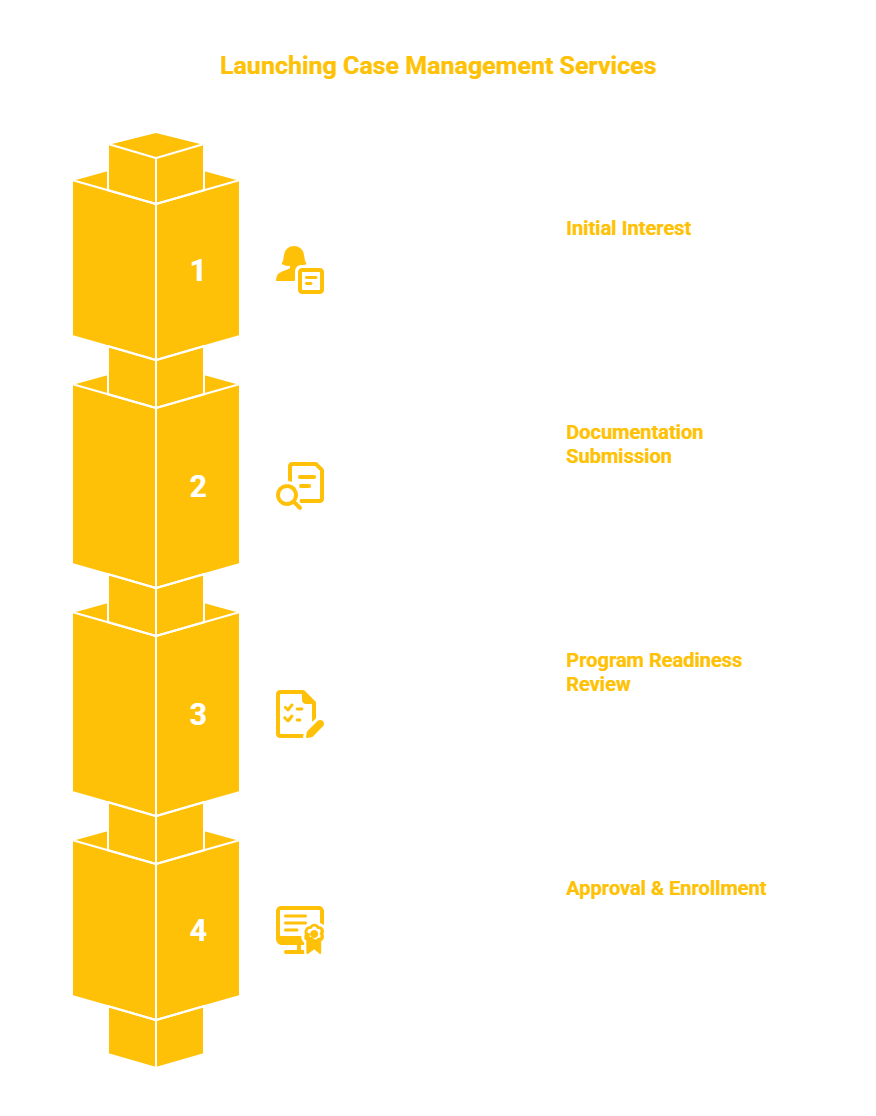
The enrollment process is a multi-stage commitment that demands strict adherence to state and federal regulations. The initial phase begins with establishing your business entity with the New Jersey Division of Revenue and Enterprise Services and obtaining the necessary federal tax identifiers, specifically an EIN and a Type 2 NPI. Without these, your organization cannot participate in the Medicaid reimbursement system.
Once the business is legally established, you must engage with the New Jersey Medicaid Provider Enrollment Portal. The process requires submitting extensive documentation, including business licenses, proof of insurance, and detailed policy manuals. Following the submission, the DHS and DDD conduct a Program Readiness Review. This phase is critical, as it verifies your organization’s capacity to handle service planning, staff oversight, and the safety measures required to support vulnerable populations under the HCBS waiver framework.
What Are the Essential Staffing and Credentialing Requirements?
Human capital is the foundation of any successful Case Management agency. Because these roles involve direct interaction with participants and high-stakes care planning, the state mandates specific educational backgrounds and experience levels. The Program Director, in particular, must demonstrate a strong history in social services or healthcare management, typically supported by a bachelor’s or master’s degree, to ensure that the agency operates with professional oversight.
Case Managers and assistants must also meet strict criteria to ensure the continuity of care. Beyond academic qualifications, all staff must undergo rigorous background clearances and training programs. These training requirements include person-centered planning, HIPAA compliance, and crisis management. Maintaining these records is not only a regulatory requirement but a cornerstone of your agency's internal quality assurance program.
- Program Director: Requires a degree in social work, human services, or healthcare, with a preference for professional case management certification and supervisory experience.
- Case Managers: Requires a bachelor’s degree in a relevant field and demonstrated proficiency in care coordination and service documentation.
- Case Management Assistants: Requires a high school diploma or GED, with a focus on administrative support and data integrity.
- Ongoing Competency: All staff must engage in annual evaluations and continuing education focused on resource management and service coordination techniques.
What Documentation Must Be Maintained for Compliance?
Administrative rigor is non-negotiable for Medicaid-approved providers. To pass audits and maintain eligibility, your agency must develop a comprehensive Policy & Procedure Manual. This document acts as the roadmap for your operations, covering everything from the intake of a new participant to the nuances of crisis intervention and emergency response protocols.
Your documentation system must be robust enough to handle the intersection of privacy laws and billing requirements. You are expected to demonstrate that you are maintaining detailed records of every interaction, assessment, and service update. Compliance monitoring is an ongoing task; therefore, your systems should be designed to facilitate easy access to records regarding staff credentialing, background checks, and the specific billing codes utilized for Medicaid reimbursement.
What Are the Common Challenges in the Launch Timeline?
Launching a Medicaid Case Management agency involves a significant time investment, usually spanning several months from inception to the first billable service. The initial phase of business formation and compliance preparation can take up to two months, during which time you must secure all legal, insurance, and administrative foundations. Rushing this stage often leads to delays during the subsequent readiness reviews.
Following setup, staffing and credentialing require an additional two to three months. Because you must prove your staff is ready before you are officially enrolled, it is vital to have your training protocols fully developed before hiring your core team. The final phase involves the Medicaid enrollment and billing setup, which typically requires another 60 to 90 days. Proper pacing is essential to ensure that your cash flow is protected once you officially begin operations.
Frequently Asked Questions
What is the role of CMS in New Jersey Case Management?
The Centers for Medicare & Medicaid Services (CMS) provides federal oversight to ensure that New Jersey’s Medicaid-funded Case Management programs adhere to national standards regarding person-centered planning, quality of care, and participant protection.
Are specific waivers required for case management?
Yes, Case Management services are authorized specifically under various New Jersey Medicaid HCBS waivers, such as the Supports Program Waiver, the Acquired Brain Injury (ABI) Waiver, and the Community Care Program for the Elderly and Disabled (CCPED).
Is insurance mandatory for new providers?
Yes, all providers must maintain both general liability and professional liability insurance as part of the enrollment and ongoing compliance requirements to protect both the agency and the participants served.
WAIVER CONSULTING GROUP’S START-UP ASSISTANCE SERVICE — NEW JERSEY CASE MANAGEMENT SERVICES PROVIDER
WCG supports agencies in launching Medicaid-compliant Case Management Services in New Jersey, offering:
- Business registration, Medicaid enrollment, and licensing support.
- Policy manual development for care coordination and crisis management.
- Staff credentialing, training program templates, and documentation guidance.
- Medicaid billing setup and audit-prepared financial management.
- Branding, website development, and client engagement strategies.
- Quality assurance systems for service coordination and compliance.
- Collaboration with healthcare and community organizations for resource sharing.
Key takeaway: Establishing a Case Management agency in New Jersey requires a disciplined focus on regulatory compliance, precise documentation, and the professional development of your staff, all while staying aligned with the specific requirements of the DDD and Medicaid enrollment protocols.
Last verified: October 2023. Disclaimer: This article is for informational purposes only and does not constitute legal or professional consulting advice. Requirements for Medicaid provider enrollment are subject to change. Always refer to the official New Jersey Department of Human Services (DHS) and Division of Developmental Disabilities (DDD) documentation for the most current regulations.