CASE MANAGEMENT SERVICES PROVIDER IN NEW HAMPSHIRE
By Fatumata Kaba · 2025-07-27 · 5 min read
Case Management Services in New Hampshire serve as a critical bridge between Medicaid-funded Home and Community-Based Services (HCBS) and the individuals who rely on them for daily independence. These services encompass comprehensive care coordination, individualized service planning, and resource navigation, ensuring that participants with disabilities, chronic conditions, or long-term care needs receive person-centered support in their own communities.
Operating as a Medicaid-approved provider requires rigorous adherence to standards set by the New Hampshire Department of Health and Human Services (DHHS) and the Bureau of Elderly and Adult Services (BEAS). By facilitating access to essential social and healthcare resources, case management providers play an indispensable role in maintaining participant safety and health outcomes under the state's various Medicaid waiver programs.
Who Governs and Oversees Case Management Services in New Hampshire?
The regulatory framework for Case Management Services in New Hampshire is tiered, involving both state-level departments and federal oversight to ensure consistent quality of care. The New Hampshire Department of Health and Human Services (DHHS) serves as the primary governing agency. It holds the authority to manage Medicaid waiver funding, oversee provider enrollment processes, manage service authorizations, and handle reimbursement protocols for agencies operating within the state.
Under the purview of DHHS, the Bureau of Elderly and Adult Services (BEAS) acts as the operational arm responsible for service delivery compliance. BEAS ensures that agencies adhere to strict quality standards and that individual care plans remain aligned with HCBS waiver requirements. At the federal level, the Centers for Medicare & Medicaid Services (CMS) provides overarching guidance and oversight. CMS ensures that New Hampshire’s Medicaid-funded services uphold national benchmarks for person-centered planning, participant protection, and the equitable delivery of HCBS supports.
What Are the Core Responsibilities of a Case Management Provider?
Case management agencies are tasked with enhancing a participant’s ability to live independently and safely. This requires a proactive approach to care that moves beyond administrative tasks to active advocacy and crisis management. Providers are responsible for the ongoing oversight of the participant's well-being, ensuring that the services authorized under the Individualized Service Plan (ISP) are both effective and accessible.
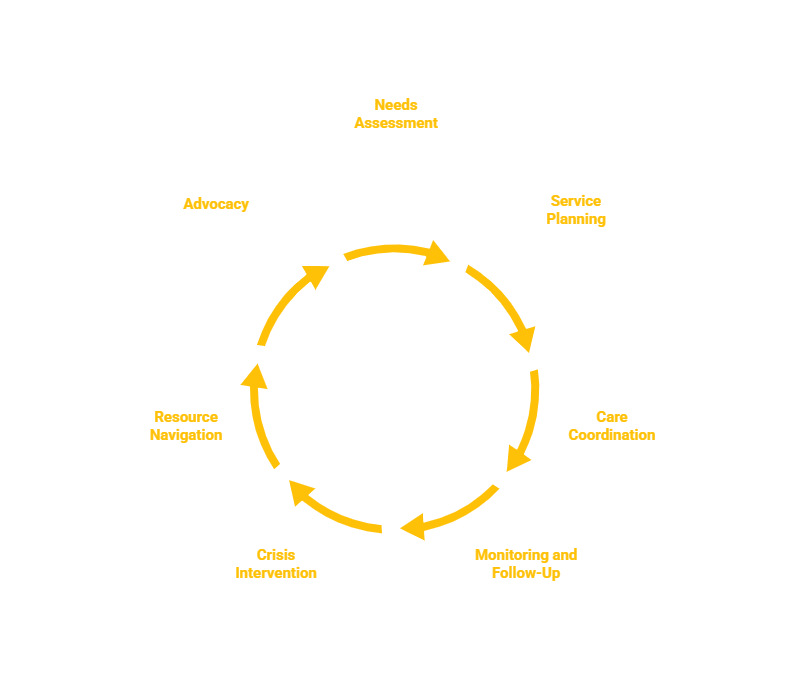
Approved providers are expected to deliver the following essential services:
- Needs Assessment: Conducting thorough evaluations to determine the specific medical, social, and functional requirements of the participant.
- Service Planning: Developing and maintaining an Individualized Service Plan (ISP) that reflects the participant’s unique goals and preferences.
- Care Coordination: Facilitating communication and service delivery between healthcare providers, social services, and community-based organizations.
- Monitoring and Follow-Up: Regularly assessing progress and modifying the care plan to accommodate changes in the participant’s health status.
- Crisis Intervention: Providing immediate support during emergencies and coordinating necessary responses to ensure participant safety.
- Advocacy: Acting on behalf of the participant to ensure their rights are upheld and that they obtain the necessary services to thrive in their community.
What Are the Licensing and Provider Enrollment Prerequisites?
Launching a case management agency in New Hampshire requires a structured, multi-step approach to compliance. Before seeking Medicaid enrollment, prospective providers must solidify their business foundation. This includes registering the business entity with the New Hampshire Secretary of State, obtaining an Employer Identification Number (EIN) from the IRS, and securing a Type 2 National Provider Identifier (NPI). These are the fundamental administrative requirements for any entity seeking to conduct business with the state’s healthcare infrastructure.
Beyond basic business registration, agencies must demonstrate readiness through the development of robust internal policies. This involves creating comprehensive manuals covering care coordination, crisis response, and documentation standards. Providers must also secure appropriate general and professional liability insurance. Furthermore, the agency must establish a rigorous system for staff vetting, including background checks, health screenings, and proof of required credentials, to ensure that all personnel meet the stringent standards set by DHHS.
How Is the Medicaid Provider Enrollment Process Managed?
The transition from a business entity to a Medicaid-authorized provider occurs through the New Hampshire Medicaid Provider Enrollment Portal. The process begins with the submission of an initial application for Case Management Services. Applicants must be prepared to provide extensive documentation, including Articles of Incorporation, proof of EIN/NPI, and comprehensive policy manuals that detail the agency’s internal operations and adherence to state regulations.
Once the application and documentation are submitted, the DHHS and BEAS conduct a program readiness review. This phase is critical, as state officials evaluate the agency’s capacity to deliver services. They will review staff qualifications, service planning protocols, and safety measures to ensure the agency is equipped to protect vulnerable populations. Upon successful completion of this review, the provider is officially authorized to bill for Medicaid services using designated billing codes, allowing them to begin formal operations.
Staffing and Training Requirements for Agency Success
The quality of case management is inherently linked to the qualifications and training of the staff. The Program Director must hold a bachelor’s or master’s degree in social work, human services, or a related healthcare field, ideally accompanied by professional certification and supervisory experience. Case managers are required to have at least a bachelor’s degree in a relevant field and demonstrated experience in service planning and care coordination.
Regardless of their role, all staff members must undergo a comprehensive training regimen. This includes mandatory education on person-centered planning, HIPAA compliance, and participant rights. Furthermore, staff must be trained in crisis management and de-escalation techniques to handle emergency scenarios safely. Continuous education and annual competency evaluations are required to ensure that the agency’s staff remains current on evolving service coordination practices and resource management strategies.
Frequently Asked Questions
Which Medicaid waiver programs allow for Case Management Services in New Hampshire?
Case Management Services are authorized under several key New Hampshire waivers, including the Choices for Independence (CFI) Waiver, the Developmental Disabilities (DD) Waiver, the Acquired Brain Disorder (ABD) Waiver, the In-Home Support (IHS) Waiver for Children, and the general Home and Community-Based Services (HCBS) Waiver.
How long is the typical timeline to launch a new agency?
The timeline varies based on administrative readiness but generally takes several months. It involves 1–2 months for business formation, 2–3 months for staffing and internal development, 60–90 days for the Medicaid enrollment and readiness review, and 30–45 days for final billing setup.
What must be included in an agency’s Policy & Procedure Manual?
A compliant manual must include protocols for participant intake, needs assessments, and care planning. Additionally, it must detail crisis intervention, staff credentialing, HIPAA compliance, grievance handling, and the specific documentation standards required for Medicaid billing and quality assurance.
Key Takeaway for New Home and Community-Based Services Providers
Successfully operating as a Case Management Services provider in New Hampshire requires a meticulous balance of administrative rigor and person-centered service delivery. By maintaining strict compliance with DHHS and BEAS protocols, investing in staff expertise, and building a transparent, audit-ready operational framework, new agencies can effectively navigate the Medicaid waiver landscape to provide essential support to the state’s most vulnerable residents.
Last verified: September 2024. This information is provided for general informational purposes only and does not constitute legal or professional advice. Requirements for Medicaid providers may be subject to change based on updates to state and federal regulations.