CASE MANAGEMENT SERVICES PROVIDER IN NEBRASKA
By Fatumata Kaba · 2025-08-08 · 5 min read
Becoming a provider of Case Management Services in Nebraska requires a strategic approach to regulatory compliance, clinical oversight, and administrative readiness. These essential services connect individuals with disabilities, chronic illnesses, and complex health needs to vital community resources, ensuring they can maintain independence and receive high-quality care under the state’s Home and Community-Based Services (HCBS) waiver programs.
This guide outlines the foundational steps for agencies seeking to enter the Nebraska Medicaid market. By aligning business operations with the requirements established by the Nebraska Department of Health and Human Services (DHHS) and the Centers for Medicare & Medicaid Services (CMS), providers can build a sustainable, compliant, and impactful service delivery model.
What Are the Governing Bodies for Nebraska Case Management?
Navigating the regulatory landscape begins with understanding the hierarchy of oversight. The Nebraska Department of Health and Human Services (DHHS) serves as the primary administrative authority, managing Medicaid waiver funding, provider enrollment protocols, and the critical processes surrounding service authorization and reimbursement.
Complementing this, the Nebraska Medicaid and Long-Term Care (MLTC) Division holds responsibility for the ongoing quality assurance of services. They monitor compliance with HCBS waiver standards, ensuring that care delivery remains consistent and person-centered. At the federal level, the Centers for Medicare & Medicaid Services (CMS) provides the overarching regulatory framework, mandating that all state-funded case management adheres to federal requirements for participant protections and quality of care.
What Scope of Work Do Case Management Providers Perform?
Case Management Services are designed to provide comprehensive care coordination for individuals who require long-term support. The core objective is to help participants achieve their highest level of independence by integrating medical, behavioral, and social support services into a cohesive, manageable plan.
Approved agencies are responsible for executing several key functions, including:
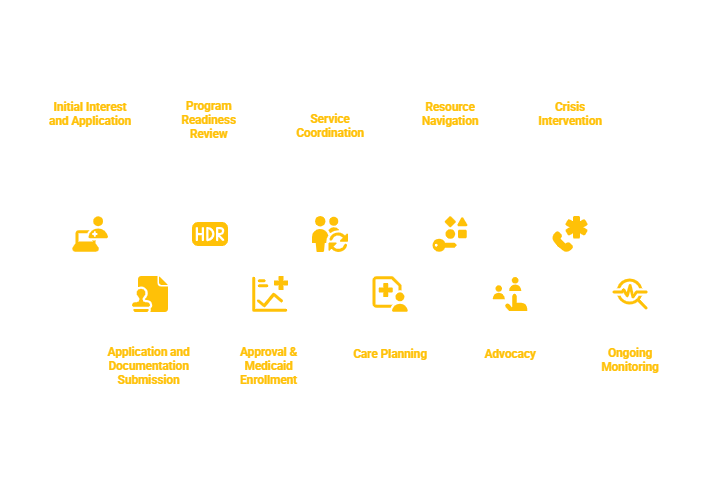
- Service Coordination: Proactively linking individuals to necessary medical, behavioral, and social services within their community.
- Care Planning: Developing, implementing, and monitoring Individualized Service Plans (ISPs) that reflect the specific needs and goals of each participant.
- Resource Navigation: Assisting participants in successfully applying for housing, financial assistance, healthcare, and other community programs.
- Advocacy & Monitoring: Acting as a voice for the participant to ensure preferences are respected, while regularly evaluating the effectiveness of services and adjusting plans as health or life circumstances change.
- Crisis Intervention: Coordinating immediate support and emergency resources when a participant faces a sudden decline or urgent health challenge.
How Do You Meet Licensing and Provider Approval Requirements?
Securing authorization as a Medicaid waiver provider is a structured, multi-step process. Before an agency can begin billing for services, it must be legally established and operationally ready. This begins with registering the business entity with the Nebraska Secretary of State and obtaining both an Employer Identification Number (EIN) from the IRS and a Type 2 National Provider Identifier (NPI).
Beyond basic business registration, agencies must demonstrate institutional readiness. This includes procuring comprehensive general and professional liability insurance and creating a robust internal policy manual. This manual serves as the blueprint for agency operations, detailing how the provider will manage case documentation, protect client data under HIPAA, handle crisis situations, and ensure that all staff meet stringent background check and health screening requirements.
What is the Enrollment Process for Nebraska Medicaid?
The enrollment journey is segmented into distinct phases, beginning with the initial submission through the Nebraska Medicaid Provider Enrollment Portal. After registering, the agency must submit a comprehensive packet of documentation, which includes Articles of Incorporation, proof of federal identification numbers, and verified evidence of insurance and staff credentials.
Once the application is submitted, the DHHS performs a Program Readiness Review. During this phase, state officials evaluate the agency’s infrastructure, including its documentation systems, care coordination protocols, and overall capacity to meet the rigorous standards of the HCBS waivers. Approval is granted only after the agency demonstrates that its internal processes are fully aligned with state and federal expectations, allowing the provider to begin utilizing designated billing codes.
How Do You Maintain Staffing and Clinical Compliance?
The quality of case management is fundamentally linked to the qualifications of the staff delivering the services. The Program Director role typically requires a Bachelor’s degree in social work, human services, or a related healthcare field, alongside experience in care coordination and staff supervision. Similarly, individual Case Managers must hold at least a Bachelor’s degree in a relevant field and must be trained in the nuances of person-centered planning.
Ongoing staff development is mandatory to maintain compliance. All personnel must undergo training in HIPAA confidentiality, crisis management, and the specific requirements of the waiver programs they serve. Agencies are responsible for maintaining organized records of these trainings, as well as documentation of annual competency evaluations and background clearances for every employee.
Frequently Asked Questions
Which Medicaid waivers allow for Case Management Services in Nebraska?
Case Management Services are authorized under several key programs, including the Aged and Disabled (AD) Waiver, the Traumatic Brain Injury (TBI) Waiver, the Developmental Disabilities (DD) Waiver, the Children with Disabilities Waiver, and the broader Home and Community-Based Services (HCBS) Waiver.
How long should an agency expect the entire launch process to take?
The launch timeline is generally split into phases: 1–2 months for business formation, 2–3 months for hiring and program development, 60–90 days for the Medicaid readiness review, and 30–45 days for final billing setup and launch.
What documentation is critical for audit readiness?
To be audit-ready, an agency must maintain clear records of its Articles of Incorporation, NPI/EIN verification, current insurance certificates, and a comprehensive Policy and Procedure Manual covering intake, assessment, HIPAA compliance, incident reporting, and staff credentialing records.
WAIVER CONSULTING GROUP’S START-UP ASSISTANCE SERVICE — NEBRASKA CASE MANAGEMENT SERVICES PROVIDER
WCG supports agencies in launching Medicaid-compliant Case Management Services in Nebraska, offering:
- Business registration, Medicaid enrollment, and compliance preparation
- Policy manual development for case management practices
- Staff training programs, credentialing templates, and care coordination protocols
- Medicaid billing system setup and claims management
- Branding, website development, and outreach strategies
- Quality assurance systems for client advocacy and service documentation
- Networking strategies to connect with healthcare and community resources
Key Takeaway: Successfully establishing a Case Management agency in Nebraska requires a rigorous adherence to the administrative and clinical standards set forth by DHHS. By prioritizing professional policy development, thorough staff training, and methodical enrollment preparation, providers can ensure they meet the complex needs of Nebraska’s most vulnerable populations while maintaining long-term Medicaid compliance.
Last verified: October 2023. This content is provided for informational purposes only and does not constitute legal or professional advice. Requirements for Nebraska Medicaid providers are subject to change; always refer to the latest updates from the Nebraska Department of Health and Human Services (DHHS) and the Centers for Medicare & Medicaid Services (CMS) official portals before initiating business activities.