CASE MANAGEMENT SERVICES PROVIDER IN MICHIGAN
By Fatumata Kaba · 2025-07-27 · 5 min read
Case Management Services in Michigan provide essential support by coordinating and facilitating access to health, social, and long-term care services for individuals with disabilities or chronic health conditions. These services are vital for maintaining the health and independence of vulnerable populations, ensuring that medical, social, and community support systems are effectively utilized through Michigan Medicaid, Home and Community-Based Services (HCBS) waivers, and the MI Choice Waiver Program.
Understanding the Regulatory Landscape for Case Management
In Michigan, the delivery of case management services is governed by a multi-tiered regulatory framework. At the federal level, the Centers for Medicare & Medicaid Services (CMS) provide the oversight necessary for all waiver-funded services. Locally, the Michigan Department of Health and Human Services (MDHHS) serves as the primary administrator, setting the standards for how services are delivered, documented, and reimbursed across the state.
To successfully operate, providers must interface with specific regional entities that hold the authority to approve and contract for services. Community Mental Health (CMH) Authorities act as the primary coordinators for individuals with developmental disabilities or complex mental health needs. Simultaneously, Area Agencies on Aging (AAA) manage the intake and oversight for seniors and adults with physical disabilities who participate in the MI Choice Waiver. Establishing a solid working relationship with these regional agencies is the foundational step for any organization aiming to provide these services.
Core Service Requirements and Person-Centered Planning
The primary objective of case management is to enhance the quality of life through comprehensive care coordination. This involves more than just monitoring; it requires active engagement in assessment, service planning, and continuous advocacy. The services are strictly person-centered, meaning that every action taken must be documented in a Person-Centered Plan (PCP) or an Individual Service Plan (ISP) that reflects the client's unique goals, preferences, and needs.
Service delivery typically encompasses several key functions to ensure a holistic approach to care:
- Assessment and Care Planning: Conducting comprehensive initial and ongoing assessments to identify client strengths, limitations, and service requirements.
- Service Coordination: Arranging healthcare appointments, coordinating with therapists, and ensuring that community supports are aligned with the ISP.
- Referral and Advocacy: Connecting clients to essential Medicaid benefits and advocating for their rights within healthcare and social service systems.
- Monitoring and Documentation: Regularly reviewing the effectiveness of care plans and maintaining HIPAA-compliant records that serve as audit-ready evidence of service delivery.
Essential Steps for Provider Enrollment and Credentialing
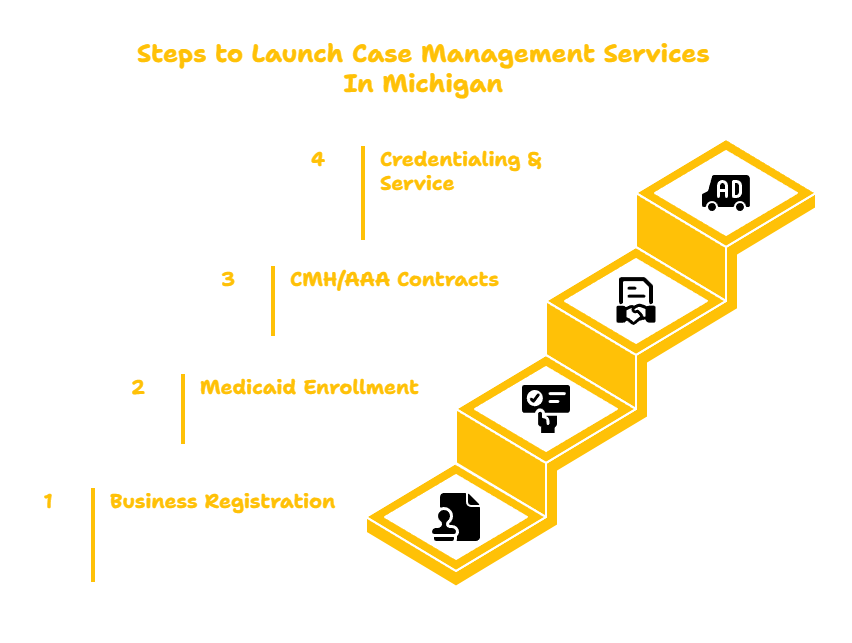
Becoming an approved case management provider in Michigan is a rigorous, multi-step process that requires careful attention to detail. Initially, a business must be registered with the Michigan Department of Licensing and Regulatory Affairs (LARA) to obtain legal standing. Following business formation, the provider must secure an IRS Employer Identification Number (EIN) and a Type 2 National Provider Identifier (NPI) to facilitate billing and professional identification.
The enrollment journey proceeds through the CHAMPS (Community Health Automated Medicaid Processing System) portal, which is the centralized hub for all Michigan Medicaid provider activities. Beyond state-level enrollment, providers must undergo specific credentialing with their local CMH or AAA offices. This regional credentialing is essential, as these agencies control the referrals and caseload assignments that form the backbone of a provider's business model. Ensuring all documentation is organized and compliant prior to submitting these applications can significantly reduce the potential for delays.
Documentation, Policies, and Operational Integrity
The integrity of a case management agency relies heavily on a comprehensive Policy & Procedure Manual. This document is not merely a requirement for licensing; it serves as the operational guide for staff to ensure that every interaction remains compliant with state and federal regulations. A robust manual should include detailed templates for intake assessments, service coordination logs, risk management, and incident reporting.
Internal controls must also be implemented to safeguard sensitive data, ensuring that all health records are handled in accordance with HIPAA standards. Because Medicaid programs are subject to frequent audits, providers must maintain rigorous documentation practices. This includes keeping accurate logs of staff training, proof of professional and liability insurance, and clear records of all services billed and delivered. Establishing these systems before beginning service delivery is critical for maintaining long-term provider eligibility.
Staffing, Training, and Professional Qualifications
Quality of care is inextricably linked to the qualifications and training of the staff. Case managers—often required to be licensed social workers or nurses—must possess a combination of technical knowledge and interpersonal skills to handle complex care coordination. Beyond their baseline education and licensure, they must undergo extensive background checks to meet state requirements for working with vulnerable populations.
Beyond the onboarding process, all staff members must receive ongoing training to stay current with evolving service standards. Essential training topics include:
- Person-Centered Planning: Techniques for facilitating care that honors individual client choice.
- Abuse and Neglect Prevention: Ensuring all staff understand their role as mandatory reporters.
- HIPAA and Data Privacy: Best practices for maintaining confidentiality in digital and physical formats.
- Medicaid Billing Practices: Ensuring that documentation standards meet the strict requirements of state reimbursement policies.
Frequently Asked Questions
What is the difference between a CMH and an AAA referral?
CMH authorities coordinate services primarily for individuals with intellectual or developmental disabilities and mental health needs, while AAAs oversee programs like the MI Choice Waiver, which focuses on seniors and adults with physical disabilities.
How long does the provider enrollment process typically take?
While timelines can vary based on the completeness of your application, providers should expect a 60-90 day window for Medicaid enrollment through CHAMPS, preceded by several weeks for business registration and insurance setup.
Are case managers required to be licensed?
Yes, case management roles typically require a Bachelor’s or Master’s degree in Social Work, Nursing, or a related field, along with the appropriate state licensure, depending on the specific scope of services being provided.
WAIVER CONSULTING GROUP’S START-UP ASSISTANCE SERVICE — MICHIGAN CASE MANAGEMENT PROVIDER
WCG supports healthcare organizations, social service agencies, and community care providers in launching licensed, Medicaid-approved case management services across Michigan. The scope of work includes business registration and Medicaid enrollment, CMH and AAA credentialing support, Case Management Policy & Procedure Manual creation, staff training resources, care coordination strategies, documentation templates, and billing setup for waiver-funded programs.
Key takeaway: Successfully launching a case management agency in Michigan requires strict adherence to state-mandated documentation, robust staff training protocols, and successful navigation of both the statewide CHAMPS system and local regional credentialing through CMH and AAA offices.
Last verified: June 2024. This content is for informational purposes only and does not constitute legal or financial advice. Always consult with the Michigan Department of Health and Human Services (MDHHS) or a qualified consultant for the most current regulatory requirements.