CASE MANAGEMENT SERVICES PROVIDER IN MAINE
By Fatumata Kaba · 2025-08-12 · 5 min read
How to Become a Case Management Services Provider in Maine
Case Management Services in Maine function as the cornerstone of the state’s long-term care and behavioral health systems, providing essential coordination for individuals with disabilities, chronic conditions, and complex health needs. To become a provider, an organization must navigate the regulatory landscape set by the Maine Department of Health and Human Services (DHHS), specifically aligning service delivery with Medicaid-funded Home and Community-Based Services (HCBS) waivers and state-funded programs.
Providing these services requires a commitment to person-centered planning, ensuring that every individual—from those in the IDD waiver community to those managing serious mental illness—receives timely access to integrated care. Successfully launching as a provider involves meeting stringent enrollment, staffing, and documentation standards designed to safeguard the health, safety, and rights of program participants.
What Are the Roles of Governing Agencies in Maine?
The regulatory framework for Maine case management is bifurcated across specific divisions of the Maine Department of Health and Human Services (DHHS). Understanding the roles of these agencies is the first step in ensuring regulatory compliance for your agency.
The Office of Aging and Disability Services (OADS) serves as the primary administrator for HCBS waiver-based case management. This office oversees supports for individuals with intellectual and developmental disabilities (IDD), physical disabilities, and seniors. Conversely, the Office of Behavioral Health (OBH) governs services for individuals dealing with serious mental illness (SMI) or substance use disorders (SUD). Meanwhile, the Office of MaineCare Services (OMS) manages the financial side, overseeing Medicaid billing and the formal provider enrollment process.
At the federal level, the Centers for Medicare & Medicaid Services (CMS) sets the overarching standards for all states. Providers must ensure their internal processes, particularly those involving person-centered planning, remain in total compliance with CMS requirements to maintain federal funding eligibility.
What Are the Essential Requirements for Provider Approval?
Before an agency can begin billing for services, it must establish a formal business structure and obtain necessary certifications. The process begins with legal registration through the Maine Secretary of State, followed by the acquisition of a federal Tax ID (EIN) and a Type 2 National Provider Identifier (NPI).
Beyond basic business registration, agencies must demonstrate operational readiness. This involves:
- Developing a comprehensive Case Management Policy & Procedure Manual.
- Obtaining agency certification or approval from OADS, OBH, or the relevant DHHS division.
- Securing adequate general liability and professional insurance coverage.
- Implementing HIPAA-compliant documentation and record-keeping systems.
- Hiring qualified staff who meet educational and experience requirements.
How Do You Navigate the MaineCare Enrollment Process?
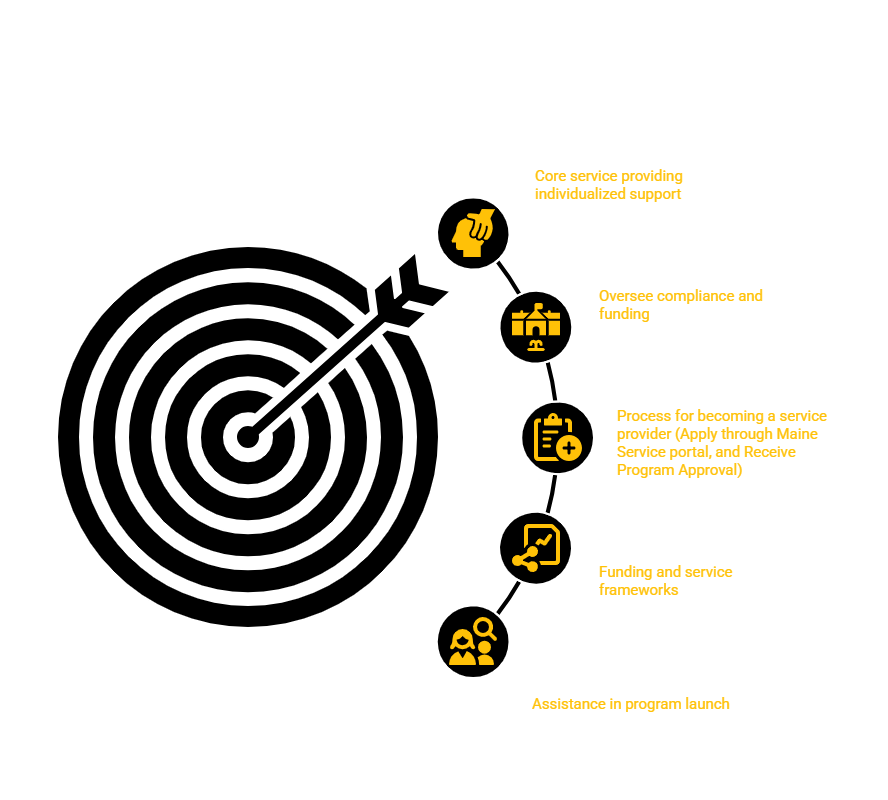
The provider enrollment process is a structured sequence that ensures only qualified agencies enter the Medicaid network. The journey begins with the MaineCare Provider Enrollment Portal. All applicants must register through this digital gateway to be considered for participation in the state’s Medicaid programs.
Once registered in the portal, the agency must seek program-specific approval. This depends on which "section" of the MaineCare benefits manual the agency intends to serve, such as Section 13 for Targeted Case Management or Sections 18, 19, 20, 21, or 29 for various HCBS waivers. During this phase, you will be required to submit documentation samples, including your policy manual and staffing plan, to demonstrate your capacity to deliver services.
Finally, the agency must undergo a credentialing process for all staff. This involves verifying educational degrees, conducting mandatory background checks, and ensuring that all personnel have completed state-mandated training prior to interacting with clients. Once these steps are satisfied, the agency enters the referral network to begin receiving client assignments from DHHS coordinators.
What Are the Staffing and Training Mandates?
The quality of service delivery is directly tied to the qualifications of the Case Manager. Typically, a Case Manager must hold a Bachelor’s degree in social work, psychology, rehabilitation, or a closely related human services field, alongside at least one year of professional experience. Some programs may also require a Clinical Supervisor, often an individual with a Master’s degree or professional licensure such as an LCSW, LCPC, or RN, to provide oversight for complex care plans.
All staff must complete a robust training curriculum to ensure safety and service excellence. Core training areas include:
- HIPAA compliance and strict confidentiality standards.
- Person-centered planning and service coordination methodologies.
- Mandatory reporting procedures regarding abuse, neglect, and exploitation.
- Standardized documentation and plan monitoring techniques.
- Cultural competency and trauma-informed care frameworks.
Frequently Asked Questions
What is the typical timeline to launch a case management agency in Maine?
The timeline varies by program complexity. Generally, business registration and policy manual development require 1–2 months. MaineCare enrollment and program-specific approvals typically take 60–90 days. Staff hiring and credentialing take 3–4 weeks, followed by a rolling launch based on regional referral needs.
What specific documentation is required in the policy and procedure manual?
Your manual must include comprehensive intake and eligibility verification forms, person-centered assessment templates, and standardized tools for creating and updating the Plan of Care (POC) or Individualized Service Plan (ISP). It must also feature protocols for critical incident reporting, grievance procedures, and ongoing monitoring logs.
Which programs are most commonly supported by Maine Case Managers?
Case managers work across various MaineCare programs, including Section 13 for behavioral health, Sections 18 and 20 for physical disabilities and children with medical needs, Section 19 for the elderly, and Sections 21 and 29 for IDD populations. Additionally, the Money Follows the Person (MFP) program relies on case managers to facilitate transitions from institutional settings to the community.
Key Takeaway
Launching a case management agency in Maine requires a disciplined approach to both business administration and clinical compliance. By focusing on the rigorous development of internal policies, adhering to DHHS and MaineCare enrollment timelines, and prioritizing the hiring of qualified, trained staff, agencies can successfully position themselves to support the state’s most vulnerable populations while maintaining long-term sustainability.
Last verified: October 2023. Disclaimer: This article is for informational purposes only and does not constitute legal or professional regulatory advice. Requirements for MaineCare provider enrollment may change; always refer to the official Maine Department of Health and Human Services (DHHS) and MaineCare portals for the most current rules, regulations, and policy updates.