CASE MANAGEMENT SERVICES PROVIDER IN LOUISIANA
By Fatumata Kaba · 2025-08-12 · 6 min read
Understanding Case Management Services in Louisiana
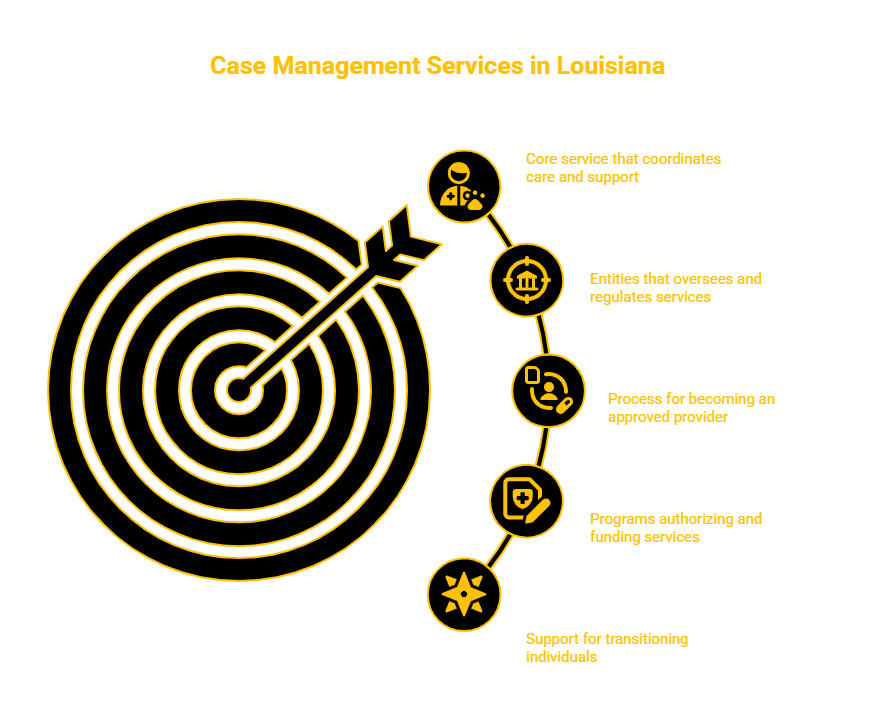
Case Management, frequently referred to as Support Coordination in Louisiana, serves as the cornerstone of the state’s Home and Community-Based Services (HCBS) infrastructure. By acting as the primary liaison between participants, the Louisiana Department of Health (LDH), and a network of medical and social providers, these services ensure that individuals with disabilities and aging adults receive the essential support required for independent community living.
For prospective provider agencies, establishing a presence in this sector requires a deep understanding of the person-centered planning philosophy mandated by the Centers for Medicare & Medicaid Services (CMS). Agencies are tasked with the critical responsibility of navigating federal and state regulations to facilitate access, monitor service quality, and advocate for the rights and goals of the populations they serve across the state’s diverse waiver programs.
Who Governs Louisiana’s Case Management Programs?
The regulatory landscape for Case Management in Louisiana is multifaceted, involving a collaboration between state-level oversight bodies and federal authorities. The Louisiana Department of Health (LDH) acts as the primary governing entity, specifically through the Office of Aging and Adult Services (OAAS) and the Office for Citizens with Developmental Disabilities (OCDD). These offices manage waiver guidelines, assign support coordination agencies to participants, and maintain rigorous standards for person-centered service planning.
Beyond state oversight, the Centers for Medicare & Medicaid Services (CMS) provides the overarching federal framework. CMS ensures that Louisiana’s case management practices remain in compliance with 1915(c) waiver requirements. Furthermore, operational support is facilitated through the Medicaid Management Information System (MMIS) and Molina Medicaid Solutions, which handle enrollment and reimbursement protocols, while Managed Care Organizations (MCOs) under Bayou Health manage specific referrals and data reporting requirements for assigned programs.
Key Functions and Service Delivery Expectations
The core objective of a Support Coordination agency is to provide comprehensive, individualized oversight that promotes participant well-being. Providers are responsible for the entire life cycle of care coordination, starting with functional needs assessments that identify an individual's specific requirements and long-term goals. From these assessments, case managers develop the Individualized Service Plan (ISP) or Plan of Care (POC), which serves as the formal blueprint for service delivery.
Beyond planning, providers must engage in ongoing monitoring and advocacy. This includes coordinating with physicians, therapists, and direct service providers to ensure the consistency of care. Furthermore, case managers are responsible for critical incident reporting, managing transitions—such as moving from an institutional setting back into the community—and conducting regular reassessments to adjust the care plan as the participant’s needs evolve. These services are vital for participants enrolled in programs such as the Residential Options Waiver (ROW), the Supports Waiver, the New Opportunities Waiver (NOW), the Children’s Choice Waiver, and the Community Choices Waiver.
Establishing Your Agency: Requirements and Licensing
Launching a Support Coordination agency is a structured process that begins with formal business registration through the Louisiana Secretary of State. Once the business entity is legally formed, the agency must secure an IRS Employer Identification Number (EIN) and a Type 2 National Provider Identifier (NPI). These foundational steps allow the agency to enter the Medicaid provider ecosystem through the Louisiana Medicaid Provider Enrollment Portal.
Once enrolled with Medicaid, the agency must seek waiver-specific designation from either OAAS or OCDD. This approval process evaluates the agency's operational readiness, including professional insurance coverage, the adequacy of the staffing plan, and the development of a comprehensive Case Management Services Policy & Procedure Manual. This manual must demonstrate that the agency possesses robust systems for HIPAA-compliant documentation, service tracking, and quality assurance.
The Provider Enrollment and Launch Roadmap
The path from startup to service delivery is broken down into four distinct phases. First, businesses must complete their Medicaid enrollment via the lamedicaid.com portal, providing all necessary organizational documentation. Second, the agency must secure its waiver-specific designation, which involves submitting detailed service protocols and undergoing staff credentialing. During this time, the agency must ensure all staff background checks are cleared according to state mandates.
The third phase focuses on administrative readiness. Agencies must finalize their internal training programs to ensure all staff are proficient in person-centered planning, incident reporting, and documentation standards. Finally, once approved, the agency begins the process of receiving participant referrals from the LDH or MCOs. Upon receiving an assignment, the case manager initiates the assessment and care planning process to begin delivering services in accordance with specific waiver program rules.
- Develop and maintain an comprehensive Policy & Procedure Manual.
- Implement compliant intake, ISP, and documentation templates.
- Establish systems for grievance reporting and participant rights informed consent.
- Maintain a consistent schedule for monthly monitoring and annual reassessments.
Staffing, Training, and Clinical Supervision
Professional standards for staff in Louisiana support coordination agencies are strictly regulated to protect participant welfare. Case Managers are typically required to hold at least a Bachelor’s degree in a human services field—such as social work or psychology—along with 1–2 years of relevant experience. Every staff member must pass a comprehensive background check prior to interacting with participants.
For the agency model, a Clinical Supervisor is mandatory. This individual must be a licensed social worker or a qualified mental health professional tasked with overseeing the clinical quality of the care plans and ensuring overall regulatory compliance. All staff must undergo recurring training on topics including:
- HIPAA and the protection of participant confidentiality.
- Advanced Person-Centered Planning and waiver-specific service rules.
- Standardized procedures for reporting abuse, neglect, and exploitation.
- Cultural competency, disability rights, and audit-ready billing documentation.
Frequently Asked Questions
What is the typical timeline for launching a new agency?
The timeline varies based on the agency's preparedness, but generally, the process takes approximately 4 to 6 months. Business registration and staff hiring typically span 1–2 months, while the Medicaid enrollment and waiver approval process usually requires 60–90 days. The development of internal policies and systems often runs concurrently over a 3–4 week period.
What specific documentation must an agency keep on file?
Agencies are required to maintain a thorough record of the business entity, including Articles of Incorporation and insurance certificates. More importantly, they must maintain a complete Case Management Services Policy & Procedure Manual, which includes templates for intake, ISP/POC development, service logs, interdisciplinary team coordination, incident reports, and billing records to ensure full audit readiness.
Where can I access resources for specific waiver programs?
Resources and program-specific updates are available directly through the Louisiana Department of Health (LDH) websites. Information regarding the Office of Aging and Adult Services (OAAS) can be found at https://ldh.la.gov/page/119, while the Office for Citizens with Developmental Disabilities (OCDD) maintains resources at https://ldh.la.gov/page/121. For general Medicaid enrollment, the primary resource is https://www.lamedicaid.com.
Key Takeaway
Successful entry into the Louisiana Case Management market hinges on rigorous adherence to LDH and CMS compliance standards, a strong focus on person-centered care, and the establishment of robust, audit-ready operational systems. By meticulously following the established enrollment roadmaps and investing in qualified, well-trained staff, providers can effectively bridge the gap between complex Medicaid waiver systems and the essential care required by participants to live fulfilling lives within their communities.
Last verified: October 2023. Disclaimer: This article is for informational purposes only and does not constitute legal or professional advice. Always verify current state and federal regulations directly with the Louisiana Department of Health or the relevant Medicaid authorities before making business decisions.