CASE MANAGEMENT SERVICES PROVIDER IN INDIANA
By Watchen Roberts · 2025-08-13 · 6 min read
Case Management Services in Indiana serve as the vital link between Medicaid waiver participants and the specialized care they require to remain independent in their homes and communities. By coordinating individualized supports, professional case managers ensure that services are person-centered, high-quality, and fully compliant with both state and federal regulatory standards.
For agencies looking to enter the Indiana Home and Community-Based Services (HCBS) market, establishing a robust Case Management program requires strict adherence to conflict-free requirements and operational rigor. This guide outlines the essential regulatory, administrative, and clinical steps necessary to become an approved provider within the Indiana Medicaid system.
How Do Governing Agencies Regulate Case Management?
The delivery of Case Management services in Indiana is overseen by a multi-layered regulatory framework designed to protect participant rights and ensure the efficient use of public funds. The Indiana Family and Social Services Administration (FSSA) acts as the primary authority, specifically through the Division of Disability and Rehabilitative Services (DDRS) and the Division of Aging. These divisions are responsible for provider enrollment, service monitoring, and ensuring that providers adhere to the standards set for HCBS waiver programs.
Beyond state-level oversight, the Indiana Office of Medicaid Policy and Planning (OMPP) manages the fiscal and administrative health of the program. OMPP oversees Medicaid reimbursement, provider enrollment processes, and claims processing. Simultaneously, the federal Centers for Medicare & Medicaid Services (CMS) provides overarching guidance, ensuring that all Medicaid-funded case management activities comply with the HCBS Settings Rule, which emphasizes community integration and person-centered planning.
Central to this regulatory structure is the mandate for "conflict-free" care coordination. This rule dictates that providers of case management cannot also provide direct waiver services to the same participants they manage. This separation is strictly enforced to prevent potential conflicts of interest and to ensure that the case manager’s sole focus remains the best interests and health outcomes of the participant.
What Are the Core Responsibilities of a Case Management Provider?
Case Management providers function as the navigator for participants, facilitating access to a wide array of medical, behavioral, social, educational, and community resources. The goal is to move beyond mere service authorization, fostering an environment where the participant’s specific needs are matched with high-quality, effective interventions. This requires a deep commitment to the person-centered planning process, where the individual’s preferences, strengths, and goals drive the service delivery model.
Approved providers must be prepared to deliver a comprehensive suite of services that include the following:
- Conducting thorough assessments of needs, potential risks, and individual strengths.
- Developing and maintaining an Individualized Support Plan (ISP) or Person-Centered Service Plan (PCSP).
- Coordinating both waiver and non-waiver services, including housing, employment, and educational supports.
- Providing ongoing monitoring to verify that services are being delivered as authorized and are meeting the needs of the participant.
- Advocating for participant rights and empowering individuals to make informed decisions regarding their care.
- Facilitating successful transitions, such as moving from institutional care to a home or community-based setting.
What Are the Licensing and Enrollment Prerequisites?
Before an agency can begin billing for Case Management services, it must establish a formal legal and operational foundation that satisfies state requirements. This begins with the registration of the business entity with the Indiana Secretary of State and obtaining an EIN from the IRS. Furthermore, the agency must secure a Type 2 NPI, which is essential for billing as an organizational provider under Medicaid.
In addition to these foundational steps, the agency must develop a comprehensive policy and procedure manual. This document acts as the blueprint for compliance and must cover every aspect of operations, from intake procedures and person-centered planning to emergency response protocols and HIPAA-compliant data management. The agency must also secure professional and general liability insurance, ensuring that they are protected against potential risks while serving vulnerable populations.
- Register the business entity with the Indiana Secretary of State.
- Obtain an EIN and Type 2 NPI.
- Enroll specifically for HCBS Case Management Services via the Indiana Medicaid Provider Enrollment Portal.
- Submit a formal conflict-free attestation, confirming the agency will not provide direct waiver services to its case management clients.
- Develop rigorous policies for assessment, documentation, and staff training.
How Do You Navigate the Indiana Provider Enrollment Process?
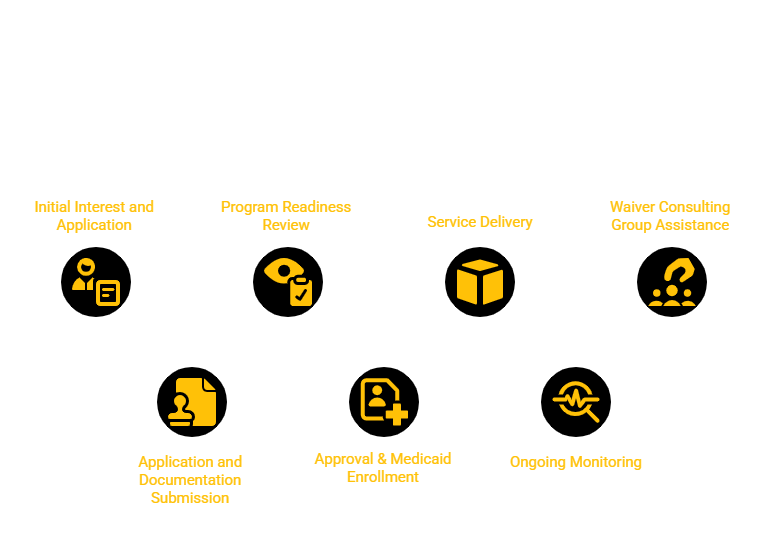
The enrollment process is a structured journey that requires diligence and attention to detail. Initially, the agency must submit a provider enrollment application through the Indiana Medicaid Provider Portal. This stage requires the submission of all corporate documentation, including Articles of Incorporation, staff credentialing records, and proof of insurance. It is critical that the information provided is consistent across all documents, as discrepancies can lead to significant delays.
Once the initial application is filed, the FSSA will conduct a Program Readiness Review. This phase is designed to assess the provider’s ability to meet the clinical and operational standards required for HCBS programs. During this review, state officials may evaluate the agency’s conflict-of-interest safeguards, documentation systems, staff training curricula, and participant protection policies. Approval is only granted once the agency demonstrates that it can reliably uphold the high standards set by the state.
What Are the Essential Staffing and Training Requirements?
The quality of a Case Management agency is largely defined by the caliber of its staff. The Case Management Supervisor or Program Director must possess a Bachelor’s or Master’s degree in a human services field—such as social work, psychology, nursing, or education—along with demonstrated experience in waiver services and staff supervision. They are responsible for ensuring that all services remain compliant with Medicaid mandates.
Case Managers themselves are expected to hold at least a Bachelor’s degree in a human services field. Because they are the primary point of contact for the participant, they must be well-versed in person-centered planning. All staff members are required to undergo comprehensive training programs, which must be refreshed through annual continuing education. These training modules typically cover:
- The HCBS Settings Rule and person-centered service planning.
- Strict protocols for conflict-free case management.
- Abuse prevention, incident reporting, and emergency safety procedures.
- Mandatory HIPAA compliance and confidentiality standards.
- Competency reassessments to ensure the continuous quality of service.
Frequently Asked Questions
Does an agency need to be a large organization to become a Case Management provider?
No, there is no specific size requirement. However, the agency must have the capacity to maintain a comprehensive policy manual, track participant data securely, meet staffing educational requirements, and ensure conflict-free operations, regardless of the agency's scale.
What exactly does "conflict-free" mean in this context?
Conflict-free case management means that the entity responsible for assessing a participant's needs and creating their service plan cannot also be the entity that is paid to provide the direct daily services (like home health or personal care) identified in that plan. This prevents the provider from having a financial incentive to authorize more or fewer services than the participant actually needs.
How long does the entire startup process take?
From the initial business formation to the launch of services, providers typically experience a timeline spanning approximately 5–8 months. This includes 1–2 months for business and compliance setup, 2–3 months for hiring and policy development, 60–90 days for Medicaid enrollment and readiness reviews, and 30–45 days for final billing system configuration.
Key Takeaway
Becoming an approved Indiana Case Management provider requires a proactive approach to regulatory compliance, a commitment to person-centered care, and a thorough understanding of the FSSA’s operational expectations. By prioritizing conflict-free service delivery and investing in high-quality staff training, provider agencies can effectively support the health, community access, and quality of life for Indiana’s Medicaid waiver participants.
Last verified: June 2024. This information is provided for educational purposes and reflects the general requirements for Medicaid HCBS programs. Agencies should always consult the official Indiana Family and Social Services Administration (FSSA) manuals and the latest provider bulletins for the most current regulatory updates and specific policy interpretations.