CASE MANAGEMENT SERVICES PROVIDER IN HAWAII
By Fatumata Kaba · 2025-07-16 · 5 min read
Coordinating services, supports, and resources to promote health, safety, and community integration is the cornerstone of case management for Hawaii’s vulnerable populations. Becoming a Medicaid Case Management Services provider in Hawaii involves navigating the rigorous regulatory frameworks established by the Department of Human Services (DHS) and the Department of Health (DOH) to ensure participants receive person-centered, high-quality care within their own communities.
What is the Role of Case Management in Hawaii’s Medicaid System?
Case Management Services serve as the bridge between individuals with disabilities, chronic conditions, or aging-related needs and the Medicaid HCBS waiver and state plan services required to sustain their independence. By acting as a central point of contact, case managers orchestrate a participant’s care, ensuring that medical, social, and support services are seamlessly aligned with the participant's unique life goals.
The primary function is to facilitate the Individualized Service Plan (ISP) process. This involves comprehensive assessments of a participant’s strengths, needs, and preferences, followed by the active coordination of resources. Whether linking a participant to community housing, specialized medical care, or employment training, the case manager monitors effectiveness, advocates for rights, and provides crucial crisis intervention when needed.
Which Agencies Govern Case Management Services?
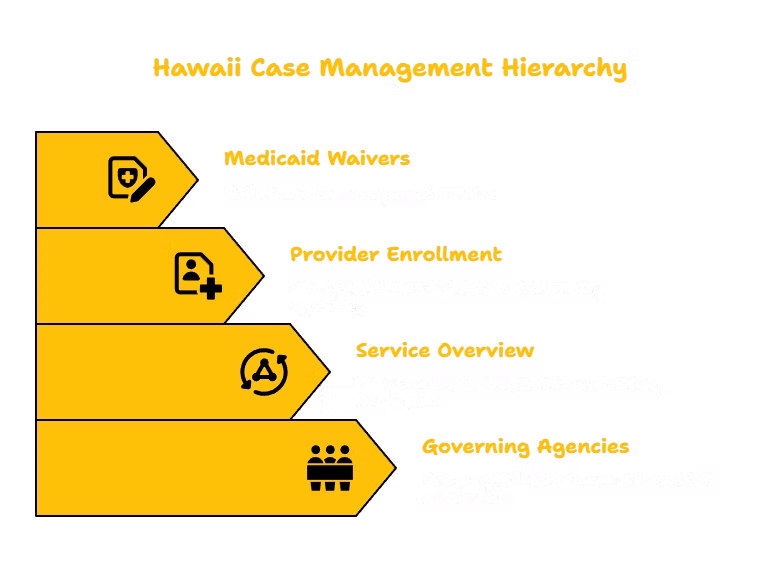
Understanding the hierarchy of regulatory oversight is essential for any aspiring provider. In Hawaii, multiple agencies collaborate to ensure that services meet both state and federal mandates for quality and integrity.
- Hawaii Department of Human Services (DHS) — Med-QUEST Division: The primary entity overseeing Medicaid provider enrollment, service authorization, and the mechanics of reimbursement for case management claims.
- Hawaii Department of Health (DOH) — Developmental Disabilities Division (DDD): Specifically responsible for administering Case Management under HCBS waivers for individuals with intellectual and developmental disabilities.
- Centers for Medicare & Medicaid Services (CMS): The federal authority that sets the foundational standards for person-centered planning, ensuring all state-level activities remain compliant with federal Medicaid regulations.
What are the Operational Requirements for Provider Approval?
Before an agency can begin serving participants, it must meet a series of prerequisite administrative and legal requirements. The process begins with establishing a formal business entity registered with the Hawaii Department of Commerce and Consumer Affairs (DCCA). Following incorporation, the agency must secure a federal Employer Identification Number (EIN) and a Type 2 National Provider Identifier (NPI) to function within the healthcare system.
Operational readiness is equally critical. Prospective providers must develop robust, participant-centered policies and procedures that cover documentation standards, HIPAA compliance, grievance handling, and quality assurance. Furthermore, agencies must maintain adequate general and professional liability insurance coverage, demonstrating a commitment to the safety and protection of both the organization and the participants it serves.
How Does the Med-QUEST Provider Enrollment Process Work?
The enrollment process with the Med-QUEST Division is a multi-phased journey that tests a provider’s administrative capacity and clinical readiness. Initially, the applicant must submit a provider enrollment application, clearly identifying their specific areas of expertise, such as Long-Term Services and Supports (LTSS) or IDD-specific coordination. This application acts as the agency's formal request to enter the Medicaid provider network.
Once the initial application is submitted, the agency must provide supporting documentation, including Articles of Incorporation, staff credentialing records, and a comprehensive set of operational templates. These samples—ranging from ISPs to crisis intervention protocols—are audited by DHS and DOH during a program readiness review. This review is designed to verify that the agency has the infrastructure to safeguard participants and maintain rigorous service coordination standards before they are authorized to bill for Medicaid services.
What Staffing and Training Mandates Apply?
Because case management is a high-touch, human-centric service, the qualifications of the staff are scrutinized heavily. The Case Management Program Supervisor must generally hold a Bachelor’s or Master’s degree in a human services field—such as social work, nursing, or psychology—and demonstrate verifiable experience in care coordination. Similarly, front-line Case Managers must hold at least a Bachelor’s degree and possess a deep understanding of Medicaid regulations.
Training is an ongoing requirement to ensure consistency and excellence. Every staff member must complete initial and recurring training modules covering several critical areas:
- Person-centered planning and community integration strategies.
- Mandatory HIPAA confidentiality and the protection of participant rights.
- Comprehensive abuse prevention, emergency response, and incident management protocols.
- Annual continuing education focused on evolving Medicaid case management best practices.
Frequently Asked Questions
What are the primary waiver programs that utilize Case Management?
Case Management Services are authorized under several key Hawaii programs, including the Developmental Disabilities/Intellectual Disabilities (DD/ID) Waiver, the Community Care Services (CCS) Program, and various QUEST Integration Long-Term Services and Supports (LTSS) programs.
How long should a new agency expect the launch process to take?
The timeline varies based on organizational readiness, but generally, business formation takes 1–2 weeks, the Med-QUEST application and readiness review spans 60–90 days, staff hiring takes 30–45 days, and final Medicaid enrollment and billing configuration requires 45–60 days.
What core documents must be included in an HCBS-Compliant Policy Manual?
A compliant manual must include detailed procedures for participant intake, assessment, and service planning; protocols for service coordination and crisis intervention; policies for incident reporting and grievance handling; and standards for HIPAA, billing, and audit readiness.
Waiver Consulting Group’s Start-Up Assistance Service
Waiver Consulting Group (WCG) supports case management agencies, care coordination organizations, and disability support providers in launching Medicaid-compliant Case Management Services under Hawaii’s HCBS and Medicaid programs. WCG provides comprehensive support through the following areas of work:
- Business registration and EIN/NPI setup.
- Medicaid provider enrollment and DHS case management certification support.
- Development of Case Management Services Policy & Procedure Manual.
- Staff credentialing templates and participant service planning documents.
- Medicaid billing system setup and claims management.
- Website, domain, and email setup.
- Participant intake, ISP development, and service monitoring templates.
- Emergency response and crisis intervention procedures.
- Quality assurance programs for service coordination and participant outcome tracking.
- Community networking and referral development strategies.
Key takeaway: Establishing a successful Case Management agency in Hawaii requires a strategic approach that prioritizes rigorous regulatory compliance, comprehensive staff training, and the development of robust internal policies to ensure long-term sustainability within the Medicaid provider network.
Last verified: [Insert Current Date]. Disclaimer: This article is for informational purposes only and does not constitute legal or professional advice. Always consult with the Hawaii Department of Human Services (DHS) Med-QUEST Division or a qualified professional regarding current Medicaid regulations and specific state requirements.