CASE MANAGEMENT SERVICES PROVIDER IN CONNECTICUT
By Fatumata Kaba · 2025-07-08 · 5 min read
Becoming a Case Management Services provider in Connecticut is a significant opportunity to support individuals with disabilities and complex needs in accessing essential Home and Community-Based Services (HCBS). By coordinating care under programs like the Connecticut Home Care Program for Elders (CHCPE) or the Acquired Brain Injury (ABI) waivers, provider agencies act as the vital link between state funding and meaningful, participant-centered health outcomes.
This guide outlines the regulatory framework, administrative requirements, and strategic steps necessary to establish a compliant and effective case management agency. Navigating the requirements of the Connecticut Department of Social Services (DSS) and the Department of Developmental Services (DDS) requires careful attention to detail and a robust understanding of federal Medicaid standards.
How do governing agencies influence case management in Connecticut?
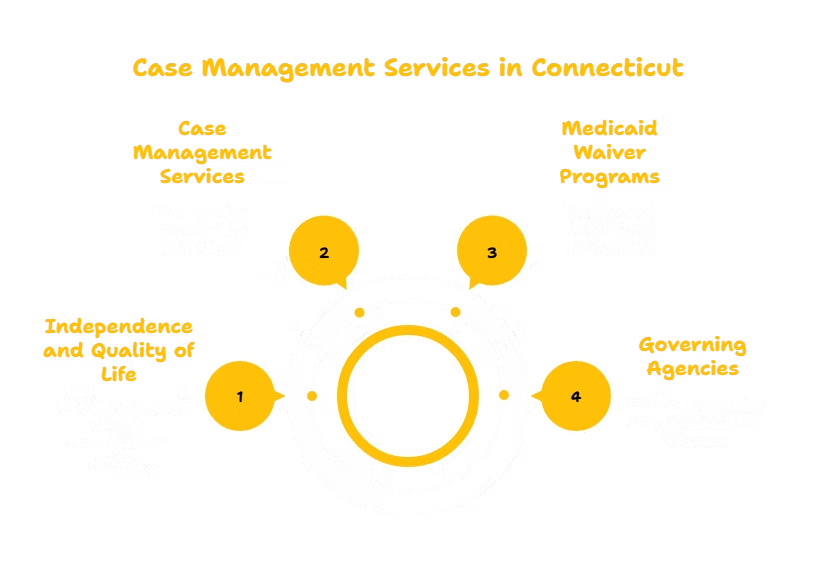
Case management in Connecticut operates under the jurisdiction of several key agencies that ensure service delivery aligns with federal and state regulations. The Connecticut Department of Social Services (DSS) serves as the primary administrator for most Medicaid waiver programs, overseeing provider enrollment and ensuring that contract standards are met for services like the PCA and ABI waivers. For organizations specializing in developmental disabilities, the Department of Developmental Services (DDS) acts as the lead agency, managing the HCBS IDD waiver and providing specific oversight for those populations.
These state agencies operate under the broader regulatory authority of the Centers for Medicare & Medicaid Services (CMS). CMS establishes the federal requirements for person-centered planning, which mandates that every individual receiving HCBS is treated as the primary architect of their own care. Providers must align their operational protocols with these standards, ensuring that all services prioritize the goals, needs, and preferences of the participant while maintaining strict adherence to Medicaid compliance and quality-of-care benchmarks.
What core functions must a Case Management agency provide?
Case management—often referred to as care management or service coordination—is defined by its role in fostering independence through structured support. Approved providers are responsible for assessing a client’s environment and health status to build a person-centered service plan. This plan serves as a roadmap, directing how various Medicaid and community services are utilized to support the participant's daily living, safety, and long-term health goals.
Beyond initial planning, providers are tasked with the ongoing monitoring and adjustment of these services. This includes coordinating linkages to vital resources such as transportation, housing, nursing, and durable medical equipment, while maintaining constant communication with families and interdisciplinary teams. Rigorous documentation, including detailed case notes and timely reassessments, is mandatory to satisfy the audit requirements of the state agencies and ensure the continuity of care.
- Conducting comprehensive assessments and developing individualized, person-centered service plans.
- Facilitating access to Medicaid and non-Medicaid community supports.
- Providing crisis planning and continuous monitoring of health and safety outcomes.
- Maintaining meticulous documentation of all care team meetings, reassessments, and service interventions.
What are the essential licensing and provider enrollment prerequisites?
Establishing an agency begins with formal business formation. An entity must be registered with the Connecticut Secretary of the State and secure an Employer Identification Number (EIN) from the IRS. Furthermore, a Type 2 National Provider Identifier (NPI) is required for billing purposes. These foundational steps ensure the business is legally recognized and prepared to interface with state systems.
The transition from a business entity to a Medicaid-authorized provider involves a multi-step enrollment process. Agencies must apply to either the DSS or the DDS depending on the specific waiver programs they intend to service, such as the CHCPE or the ABI waiver. Once authorization is granted by the respective department, the agency must enroll through the DSS Medicaid Provider Enrollment Portal. This involves submitting detailed staff credentials, quality assurance protocols, and proof of liability insurance to verify the agency’s capacity to deliver professional care coordination.
What documentation is required to ensure audit readiness?
A successful case management agency must maintain an extensive internal policy and procedure manual that satisfies state audits. This manual should outline the clinical and operational processes of the agency, including the methods for conducting assessments, the timelines for mandatory service plan updates, and the protocols for handling emergency or crisis situations. Clear, repeatable processes are the cornerstone of a compliant agency.
Additionally, providers must establish a robust documentation system. Whether digital or paper-based, this system must capture all pertinent client information while ensuring complete HIPAA compliance. Providers are required to keep organized records of consent forms, participant rights, and grievance resolution processes. Having these files readily available for review is a critical component of maintaining "good standing" as an approved Medicaid service provider.
- Articles of Incorporation and proof of formal business registration.
- Policy and procedure manual covering service coordination, incident reporting, and crisis management.
- Standardized tools for initial assessments, reassessments, and interdisciplinary care planning.
- Evidence of staff training protocols, including ethics, documentation standards, and HIPAA compliance.
How are staffing requirements managed in this sector?
The quality of a case management agency is fundamentally linked to the qualifications of its staff. Case managers or care coordinators typically hold a bachelor’s degree in nursing, social work, public health, or a closely related field. While specific waiver programs may have varying requirements regarding professional licensure, the overarching expectation is that staff possess documented experience in working with older adults or individuals with physical and intellectual disabilities.
Beyond initial hiring, agencies must invest in continuous staff development. Mandatory training areas include person-centered planning, cultural competency, and the ethical use of protected health information. Because case managers often perform home visits, they must possess a valid driver’s license and the logistical capability to travel to the individuals they serve. Regular supervisory reviews are essential to ensure that staff documentation remains accurate and that all service coordination efforts meet the high standards expected by state oversight agencies.
Frequently Asked Questions
How long does the approval process typically take?
The timeline varies based on the agency's preparedness, but the DSS/DDS provider enrollment phase usually takes 45–90 days, followed by an additional 30–60 days for Medicaid enrollment in the state portal.
What is the difference between CHCPE and the IDD Waiver?
The CHCPE is primarily for older adults needing assistance to remain in the community, while the IDD waiver is specifically designed for individuals with intellectual or developmental disabilities and is administered by the Department of Developmental Services.
Are providers required to use a specific electronic record system?
While the state may mandate specific reporting formats or portal usage for billing, agencies are generally responsible for maintaining their own internal systems that are HIPAA-compliant and capable of producing the required documentation for audits.
Key Takeaway
Launching a case management services agency in Connecticut requires a disciplined approach to business registration, regulatory compliance with DSS or DDS, and a commitment to high-quality, person-centered documentation. By meticulously following state-mandated enrollment steps and maintaining constant audit readiness, new agencies can effectively position themselves to serve vulnerable populations while operating within the established Medicaid HCBS framework.
Last verified: October 2023. This information is for educational purposes only and does not constitute legal or professional advice. Always refer to the official Connecticut Department of Social Services and Department of Developmental Services portals for the most current regulatory requirements and enrollment guidelines.