CASE MANAGEMENT SERVICES PROVIDER IN ARIZONA
By Fatumata Kaba · 2025-07-01 · 5 min read
COORDINATING PERSON-CENTERED SUPPORTS TO ENSURE QUALITY CARE AND ACCESS TO RESOURCES FOR INDIVIDUALS WITH DISABILITIES
Case Management Services in Arizona function as the essential administrative and clinical link between individuals with disabilities and the complex network of Medicaid-funded supports. These services are a core component of the Arizona Long Term Care System (ALTCS) and are delivered through Home and Community-Based Services (HCBS) Waivers to ensure that members receive personalized, high-quality care coordination and advocacy.
What is the Role of Governing Agencies in Arizona Case Management?
The provision of case management services in Arizona is governed by a tripartite structure of federal and state oversight. The Arizona Health Care Cost Containment System (AHCCCS) serves as the primary state agency, overseeing the ALTCS, HCBS programs, and the establishment of clinical and administrative standards for all Medicaid-funded services. By maintaining these standards, AHCCCS ensures that all case management delivery remains consistent with state-level health outcomes and quality benchmarks.
At the operational level, the Arizona Department of Economic Security (DES) – Division of Developmental Disabilities (DDD) acts as a critical intermediary. The DDD directly employs Support Coordinators who oversee member care and strictly monitors Qualified Vendor performance. Simultaneously, the federal Centers for Medicare & Medicaid Services (CMS) ensures that all Arizona programs adhere to federal mandates regarding person-centered planning, ensuring that every service plan is legally defensible and centered on the unique needs of the member.
What Are the Core Responsibilities of a Case Management Provider?
Case management agencies are tasked with serving as the primary point of communication among members, their families, health plans, and service providers. This requires a proactive approach to identifying member needs, linking them to appropriate community resources, and continuously monitoring the quality and efficacy of the services being delivered. The provider must act as a tireless advocate for the individual, ensuring that all interventions are aligned with their stated goals and health requirements.
Approved providers are responsible for a comprehensive range of clinical and administrative tasks, including:
- Conducting functional assessments and periodic reassessments to determine ongoing program eligibility and service requirements.
- Developing, implementing, and regularly updating person-centered Individual Support Plans (ISPs).
- Coordinating the delivery of HCBS services, managing provider schedules, and facilitating community support integration.
- Monitoring the safety, health, and overall satisfaction of the member through regular check-ins.
- Executing crisis planning, emergency response coordination, and thorough documentation of all progress or changes in condition.
How Do Agencies Meet Licensing and Provider Approval Requirements?
Establishing a case management agency in Arizona requires meticulous adherence to administrative and structural prerequisites. Before an agency can begin operations, it must be formally registered with the Arizona Corporation Commission. Following business registration, the entity must secure an Employer Identification Number (EIN) from the IRS and a National Provider Identifier (NPI Type 2), which are mandatory for all formal billing and contracting activities.
Beyond the initial business setup, providers must navigate the specific credentialing pathways required by payers. For agencies serving the broader ALTCS population, this involves contracting directly with Managed Care Organizations (MCOs) such as Mercy Care, Banner, or UnitedHealthcare. For those operating within the DDD framework, the agency must maintain active Qualified Vendor Agreement and Directory System (QVADS) registration. Successful providers invest in robust professional liability insurance and secure, HIPAA-compliant data systems to protect sensitive member information.
What Is the Sequence for Enrollment and Contracting?
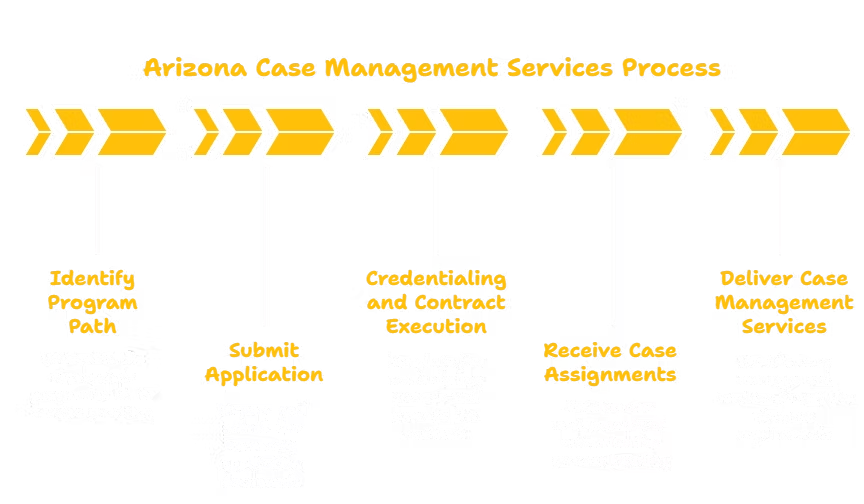
The path to becoming an authorized provider involves three distinct phases. First, an agency must define its programmatic path, determining whether it will focus on serving ALTCS/MCO members or supporting DDD member coordination. This choice dictates which department the agency must contact; typically, an agency will reach out to the relevant MCO provider relations department or the DDD vendor unit to express interest in joining their provider network.
Once the path is identified, the agency must submit a formal application. This package must include detailed business documentation, a description of the proposed case management model, and clear evidence of staff credentials. Agencies are also required to submit their internal quality assurance plans and samples of their service plans, tracking tools, and follow-up protocols. Once the application is approved, the agency enters the final phase of credentialing and system access, which concludes with authorized training on case assignments and billing procedures.
What Documentation and Staffing Standards Must Be Maintained?
Regulatory compliance hinges on the quality of an agency’s internal documentation and the qualifications of its staff. Every provider must maintain a comprehensive Policy & Procedure Manual that covers assessment tools, risk management, incident reporting, and HIPAA compliance. This manual serves as the operational blueprint for the agency and is subject to audit by AHCCCS or the DDD to ensure that every case note, service log, and monitoring report adheres to state standards.
Staffing requirements are equally rigorous. A standard Case Manager or Service Coordinator must typically possess a bachelor’s degree in social work, nursing, psychology, or a related field, supplemented by at least one to two years of experience in human services or HCBS coordination. Agencies must ensure that all staff members undergo regular training in person-centered planning, motivational interviewing, and cultural competence. If the agency utilizes a Clinical Supervisor, that individual must be a licensed professional, such as an LMSW or an RN, capable of providing high-level oversight for complex cases.
Frequently Asked Questions
What is the typical timeline to launch a case management agency?
The timeline varies based on the scope of the program. Business formation typically takes 1–2 weeks, while the MCO or DDD contracting process usually requires 60–90 days. Staff hiring, credentialing, and systems access add another 30–45 days, and AHCCCS billing configuration may take an additional 30–60 days.
Which Medicaid programs utilize these case management services?
Case management services are integral to the ALTCS Elderly and Physically Disabled (EPD) Waiver, the ALTCS Division of Developmental Disabilities (DDD) Waiver, Children’s Rehabilitative Services (CRS), the Arizona Early Intervention Program (AzEIP), and various MCO-managed care coordination programs.
What are the essential components of a compliant Policy & Procedure Manual?
A manual must include protocols for assessments and service planning, communication workflows, risk and safety planning templates, clinical documentation standards, HIPAA and record retention policies, client rights and consent procedures, and critical incident management reporting protocols.
Key Takeaway
Success as a Case Management Services Provider in Arizona requires a focus on rigorous regulatory compliance, professional staffing, and the ability to navigate the specific credentialing requirements of MCOs and the Division of Developmental Disabilities. By establishing robust internal policies and maintaining clear, documented communication with governing agencies, providers ensure the delivery of high-quality, person-centered care that meets the evolving needs of Arizona's Medicaid population.
Last verified: October 2023. Disclaimer: This guide is for informational purposes and does not constitute legal or professional advice. Requirements for Medicaid providers may change; always consult the latest AHCCCS or DDD provider manuals and official state communications before making business decisions.