CARE COORDINATION SERVICES PROVIDER IN ALASKA
By Fatumata Kaba · 2025-07-03 · 5 min read
Care Coordination services in Alaska are essential components of the Home and Community-Based Services (HCBS) Medicaid Waiver system, designed to connect vulnerable individuals with critical long-term supports. These services function as the primary link between participants, service providers, and the Alaska Department of Health’s Division of Senior and Disabilities Services (SDS), ensuring that person-centered plans are effectively developed, implemented, and monitored to meet individual health and safety needs.
For organizations looking to enter this field, operating as an approved Care Coordination agency requires rigorous adherence to state regulatory standards and federal oversight. This guide outlines the professional landscape for providers in Alaska, focusing on the governing structures, operational requirements, and the administrative pathway necessary to deliver these vital services across the state’s various Medicaid waiver programs.
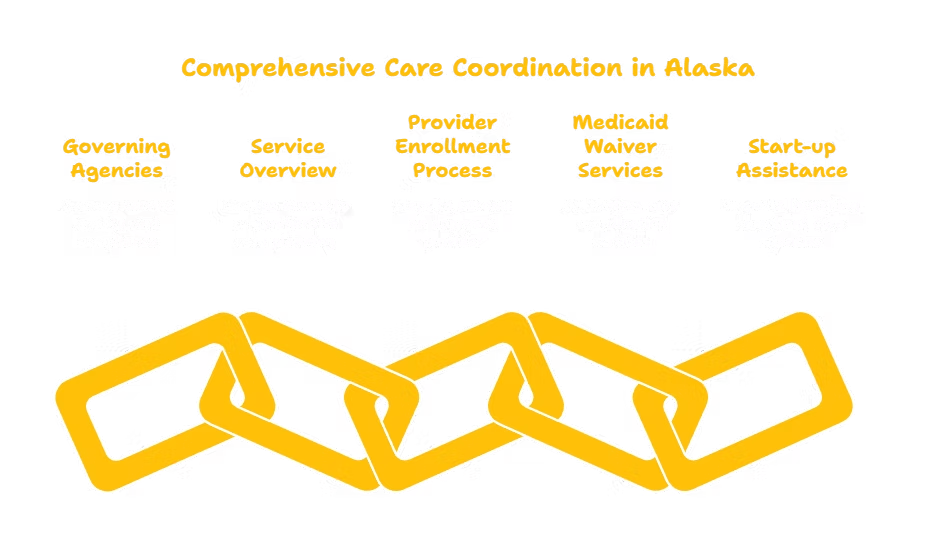
What Role Do Governing Agencies Play in Care Coordination?
The delivery of Care Coordination services is managed through a multi-tiered regulatory framework. At the state level, the Alaska Department of Health, specifically the Division of Senior and Disabilities Services (SDS), acts as the primary governing body. SDS is responsible for approving agencies, establishing the standards for care planning, and conducting ongoing oversight to ensure service quality and regulatory compliance. Any organization wishing to operate in this space must align its internal operations with the specific requirements set forth by SDS.
Complementing state oversight, Alaska Medicaid manages the financial and provider enrollment aspects of the program. This includes the administration of provider enrollment, the management of billing codes, and the final reimbursement process for rendered services. Furthermore, the federal Centers for Medicare & Medicaid Services (CMS) provides the overarching mandate for HCBS waivers. CMS enforces federal regulations regarding person-centered planning, the integrity of service delivery, and the protection of participant rights, ensuring that Alaska’s programs remain consistent with national standards.
How Are Care Coordination Services Defined and Delivered?
Care Coordination services are designed to navigate complex health and social systems on behalf of the participant. The service is fundamentally person-centered, meaning that every action, assessment, and plan must prioritize the individual’s unique strengths, preferences, and personal goals. Providers are tasked with moving beyond simple administrative oversight to become active facilitators of the participant's long-term care strategy.
Approved providers are authorized to deliver a suite of essential activities that maintain service continuity and quality. These include:
- Conducting comprehensive person-centered assessments and developing individualized service plans.
- Performing regular monitoring and maintaining detailed documentation of service outcomes.
- Facilitating coordination between the individual, their healthcare providers, and other waiver service agencies.
- Providing assistance with essential social needs, such as securing stable housing, reliable transportation, and access to community resources.
- Managing crisis situations and ensuring that critical incidents are documented and resolved according to state guidelines.
- Advocating for the rights of the client to ensure goal achievement and access to entitlements.
What Are the Prerequisites for Provider Licensing and Approval?
Establishing an agency for Care Coordination requires meeting specific administrative and structural prerequisites before an application can be submitted to the state. Prospective providers must first formalize their business entity by registering with the Alaska Division of Corporations, Business and Professional Licensing. This legal foundation is necessary before obtaining an Employer Identification Number (EIN) from the IRS and a Type 2 National Provider Identifier (NPI), which is required for all organizational healthcare billing.
In addition to legal and tax status, the agency must maintain an administrative office physically located within Alaska. This office must be equipped with secure, HIPAA-compliant storage for client records and sensitive documentation. Furthermore, leadership must demonstrate a clear commitment to SDS ethical standards and possess robust documentation systems capable of producing accurate case notes, service plans, and monitoring reports that satisfy state audit requirements.
How Do You Navigate the SDS Provider Enrollment Process?
The path to becoming an approved provider is a sequential process that begins with an expression of interest to the Division of Senior and Disabilities Services. Applicants must contact SDS to obtain the official Care Coordination Services application packet and fulfill the requirement of attending a mandatory orientation session, which provides essential context on the current regulatory landscape and service delivery expectations.
Following orientation, the agency must submit its formal application, which includes comprehensive organizational data, service descriptions, and detailed internal control policies. A critical portion of this phase involves the credentialing review, where the agency must submit background checks, resumes, and certification evidence for all proposed Care Coordinators. Once SDS grants approval, the agency then proceeds to enroll with Alaska Medicaid through the Conduent MMIS system. This final step involves selecting the appropriate billing codes for the specific waivers the agency intends to serve and signing the provider agreement to activate the billing portal.
Which Medicaid Waivers Authorize Care Coordination Services?
Care Coordination is a cornerstone service for several key Medicaid waiver programs in Alaska. These waivers target specific populations, ensuring that those with disabilities or age-related needs have the support necessary to live independently in their communities. Agencies must be familiar with the nuances of each program to provide effective oversight.
- Alaskans Living Independently (ALI) Waiver: Focused on supporting seniors and adults with physical disabilities.
- Adults with Physical and Developmental Disabilities (APDD) Waiver: Designed to provide comprehensive support to adults who meet specific disability criteria.
- Individuals with Intellectual and Developmental Disabilities (IDD) Waiver: Targeted at supporting independence and community integration for this population.
- Children with Complex Medical Conditions (CCMC) Waiver: Specifically tailored to support children requiring high levels of medical intervention.
Frequently Asked Questions
What are the baseline education requirements for a Care Coordinator?
Care Coordinators must hold at least a bachelor’s degree in a human services field, such as social work, psychology, or nursing. Additionally, they must have a minimum of one year of experience in case management or working with individuals with disabilities and must complete all required SDS-approved training sessions.
How long is the total timeline for launching a Care Coordination agency?
The timeline varies based on organizational readiness, but generally spans several months. Business formation takes roughly 1–2 weeks, followed by an SDS application and orientation phase of 30–60 days, a credentialing period of 30–45 days, and a final Medicaid enrollment and billing setup phase of 45–60 days.
What must be included in the SDS-compliant Policy & Procedure Manual?
The manual must detail protocols for intake and eligibility, service planning and reassessment timelines, emergency and critical incident response, client advocacy, HIPAA and confidentiality measures, staff training standards, and billing integrity protocols.
Key Takeaways for Prospective Providers
Launching a Care Coordination agency in Alaska is a significant undertaking that requires strict adherence to SDS and Medicaid administrative guidelines. Success depends on maintaining high standards of documentation, ensuring staff possess the necessary credentials, and remaining updated on the evolving requirements of Alaska’s various HCBS waivers. By focusing on robust internal controls, professional development, and unwavering commitment to person-centered advocacy, agencies can build a sustainable and impactful operation within the state's healthcare landscape.
Last verified: October 2023. This content is for informational purposes only and does not constitute legal or professional advice. Always consult with the Alaska Department of Health and official SDS guidelines for the most current regulatory requirements.