BEHAVIORAL SUPPORT SERVICES PROVIDER IN GEORGIA
By Fatumata Kaba · 2025-07-14 · 5 min read
Behavioral Support Services in Georgia are specialized clinical services authorized under the New Options Waiver (NOW) and Comprehensive Supports Waiver Program (COMP) to assist individuals with developmental disabilities. By utilizing person-centered strategies, providers deliver functional assessments and individualized intervention plans that help participants manage behavioral challenges, improve emotional regulation, and achieve greater independence within their communities.
Navigating the Regulatory Landscape: DBHDD, DCH, and CMS
The delivery of Behavioral Support Services in Georgia requires adherence to a multi-tiered regulatory framework. At the federal level, the Centers for Medicare & Medicaid Services (CMS) mandates that all services under the Home and Community-Based Services (HCBS) waivers remain compliant with strict person-centered planning requirements and federal health standards. Understanding the division of labor between state agencies is essential for any agency owner planning to enter this market.
In Georgia, the Department of Behavioral Health and Developmental Disabilities (DBHDD) serves as the primary governing body responsible for the administration and oversight of Behavioral Support Services. Providers must satisfy DBHDD’s rigorous quality standards to maintain their standing within the waiver programs. Concurrently, the Department of Community Health (DCH) manages the fiscal and logistical components of the program, including Medicaid provider enrollment, service authorization, and the reimbursement processes necessary to maintain operational viability.
What Are the Core Components of Behavioral Support Services?
Behavioral Support Services are fundamentally designed to replace challenging behaviors with functional, adaptive skills. Providers act as clinical partners to the participant, starting with a comprehensive Functional Behavioral Assessment (FBA) to determine the "why" behind specific actions. This assessment serves as the foundation for all subsequent care, ensuring that interventions are evidence-based and tailored to the individual’s unique cognitive and emotional profile.
Once the FBA is complete, the provider is responsible for developing and implementing a Positive Behavior Support Plan (PBSP). This document is a living guide that outlines proactive strategies, reactive de-escalation techniques, and skill-building goals. Approved providers are tasked with a wide range of responsibilities to ensure these plans remain effective over time, including:
- Conducting direct behavioral interventions to implement the strategies identified in the PBSP.
- Providing training and mentorship to family members, caregivers, and direct support staff to ensure consistency in behavior management.
- Monitoring, revising, and updating PBSPs regularly based on objective progress data and participant feedback.
- Establishing and executing crisis prevention and emergency response protocols to ensure safety in all environments.
Establishing Your Agency: Licensing and Provider Requirements
Launching a Behavioral Support Services agency is a formal process that begins with establishing your corporate and legal identity. Before engaging with state agencies, owners must secure an Employer Identification Number (EIN) from the IRS and a Type 2 National Provider Identifier (NPI). These identifiers are the bedrock of your ability to bill for services and interact with the Georgia Medicaid Management Information System (GAMMIS).
Beyond basic business registration with the Georgia Secretary of State, providers must prove they have the clinical capacity to serve the population. This includes maintaining professional and general liability insurance and creating a robust internal infrastructure. Agencies must develop comprehensive policy manuals that dictate how they will handle client rights, HIPAA compliance, grievance procedures, and the specific clinical methodologies they intend to employ. A failure to document these internal systems during the application phase is a primary cause of delay in the provider enrollment process.
The Roadmap to Provider Enrollment and Readiness
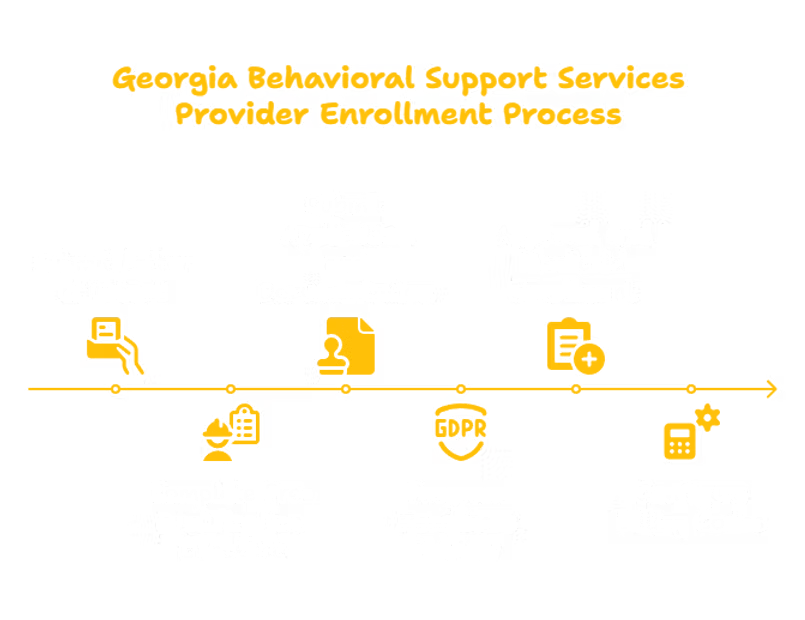
The pathway to becoming an active provider involves a sequenced approach, starting with the submission of a Letter of Intent to the DBHDD. This formal communication initiates the process, signaling the agency's intent to provide Behavioral Support Services. Following this, applicants must complete a pre-qualification checklist that covers operational readiness, including staffing plans, insurance verification, and internal policy development.
The "Program Readiness Review" is the most critical phase of the journey. During this stage, the DBHDD evaluates the provider's capability to deliver high-quality, compliant care. This review scrutinizes staff credentials, the effectiveness of the proposed behavior planning systems, and the agency’s commitment to participant rights. Once the DBHDD grants approval, the final step involves completing the Medicaid enrollment through GAMMIS and configuring specific billing codes for FBAs, PBSP development, and ongoing intervention services.
Staffing, Training, and Clinical Credentialing
Quality of care in behavioral support is entirely dependent on the caliber of the staff. The Clinical Lead or Supervisor is the anchor of the agency, typically requiring an active Georgia license or certification as a Board Certified Behavior Analyst (BCBA), Licensed Professional Counselor (LPC), or psychologist. These leaders are responsible for overseeing the clinical rigor of all behavioral plans and ensuring that the organization remains in compliance with professional standards.
Direct support roles, such as Behavior Specialists or Technicians, must meet minimum educational requirements and undergo extensive training before interacting with participants. All staff members, regardless of their role, are required to complete mandatory training programs that cover:
- HIPAA confidentiality, patient privacy, and the protection of client rights.
- Evidence-based Positive Behavior Support (PBS) techniques and de-escalation strategies.
- Procedures for reporting incidents and emergency preparedness.
- Annual continuing education to keep current with advancements in behavioral intervention best practices.
Frequently Asked Questions
What is the typical timeline for launching a Behavioral Support agency?
The total timeline generally spans several months. Business formation and setup usually take 1–2 weeks, while the DBHDD application and readiness review process typically takes 60–90 days. Subsequent staff hiring and credentialing take 30–45 days, and final Medicaid enrollment and billing configuration require 45–60 days.
Which Medicaid waivers cover Behavioral Support Services?
Behavioral Support Services are specifically authorized under Georgia's New Options Waiver (NOW) and the Comprehensive Supports Waiver Program (COMP).
What documentation is essential for the DBHDD application?
Applicants must provide Articles of Incorporation, proof of EIN/NPI, professional staff licenses, and a comprehensive Policy & Procedure Manual. This manual must explicitly cover participant intake, behavior assessment protocols, PBSP development, staff training systems, and audit readiness procedures.
Key Takeaway
Launching a Behavioral Support Services agency in Georgia requires a disciplined approach to clinical compliance, administrative organization, and regulatory alignment. By focusing on the foundational requirements set forth by the DBHDD and DCH, and ensuring that all clinical staff are properly credentialed and trained, providers can build a sustainable agency that meaningfully improves the quality of life for individuals with developmental disabilities.
Last verified: October 2023. This information is intended for educational purposes and does not constitute legal or professional advice. Requirements for Medicaid waiver programs are subject to change by the Georgia Department of Community Health and the Department of Behavioral Health and Developmental Disabilities. Please consult with state agencies or professional advisors for the most current regulatory updates.