BEHAVIORAL HEALTH SERVICES PROVIDER IN WYOMING
By Fatumata Kaba · 2026-04-14 · 5 min read
Becoming a behavioral health services provider in Wyoming requires a disciplined approach to clinical compliance, rigorous documentation standards, and successful navigation of the state’s Medicaid enrollment landscape. Agencies that provide these services play a critical role in supporting individuals with psychiatric conditions, developmental disabilities, and emotional disorders by delivering evidence-based interventions in homes, clinics, and community settings across the state.
This guide serves as a professional roadmap for administrators and founders seeking to establish and operate a Medicaid-approved behavioral health agency in Wyoming. By aligning your operational framework with the requirements of the Wyoming Department of Health and Medicaid’s Division of Healthcare Financing, your organization can effectively address the growing demand for mental health stability and positive behavioral outcomes for Wyoming’s most vulnerable populations.
How Does the Regulatory Framework Govern Behavioral Health in Wyoming?
The provision of behavioral health services in Wyoming is subject to oversight by several key state agencies. The Wyoming Department of Health—specifically the Behavioral Health Division and the Division of Healthcare Financing—holds primary responsibility for policy development, service monitoring, and the allocation of funding. These agencies establish the standards for clinical quality and ensure that service delivery remains consistent with Medicaid’s mission to provide accessible, high-quality care.
In addition to these departments, clinical oversight is managed by professional licensing boards, such as the Wyoming Board of Psychology and various boards governing counselors and therapists. These bodies ensure that every practitioner holds a valid, active license and adheres to the ethical standards of their discipline. Coordination between Medicaid Provider Services, which handles enrollment and reimbursement, and local case management agencies, which facilitate assessments and care planning, is essential for maintaining the operational integrity of your agency.
What Are the Core Behavioral Health Services and Delivery Models?
Behavioral health services in Wyoming are designed to improve daily functioning, emotional regulation, and social participation. These services must be firmly rooted in medical necessity, evidenced by a formal diagnosis, and documented within an Individualized Plan of Care (IPC) or an equivalent treatment plan. Providers are expected to utilize a range of interventions tailored to the unique clinical needs of the participant, whether they are a child under 21 accessing EPSDT services or an adult receiving supports through a Comprehensive or Supports Waiver.
- Diagnostic assessments and comprehensive psychological evaluations.
- Individual, family, and group therapy sessions.
- Behavioral therapy, including specialized Applied Behavior Analysis (ABA).
- Functional Behavior Assessments (FBAs) and the creation of ongoing behavior support plans.
- Crisis intervention, de-escalation support, and trauma-informed recovery services.
- Skill-building in communication, emotional regulation, and daily coping strategies.
- Medication management support provided by qualified, licensed medical professionals.
What Are the Prerequisites for Provider Enrollment and Licensure?
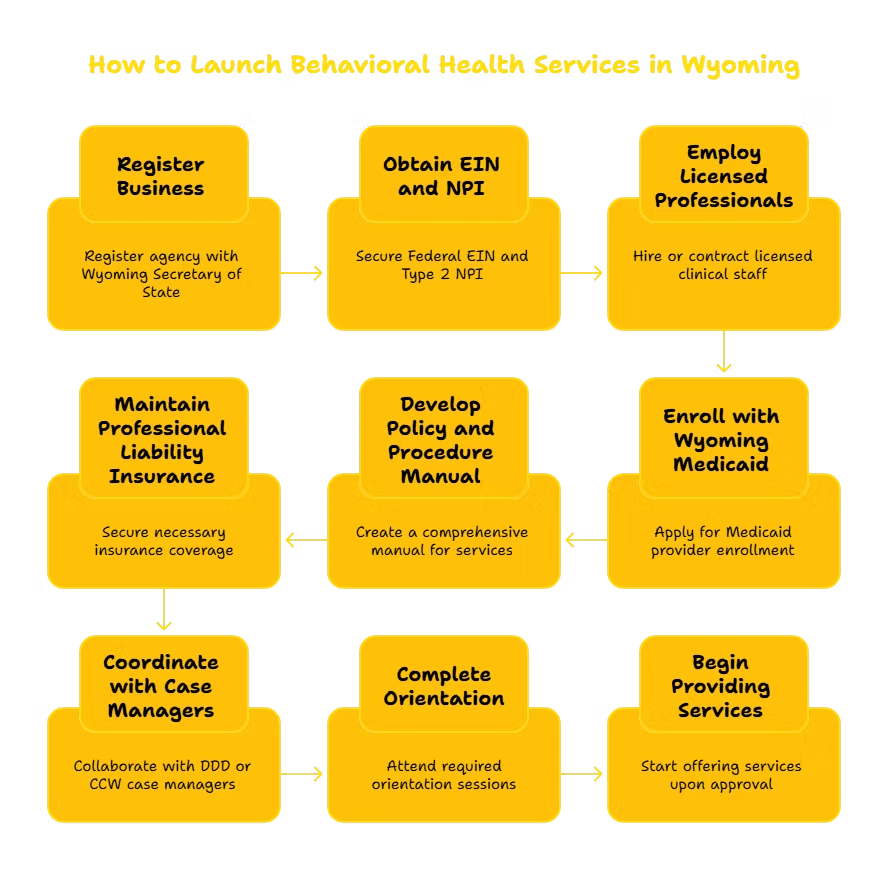
To begin the process of becoming a Medicaid provider, an agency must first satisfy foundational business and clinical requirements. This involves formal registration with the Wyoming Secretary of State, obtaining a Federal Employer Identification Number (EIN), and securing a Type 2 National Provider Identifier (NPI). These administrative milestones provide the legal framework for your agency to conduct business and bill for services.
Beyond these filings, you must establish an infrastructure that supports compliance and high-quality care. This includes securing professional liability insurance, enrolling with Wyoming Medicaid as a behavioral health provider or outpatient mental health clinic, and developing a comprehensive Policy & Procedure Manual. Your agency must also verify that all staff hold the appropriate credentials and that internal systems for tracking confidentiality, service documentation, and clinical supervision are operational before billing begins.
What Is the Required Documentation for Operational Compliance?
Documentation serves as the primary record of service delivery and is the foundation for audit readiness. A robust Policy & Procedure Manual must be maintained at all times, covering critical areas such as assessment protocols, treatment planning standards, and the templates used for progress notes. These documents must clearly define how staff will handle crises, implement suicide prevention protocols, and maintain patient confidentiality in accordance with HIPAA regulations.
- Formal proof of Medicaid enrollment.
- A standardized Policy & Procedure Manual encompassing consent, participant rights, and discharge planning.
- Detailed session note and treatment plan templates.
- Verification of staff licenses, certifications, and background checks.
- Data sheets and tracking mechanisms for behavior support plans.
- Records of staff training in HIPAA, abuse prevention, and cultural competency.
How Are Staffing Requirements and Clinical Roles Defined?
The quality of your behavioral health program depends on the caliber of your clinical staff. Licensed Mental Health Professionals (LPMHs)—such as Licensed Professional Counselors (LPCs), Licensed Clinical Social Workers (LCSWs), and Licensed Marriage and Family Therapists (LMFTs)—are the backbone of therapeutic service delivery. These professionals must maintain active Wyoming licenses, complete mandated continuing education, and demonstrate proficiency in person-centered care.
For agencies providing behavioral therapy, Board Certified Behavior Analysts (BCBAs) are essential for developing and supervising ABA treatment plans. In many cases, behavioral technicians or paraprofessionals will deliver direct support under the close supervision of these clinicians. Regardless of the role, all staff must be thoroughly trained in emergency response, documentation requirements, and the ethical standards governing their respective fields of practice.
Frequently Asked Questions
What is the typical timeline for launching a behavioral health agency?
The launch process generally follows a multi-phase timeline. Business registration and manual development typically require 2–3 weeks. Clinical staff hiring and credentialing can take 30–60 days, while the Medicaid provider enrollment process often spans 2–3 months. Services can generally begin once provider credentialing is complete and individual treatment plans are approved.
Which Medicaid programs cover these services?
Services are covered under the Wyoming Medicaid State Plan, which includes psychotherapy and evaluations. Additionally, the Comprehensive and Supports Waivers cover behavioral supports for individuals with intellectual or developmental disabilities. For children under 21, services are accessible through the Early and Periodic Screening, Diagnostic, and Treatment (EPSDT) benefit when deemed medically necessary.
What is the role of a Case Management Agency?
Case management agencies and mental health centers are responsible for coordinating the participant's path through the behavioral health system. They manage assessments, assist with the referral process, and ensure that the services outlined in the Individualized Plan of Care (IPC) are being provided according to the state’s requirements.
Key Takeaways for Provider Success
Success as a behavioral health provider in Wyoming is contingent upon the alignment of your clinical practices with state-mandated documentation and billing standards. By meticulously preparing your administrative infrastructure, prioritizing staff credentialing, and maintaining strict adherence to Medicaid’s medical necessity guidelines, your agency will be well-positioned to provide essential, high-impact behavioral health services to Wyoming’s residents.
Waiver Consulting Group provides start-up assistance for mental health professionals and agencies looking to navigate the Medicaid enrollment process, develop compliant Policy & Procedure Manuals, and integrate seamlessly into Wyoming’s behavioral health ecosystem. Our services include support for audit readiness, HIPAA compliance tools, and clinical staff onboarding to ensure your agency is prepared for long-term operational success.
Last verified: September 2023. This content is provided for informational purposes only and does not constitute legal or professional advice. Always consult the latest Wyoming Department of Health guidelines and administrative statutes for the most current regulatory requirements.