BEHAVIORAL HEALTH SERVICES PROVIDER IN WISCONSIN
By Fatumata Kaba · 2026-04-14 · 6 min read
SUPPORTING MENTAL HEALTH, EMOTIONAL WELLNESS, AND BEHAVIORAL STABILITY FOR INDIVIDUALS IN HOME AND COMMUNITY SETTINGS
Behavioral health services in Wisconsin serve as a cornerstone of the state’s long-term care ecosystem, providing critical mental health and behavioral supports to individuals navigating emotional disorders, psychiatric diagnoses, developmental disabilities, or complex behavioral challenges. By shifting care from institutional settings to home and community-based environments, these services foster stabilization, promote recovery, and empower participants to achieve greater independence through person-centered, evidence-based clinical interventions.
For providers and agencies, operating within the Wisconsin Medicaid framework requires a robust understanding of both State Plan services and Home and Community-Based Services (HCBS) waivers. Whether supporting a participant through IRIS, Family Care, or the Children’s Long-Term Support (CLTS) Waiver, providers must align their clinical practices with state regulations and individual treatment plans to ensure both program compliance and high-quality care.
How Do Governing Agencies Regulate Behavioral Health Providers?
The regulatory environment for behavioral health in Wisconsin is structured to ensure that every provider meets high standards of clinical excellence and fiscal responsibility. The Wisconsin Department of Health Services (DHS) serves as the primary regulator, overseeing provider qualifications, licensing mandates, and the overarching framework for Medicaid reimbursement. This agency ensures that all services remain compliant with federal HCBS settings rules and state-specific behavioral health mandates.
Operationalizing these services involves multiple agencies, each with a distinct role in the provider lifecycle. ForwardHealth is the central portal for all Medicaid provider enrollment, authorization of services, and claims processing. Simultaneously, IRIS Consultant Agencies and Managed Care Organizations (MCOs) act as the gatekeepers for waiver-based services, conducting the necessary reviews to ensure that a provider's proposed intervention is clinically appropriate and aligned with the participant’s individualized service plan.
Clinical integrity is maintained by the Wisconsin Department of Safety and Professional Services (DSPS). Because behavioral health relies on the expertise of trained professionals, DSPS manages the licensure for psychologists, counselors, and therapists. Providers must maintain strict alignment with these licensure requirements to ensure that every service billed to Medicaid is performed by an appropriately credentialed practitioner.
What Scope of Services Can Behavioral Health Providers Offer?
The core objective of behavioral health services is to treat mental, emotional, and behavioral disorders while providing participants with the tools to improve their daily functioning and social integration. Because needs vary widely across the population—ranging from children in the CLTS program to adults in the IRIS waiver—providers often offer a versatile spectrum of interventions that can be delivered in-home, in the community, or via outpatient clinical settings.
Covered services typically encompass a range of therapeutic and supportive interventions designed to address the unique behavioral health diagnosis of the participant. These include:
- Individual, group, or family psychotherapy.
- Behavioral therapy and applied behavior analysis (ABA).
- Crisis intervention and de-escalation support.
- Psychiatric assessments and ongoing medication management.
- Case management and formal treatment planning.
- Skill-building for emotion regulation, self-advocacy, and daily living.
- In-home or community-based behavioral support.
- Peer support and specialized recovery coaching.
What Are the Essential Requirements for Provider Enrollment?
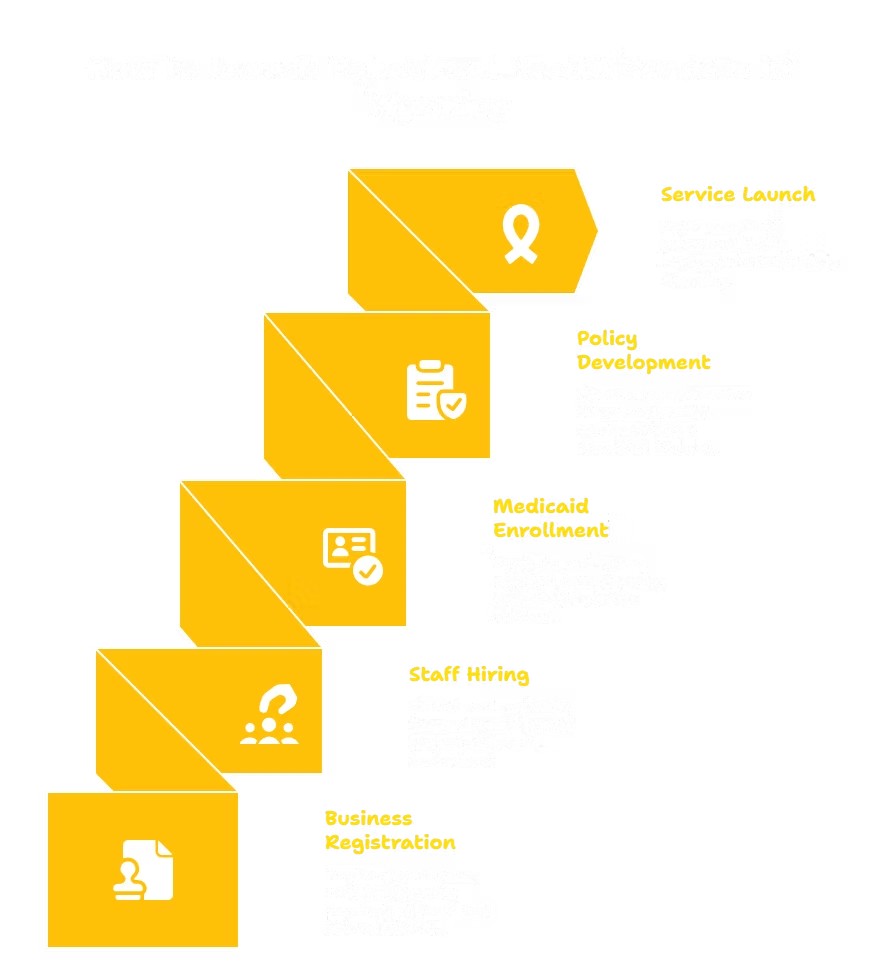
Establishing a behavioral health agency in Wisconsin is a multi-phased process that requires both business registration and clinical readiness. Before a provider can bill ForwardHealth, they must first secure their legal standing in the state. This begins with registering the business entity with the Wisconsin Department of Financial Institutions (DFI) and obtaining a Federal Employer Identification Number (EIN) and a Type 2 National Provider Identifier (NPI).
Once the business is legally established, the agency must focus on the clinical infrastructure required for approval. This includes employing or contracting licensed behavioral health professionals—such as LCSWs, LPCs, LMFTs, or Psychologists—and registering the agency as a mental health clinic or therapy provider with ForwardHealth. Furthermore, if the agency intends to serve the HCBS population, it must apply for inclusion in IRIS and MCO provider networks, which often requires a secondary vetting process to ensure the provider can meet the unique demands of waiver-based care.
Central to this process is the development of a comprehensive Behavioral Health Services Policy & Procedure (P&P) Manual. This document serves as the backbone of the agency's operations, detailing everything from intake procedures and clinical supervision protocols to crisis intervention strategies and HIPAA compliance. Without a rigorous, written set of policies, agencies risk failing the audit requirements necessary for continued participation in Wisconsin’s Medicaid programs.
How Do Agencies Navigate the Enrollment and Documentation Process?
The path to becoming an approved provider is structured into sequential steps, starting with initial business setup and moving toward formal network authorization. Agencies must complete their ForwardHealth enrollment application with precision, ensuring that all staff rosters are current and that all professional licenses held by staff members are in good standing with the DSPS. Failure to maintain accurate credentialing records is a primary cause of billing delays and potential audits.
Documentation requirements are extensive and serve as the official record of medical necessity. Agencies must demonstrate that they have robust systems in place to handle sensitive client data and that they follow strict protocols for clinical documentation. These include:
- Intake and diagnostic assessment documentation.
- Detailed treatment planning and periodic plan reviews.
- Documented crisis intervention and safety planning records.
- HIPAA-compliant session notes and progress reports.
- Clinical supervision logs for non-independent practitioners.
- Incident reporting and formal discharge planning procedures.
Frequently Asked Questions
What is the difference between state plan services and waiver-based services?
State Plan services are generally available to all Medicaid-eligible individuals to treat specific clinical conditions, whereas waiver-based services like IRIS or CLTS are designed specifically for individuals who require long-term care to live independently in the community. Waiver services often provide more flexibility in how supports are delivered, but they require prior authorization from an MCO or IRIS consultant.
Do all behavioral health staff need to be licensed by the state?
Clinical professionals providing psychotherapy or behavioral treatment—such as therapists, psychologists, and counselors—must hold active, valid licenses issued by the Wisconsin Department of Safety and Professional Services (DSPS). Behavioral support technicians who operate under direct clinical supervision may have different educational requirements, but they must still meet the training and background check standards set forth by DHS.
How long does the overall process typically take for a new agency?
The timeline varies based on the agency's preparation, but the process generally spans several months. Business registration typically takes 3–4 weeks, followed by 45–60 days for ForwardHealth enrollment and P&P development. Finalizing approvals to join IRIS or MCO networks can take an additional 2–3 months. Service delivery can only commence once these authorizations are officially granted.
WAIVER CONSULTING GROUP’S START-UP ASSISTANCE SERVICE — WISCONSIN BEHAVIORAL HEALTH PROVIDER
WCG assists licensed professionals and agencies in launching compliant, high-quality behavioral health services under Wisconsin Medicaid and waiver programs. Our scope of work includes:
- ForwardHealth and waiver program enrollment.
- Behavioral Health P&P Manual creation.
- Treatment plan, progress note, and supervision log templates.
- Staff credentialing, licensing, and clinical documentation setup.
- Safety, privacy, and HIPAA compliance tools.
- Audit readiness and performance monitoring support.
Key Takeaway: Successful behavioral health service delivery in Wisconsin hinges on the integration of rigorous clinical standards with a thorough understanding of the ForwardHealth billing system. By prioritizing comprehensive policy development, ensuring staff credentialing meets state mandates, and maintaining transparent communication with IRIS and MCO entities, agencies can effectively support the behavioral health needs of Wisconsin’s vulnerable populations while maintaining sustainable, compliant business operations.
Last verified: 2024. The information provided herein is for educational purposes only and does not constitute legal or financial advice. We encourage all prospective and current providers to verify the most recent policies directly through the official ForwardHealth and Wisconsin Department of Health Services websites.