BEHAVIORAL HEALTH SERVICES PROVIDER IN TENNESSEE
By Fatumata Kaba · 2025-10-22 · 5 min read
Behavioral health services in Tennessee are essential components of the state’s healthcare landscape, providing critical mental health and substance use support through TennCare and various waiver programs. These services are delivered via a person-centered, recovery-oriented framework designed to empower individuals while ensuring compliance with state and federal clinical standards.
What Are the Roles of Governing Agencies in Tennessee Behavioral Health?
The regulatory environment for behavioral health in Tennessee is divided among several key agencies, each serving a distinct purpose in overseeing the delivery of care. TennCare, the state's Medicaid program, acts as the primary payer and administrative lead, managing behavioral health benefits, service authorizations, and reimbursements through contracts with various Managed Care Organizations (MCOs). These MCOs are responsible for maintaining provider networks that meet the medical necessity requirements for Medicaid-eligible participants.
Beyond TennCare, the Tennessee Department of Mental Health and Substance Abuse Services (TDMHSAS) plays a central role in regulating the broader behavioral health landscape. TDMHSAS is responsible for certifying providers of substance use treatment and overseeing community mental health providers and crisis response programs. Additionally, the Department of Intellectual and Developmental Disabilities (DIDD) coordinates specialized behavioral services for individuals enrolled in Home and Community-Based Services (HCBS) waivers. Finally, the Centers for Medicare & Medicaid Services (CMS) provides federal oversight, ensuring that all Medicaid-funded behavioral health initiatives adhere to established national compliance and quality-of-care standards.
What Services Comprise the Behavioral Health Spectrum?
Behavioral health services are delivered across a variety of settings, including in-home, clinical, and telehealth environments. The specific services provided to a participant must align with their Individual Support Plan (ISP) or clinical treatment plan, ensuring that all interventions meet defined medical necessity criteria. By tailoring support to an individual’s diagnosis and functional goals, providers can effectively address mental health challenges and substance use disorders.
- Diagnostic Assessments and comprehensive Treatment Planning
- Individual, Group, and Family Therapy modalities
- Behavioral Support, including the development of Positive Behavior Support Plans (PBSPs) and Functional Behavioral Assessments (FBAs)
- Psychiatric services and clinical medication management
- Crisis intervention, stabilization services, and peer recovery support
- Skills training and community integration counseling
How Do Providers Obtain Licensure and Network Approval?
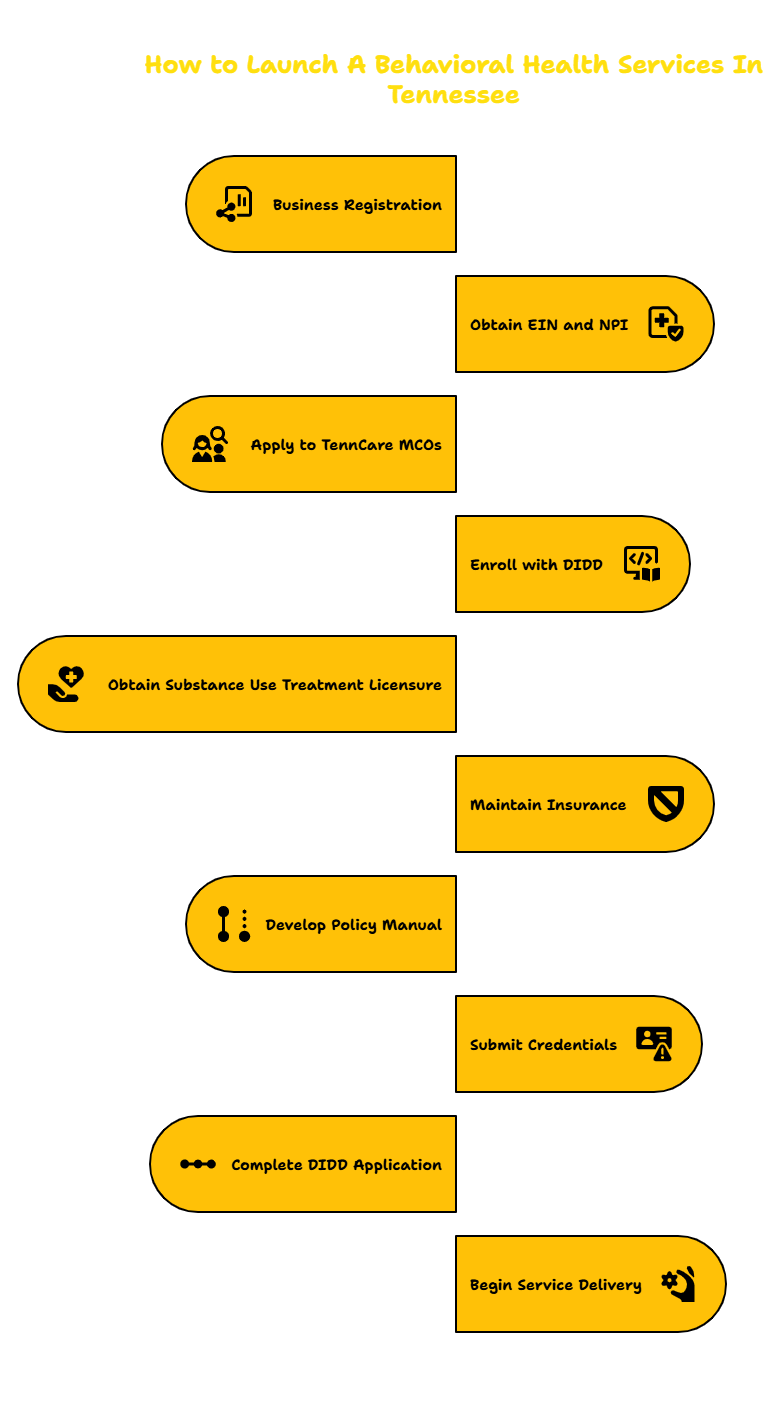
Launching a behavioral health practice in Tennessee requires a structured approach to registration and credentialing. Founders must first establish the business entity with the Tennessee Secretary of State and obtain an Employer Identification Number (EIN) and a Type 2 National Provider Identifier (NPI). These foundational steps are necessary before applying for network participation with TennCare MCOs—such as Amerigroup, BlueCare, or UnitedHealthcare—and registering for specialized programs as required.
Clinical and programmatic requirements are strictly enforced to ensure quality of care. For providers intending to serve participants in waiver programs, registration through the DIDD is a mandatory step, often requiring additional training specific to intellectual and developmental disability populations. Furthermore, those providing substance use treatment must secure the appropriate licensure through TDMHSAS. Throughout this process, providers must maintain comprehensive liability and professional malpractice insurance and develop a robust Behavioral Health Services Policy and Procedure Manual to codify their operational and clinical standards.
What Is the Sequence of the Provider Enrollment Process?
The enrollment timeline for a new provider is divided into distinct phases, beginning with business formation and ending with the delivery of services. Initially, providers must finalize their legal business registration and obtain the necessary organizational licensure. Once the legal framework is complete, the focus shifts to network enrollment. Providers must submit applications to one or more TennCare MCOs, which involves submitting staff credentials, proof of insurance, and detailed service descriptions for review.
If the provider intends to serve individuals under DIDD waivers, a secondary application process is required. This phase includes meeting specific training standards tailored to HCBS participants. Following the successful submission and approval of these materials, the provider is officially added to the network. The final phase involves the receipt of patient referrals, at which point the provider can begin delivering services in accordance with the participant’s approved ISP.
What Are the Essential Staffing and Documentation Requirements?
Staffing requirements in Tennessee are designed to ensure that clinical interventions are delivered by qualified, licensed professionals. Depending on the scope of services, providers must employ Licensed Mental Health Professionals (such as LPCs, LCSWs, or LMFTs), board-certified Behavior Analysts (BCBAs), or master’s-level behaviorists for waiver-based services. If medication management is provided, the team must include a Psychiatrist or Psychiatric Nurse Practitioner with the appropriate DEA registration and prescriptive authority.
Beyond hiring, the agency must maintain rigorous documentation protocols. A standard Policy & Procedure Manual must include:
- Clinical documentation standards and progress note templates
- Specific protocols for crisis de-escalation and emergency response
- Standardized procedures for PBSP implementation and staff oversight
- HIPAA-compliant data management and safety planning
- Incident reporting structures and outcome tracking mechanisms
- Verified consent forms and comprehensive intake assessment tools
Frequently Asked Questions
What is the difference between TennCare and DIDD enrollment?
TennCare manages general Medicaid behavioral health benefits through MCOs, whereas DIDD coordinates specialized behavioral support services specifically for individuals with intellectual and developmental disabilities enrolled in HCBS waiver programs.
Are all behavioral health staff required to have a clinical license?
While licensed mental health professionals are required for therapy and psychiatric services, some roles, such as Peer Recovery Specialists or certain case management positions, may rely on state-specific certifications or specialized training rather than a clinical license.
What is the typical timeframe to become a fully operational provider?
The process generally takes 4 to 6 months in total: 1–2 months for business formation and licensure, 2–3 months for MCO and DIDD enrollment, and 30–60 days for finalizing staff credentialing and internal compliance protocols.
Key Takeaway: Establishing a behavioral health practice in Tennessee requires a deep understanding of the interplay between TennCare, TDMHSAS, and DIDD regulations. Success depends on maintaining rigorous clinical documentation, securing the correct professional credentials, and aligning service delivery with both state-mandated billing protocols and the unique needs of the individuals identified in their Individual Support Plans.
Waiver Consulting Group’s Start-up Assistance Service supports behavioral health clinics, solo practitioners, and interdisciplinary teams with entry into Tennessee’s Medicaid and waiver networks for integrated mental health support. Our scope of work includes TennCare MCO and DIDD provider enrollment, Behavioral Health Policy Manual creation, development of consent forms and clinical documentation templates, establishment of crisis response protocols, and guidance on Medicaid billing and authorization packets.
Last verified: 2024. This content is for informational purposes only and does not constitute legal or professional advice. Always consult with the relevant state departments or a qualified consultant to ensure compliance with current regulations and program requirements.