BEHAVIORAL HEALTH SERVICES PROVIDER IN OKLAHOMA
By Fatumata Kaba · 2025-09-08 · 5 min read
Establishing a behavioral health services provider in Oklahoma requires a comprehensive understanding of the state’s regulatory landscape and the specific requirements mandated by the Oklahoma Health Care Authority (OHCA) and the Oklahoma Department of Mental Health and Substance Abuse Services (ODMHSAS). These agencies, in conjunction with the Oklahoma Department of Human Services (OKDHS), ensure that providers deliver high-quality, evidence-based interventions for individuals requiring support for mental illness, developmental disabilities, and co-occurring disorders within the SoonerCare and Home and Community-Based Services (HCBS) waiver ecosystems.
What Are the Governing Bodies for Behavioral Health in Oklahoma?
The Oklahoma behavioral health sector operates under a multi-agency oversight structure designed to maintain clinical standards and fiscal accountability. The Oklahoma Health Care Authority (OHCA) acts as the primary agency for the administration of SoonerCare (Medicaid), managing the reimbursement processes and provider enrollment pathways essential for agency sustainability. Without active enrollment and credentialing through the SoonerCare provider portal, an agency cannot receive Medicaid reimbursement for covered services.
Simultaneously, the Oklahoma Department of Mental Health and Substance Abuse Services (ODMHSAS) serves as the primary regulatory body responsible for licensing behavioral health agencies. Their role includes certifying clinical staff, auditing facility standards, and overseeing the state’s crisis response infrastructure. For providers focusing on intellectual and developmental disabilities (IDD), the Oklahoma Department of Human Services (OKDHS) and its Developmental Disabilities Services (DDS) division coordinate the specific behavioral support services essential for waiver participants. Finally, the Centers for Medicare & Medicaid Services (CMS) sets the overarching federal framework, ensuring that all Oklahoma services align with federal mental health parity regulations and HCBS quality standards.
How Do Providers Structure Behavioral Health Service Delivery?
Behavioral health services are delivered across a continuum of care, ranging from community-based interventions to clinical outpatient settings. Effective service delivery relies on individualized assessments that dictate the frequency and intensity of support, such as therapy, skill-building, and crisis intervention. By integrating evidence-based interventions into the daily lives of participants, providers help foster recovery, stability, and community inclusion.
Approved agencies generally facilitate the following service categories:
- Behavioral Health Assessments: Clinical evaluations used to diagnose conditions and determine eligibility for specific service pathways.
- Individual & Family Therapy: Evidence-based interventions targeting trauma, emotional regulation, and interpersonal relationships.
- Behavior Support Services (HCBS Waiver): Development of Functional Behavior Assessments (FBAs) and Behavior Intervention Plans (BIPs), supported by ongoing caregiver training.
- Crisis Intervention: Rapid response services focused on de-escalation and stabilization for individuals in urgent need.
- Rehabilitative Skills Building: Structured training in social skills, self-management, and effective coping strategies.
- Medication Management: Psychiatric care overseen by licensed nurse practitioners or psychiatrists to ensure the safety and efficacy of psychotropic medications.
What Are the Essential Licensing and Enrollment Requirements?
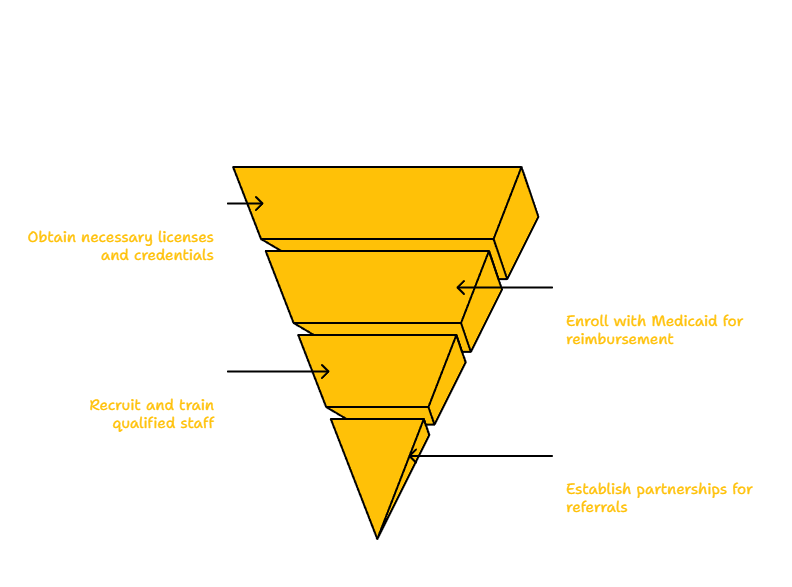
Launching a behavioral health practice is a multi-step process that begins with formalizing the business entity and ends with state-authorized credentialing. Founders must first register their business with the Oklahoma Secretary of State and secure both an EIN and a Type 2 NPI for the agency. Once the business foundation is established, the agency must seek formal licensure from the ODMHSAS as a Behavioral Health Agency or an Outpatient Mental Health Facility.
Once licensure is secured, the focus shifts to the OHCA SoonerCare provider portal, where the agency must complete enrollment to become an eligible billing entity. Throughout this process, administrators must maintain robust general, professional, and malpractice insurance policies. Furthermore, the development of a comprehensive Policy & Procedure Manual is non-negotiable, as it serves as the foundation for operational compliance and clinical governance during state audits.
How Is Staffing Managed for Regulatory Compliance?
Staffing requirements in Oklahoma are strictly regulated to ensure that participants receive care from qualified professionals. A Clinical Director or Program Supervisor must hold active licensure as an LPC, LCSW, LMFT, or psychologist. These leaders are responsible for overseeing the clinical direction of the agency and ensuring that all behavioral health therapists maintain active state credentials.
In addition to leadership, Behavioral Support Specialists or Technicians are required to possess at least a Bachelor’s degree in psychology or a related human services field. All staff members, regardless of their role, are required to undergo rigorous training programs that cover:
- HIPAA compliance and confidential documentation standards.
- Crisis de-escalation techniques and abuse/neglect prevention.
- Continuing education units (CEUs) as mandated by ODMHSAS.
- Documentation workflows, including progress notes and incident reporting.
- Regular performance reviews and internal safety drills.
Which Medicaid Programs Support Behavioral Health?
Behavioral health providers in Oklahoma operate across several distinct funding streams. Understanding which programs a provider is authorized to bill is critical to the agency's long-term viability. The SoonerCare State Plan covers foundational services like outpatient therapy and medication management, while various HCBS waivers provide more targeted, specialized support for vulnerable populations.
Providers should be familiar with the following programs:
- ADvantage Waiver: Provides specific behavioral consults and interventions for eligible adults.
- Medically Fragile Waiver: Integrates behavioral health services directly into the participant's comprehensive care plan.
- DDS Waivers (Community & IHSW): Focuses on functional behavior assessments, the creation of BIPs, and consistent, long-term support.
- Living Choice Program: Offers behavioral support specifically for individuals transitioning from institutional settings back into the community.
- Crisis Services: Funded by the ODMHSAS, these programs facilitate mobile response teams and stabilization services outside of the traditional waiver framework.
Frequently Asked Questions
What is the typical timeline to launch a behavioral health agency?
The total timeline varies based on administrative readiness, but it generally spans 6 to 10 months. Licensing and credentialing typically take 2–3 months, followed by an additional 2–3 months for Medicaid enrollment. Hiring and training staff, along with establishing referral partnerships, adds another 30–60 days to the process.
What documentation is necessary for Medicaid billing?
Agencies must maintain meticulous records, including comprehensive treatment plans, signed progress notes, crisis logs, and incident reports. Additionally, billing forms must be submitted through the OHCA portal in strict alignment with service encounter logs and authorized care plans.
How does a new provider secure referrals?
Referrals are typically generated through partnerships with case managers, school districts, community health clinics, and DDS personnel. Building a strong professional reputation through consistent quality assurance and effective outcomes reporting is the most reliable way to maintain a steady flow of referrals.
Key Takeaway
Success as a behavioral health provider in Oklahoma depends on the integration of rigorous clinical standards with precise administrative compliance. By following the regulatory requirements set by OHCA, ODMHSAS, and OKDHS, and maintaining a focus on evidence-based documentation, new agencies can effectively position themselves to serve the needs of the Oklahoma community while successfully navigating the Medicaid landscape.
Last verified: 2024. The information provided is for educational purposes only and does not constitute legal or professional advice. Always refer to official documentation from the Oklahoma Health Care Authority (OHCA), the Oklahoma Department of Mental Health and Substance Abuse Services (ODMHSAS), and the Centers for Medicare & Medicaid Services (CMS) for the most current regulatory requirements.