BEHAVIORAL HEALTH SERVICES PROVIDER IN NEW HAMPSHIRE
By Fatumata Kaba · 2025-07-27 · 5 min read
Behavioral health services in New Hampshire provide critical therapeutic support and interventions designed to foster emotional well-being, manage complex behavioral symptoms, and promote community integration for vulnerable populations. These services, authorized under New Hampshire Medicaid Home and Community-Based Services (HCBS) waiver programs, allow eligible individuals to receive personalized care within their homes and communities rather than in restrictive institutional settings.
Understanding the Governing Framework and Agency Oversight
The delivery of behavioral health services in New Hampshire is overseen by a multi-tiered regulatory structure. The primary administrative body is the New Hampshire Department of Health and Human Services (DHHS), which serves as the lead agency for Medicaid waiver funding. DHHS is responsible for managing the complexities of provider enrollment, service authorization, and the reimbursement processes that sustain these vital programs.
Quality assurance and compliance monitoring are managed by the Bureau of Elderly and Adult Services (BEAS). This bureau ensures that all service delivery adheres to state standards and that participants receive high-quality, person-centered care. At the federal level, the Centers for Medicare & Medicaid Services (CMS) provides oversight to ensure that New Hampshire’s Medicaid-funded programs remain aligned with federal HCBS regulations, particularly concerning participant protection and the efficacy of person-centered planning.
Core Components of Behavioral Health Services
Behavioral health services are designed to be dynamic and responsive to the unique needs of each participant. By focusing on skill acquisition and emotional regulation, these interventions reduce the necessity for higher levels of care and empower participants to achieve greater independence. Providers operate under the umbrella of the Individualized Service Plan (ISP), ensuring that every session is tailored to the specific mental health or behavioral goals of the participant.
Approved providers generally deliver the following clinical and support services:
- Individual and Group Therapy: Facilitating sessions that focus on emotional regulation, evidence-based coping strategies, and social skill development.
- Behavioral Intervention Planning: Crafting personalized strategies to mitigate maladaptive behaviors and reinforce positive habits.
- Psychiatric Support: Providing essential assessment and management of mental health conditions by qualified licensed practitioners.
- Crisis Intervention: Offering immediate, on-call support during behavioral or mental health emergencies to ensure participant safety.
- Skill Building: Training in communication, problem-solving, and self-regulation techniques for improved daily functioning.
- Family and Caregiver Support: Providing training and guidance to families on how to effectively manage behavioral challenges in the home environment.
- Case Management: Serving as the central point of coordination for mental health, healthcare, and community-based resources.
- Peer Support Services: Leveraging the lived experience of trained peers to provide vital social and emotional mentorship.
Establishing and Licensing Your Behavioral Health Agency
Launching a behavioral health practice in New Hampshire requires meticulous attention to business and regulatory prerequisites. Prospective providers must first formalize their entity with the New Hampshire Secretary of State and secure a Federal Employer Identification Number (EIN) from the IRS. A Type 2 National Provider Identifier (NPI) is also mandatory for organizational billing purposes.
Beyond basic business filings, providers must secure appropriate licensure through the New Hampshire Board of Mental Health Practice. Compliance is not merely a formality; it requires the development of robust internal policies regarding behavioral assessments, crisis management protocols, and therapeutic standards. Providers must also maintain comprehensive general and professional liability insurance to protect both the agency and the participants served.
Navigating the New Hampshire Medicaid Enrollment Process
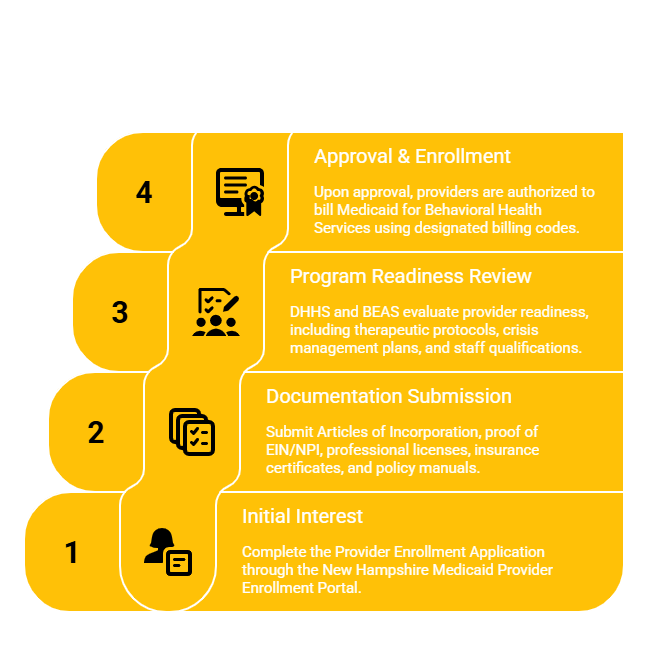
The path to becoming an approved Medicaid provider involves a structured application process through the New Hampshire Medicaid Provider Enrollment Portal. After submitting initial documentation—including articles of incorporation, proof of professional licensure, and insurance certificates—the provider enters the Program Readiness Review phase. During this period, DHHS and BEAS conduct an evaluation of the agency’s therapeutic protocols and operational readiness.
The timeline for these phases is iterative, requiring close attention to detail in policy manual submission. Once the readiness review is completed and the agency is approved, they are granted authority to bill for Medicaid-covered services using established billing codes. Maintaining this status requires ongoing adherence to documentation standards and consistent participation in quality monitoring conducted by state agencies.
Staffing, Training, and Clinical Documentation Requirements
The success of a behavioral health agency rests on the competency and credentials of its clinical and direct support staff. The Behavioral Health Program Director is a critical role, requiring a Master’s degree in a mental health field and active state licensure. Similarly, all practitioners—including LCSWs, LMHCs, and LPCs—must maintain active credentials and undergo thorough background clearances before engaging with participants.
Staff must be equipped with more than just academic qualifications; they must also undergo specialized training. Every employee should be proficient in HIPAA compliance, crisis de-escalation, and client rights. Agencies are responsible for maintaining organized records of all staff training, annual competency evaluations, and continuing professional development to ensure that the standard of care remains consistent over time.
Frequently Asked Questions
Which Medicaid waiver programs cover behavioral health services?
Behavioral health services are integrated into several key New Hampshire waivers, including the Choices for Independence (CFI) Waiver, the Developmental Disabilities (DD) Waiver, the Acquired Brain Disorder (ABD) Waiver, the In-Home Support (IHS) Waiver for Children, and the broader Home and Community-Based Services (HCBS) waiver framework.
What documentation is required for the provider policy manual?
A compliant policy manual must include protocols for assessment and treatment planning, crisis management and de-escalation, staff credentialing and training records, HIPAA compliance, client rights and grievance procedures, and standardized documentation protocols for Medicaid billing and therapy tracking.
How long does the startup process typically take?
The total timeline generally spans several months. Business formation and compliance preparation usually take 1–2 months, followed by 2–3 months for hiring and program development. The Medicaid enrollment and readiness review stage adds another 60–90 days, with final billing setup requiring an additional 30–45 days.
Key Takeaway
Succeeding as a behavioral health provider in New Hampshire requires a commitment to rigorous regulatory compliance, professional staffing, and person-centered service delivery. By maintaining strict adherence to DHHS and BEAS standards and utilizing structured documentation, agencies can effectively navigate the Medicaid waiver system to provide essential support for participants across the state.
Last verified: 2024. The information provided is for educational purposes only and does not constitute legal or professional advice. Potential providers should consult directly with the New Hampshire Department of Health and Human Services (DHHS) and the New Hampshire Board of Mental Health Practice to confirm current requirements and regulatory updates before launching their service programs.