BEHAVIORAL HEALTH SERVICES PROVIDER IN LOUISIANA
By Fatumata Kaba · 2025-08-12 · 5 min read
Providing behavioral health services in Louisiana requires a strategic approach to regulatory compliance, clinical oversight, and systemic integration with the state’s Medicaid landscape. These services support individuals living with mental illness, emotional challenges, and substance use disorders by ensuring they receive professional, evidence-based care within their own communities through programs directed by the Louisiana Department of Health (LDH).
How are Behavioral Health Services Governed in Louisiana?
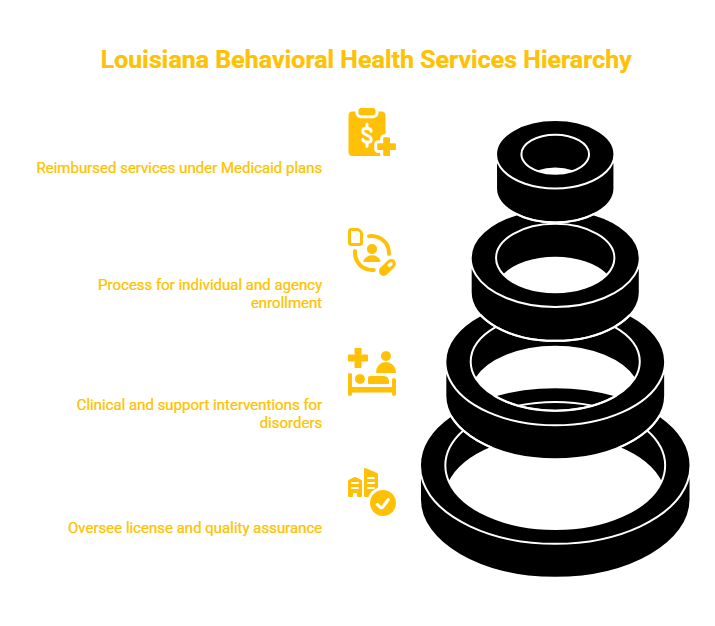
The delivery of behavioral health care in Louisiana is a multi-tiered regulatory process managed by state and federal entities. The primary regulatory body is the Louisiana Department of Health (LDH), specifically the Office of Behavioral Health (OBH), which establishes the scope of service, licensing standards, and clinical quality requirements for Medicaid-funded interventions. Their oversight ensures that providers adhere to state laws designed to protect vulnerable populations while maintaining high standards of care.
Complementing state oversight, the Centers for Medicare & Medicaid Services (CMS) provides federal guidance, ensuring that all Louisiana behavioral health services remain compliant with Home and Community-Based Services (HCBS) and Early and Periodic Screening, Diagnostic, and Treatment (EPSDT) requirements. Furthermore, Managed Care Organizations (MCOs) operating under the Bayou Health network function as the operational intermediaries, managing provider credentialing, authorizing individual care plans, and processing all billing and reimbursement for enrolled members.
What are the Essential Steps to Become an Approved Behavioral Health Provider?
The launch of a behavioral health agency in Louisiana begins with formal business organization and state-level registration. Founders must first register their business entity with the Louisiana Secretary of State and secure a unique Employer Identification Number (EIN) from the IRS, along with a Type 2 National Provider Identifier (NPI). These administrative foundations are essential for all subsequent state and federal applications.
Once the business is legally established, the provider must navigate the specific licensing and enrollment requirements set forth by LDH. This includes obtaining a Behavioral Health Services license through the LDH Health Standards Section and enrolling in the Louisiana Medicaid program via the official Provider Enrollment Portal. Following Medicaid enrollment, providers must complete the credentialing process with each of the state's contracted MCOs—such as Aetna, AmeriHealth Caritas, Healthy Blue, LA Healthcare Connections, and UHC—to begin receiving referrals and seeking reimbursement.
- Register business with the Louisiana Secretary of State.
- Obtain IRS EIN and Type 2 NPI.
- Secure Behavioral Health Services License through LDH Health Standards Section.
- Enroll in Louisiana Medicaid via the official provider portal.
- Complete individual credentialing with each Bayou Health MCO.
- Establish clinical documentation protocols and secure general liability and malpractice insurance.
What Clinical Services and Documentation Protocols are Required?
Approved behavioral health providers must offer a range of clinical and rehabilitative interventions. These typically include diagnostic evaluations, mental health assessments, individual and group therapy, and psychiatric medication management. Additionally, providers are often required to deliver specialized services such as Community Psychiatric Support and Treatment (CPST), Psychosocial Rehabilitation (PSR), and crisis response services designed to stabilize individuals during acute episodes.
Maintaining comprehensive documentation is not only a regulatory mandate but also a clinical necessity. Providers must maintain a robust Policy & Procedure Manual that covers client intake procedures, mental health assessment forms, treatment planning templates, and progress notes. Furthermore, agencies must develop standardized protocols for suicide risk assessment, crisis intervention, medication administration, and incident reporting. All documentation must strictly adhere to HIPAA regulations and be readily available for audits by LDH or MCO representatives.
How Do Staffing and Training Requirements Influence Agency Operations?
Operational success depends heavily on the expertise and qualifications of the staff. Agencies must employ Licensed Mental Health Professionals (LMHPs) such as Licensed Clinical Social Workers (LCSWs), Licensed Professional Counselors (LPCs), or Psychologists. When providing medication-related services, the agency must utilize a psychiatrist or a qualified nurse practitioner who holds an active state license and a current DEA registration.
In addition to licensed professionals, many agencies utilize Peer Support Specialists or Behavioral Health Technicians to facilitate community-based recovery. Regardless of role, all staff must undergo rigorous training programs. These requirements typically include modules on HIPAA compliance, de-escalation techniques, suicide prevention, mandated reporting protocols, trauma-informed care, and cultural competency. Agencies are responsible for maintaining logs of staff credentials, annual continuing education units (CEUs), and ongoing clinical supervision to ensure compliance with state standards.
How are Behavioral Health Services Reimbursed through Medicaid?
Reimbursement for behavioral health services is provided through several distinct channels, primarily the Louisiana Medicaid State Plan. This covers a broad spectrum of services for individuals across all ages and diagnoses. For younger participants, services are often facilitated through the EPSDT benefit, which ensures that children receive necessary diagnostic and treatment services. Furthermore, individuals participating in HCBS waivers—such as the Residential Options Waiver (ROW), New Opportunities Waiver (NOW), Supports Waiver, or Children’s Choice Waiver—may have specialized behavioral supports integrated directly into their person-centered care plans.
Additional reimbursement pathways include the Money Follows the Person (MFP) program, which supports individuals transitioning from institutional settings to community-based living. Providers deliver these services in various settings, including the patient’s home, community clinics, or via approved telehealth platforms. Constant coordination with support coordinators and MCO care teams is essential to ensure that the services delivered align with the participant’s individualized care plan and remain eligible for ongoing Medicaid reimbursement.
Frequently Asked Questions
What is the typical timeline for launching a behavioral health agency?
The launch process generally follows a multi-phase timeline: business formation and LDH licensing typically take 1–2 months, followed by a 60–90 day window for Medicaid enrollment and MCO credentialing. Staff hiring and the development of internal documentation protocols usually require an additional 2–4 weeks before services can commence.
Do individual practitioners need the same licensing as a behavioral health agency?
Individual practitioners, such as LCSWs or LPCs, follow an abbreviated path compared to agencies. They must apply through the Medicaid Provider Enrollment Portal, submit proof of their professional license, NPI, and insurance, and then contract directly with MCOs to begin receiving referrals and reimbursements.
Where can I access official resources for provider enrollment and licensing?
Providers should utilize the official Louisiana Department of Health website (ldh.la.gov/page/86) for behavioral health information. Licensing inquiries should be directed to the LDH Health Standards Section (ldh.la.gov/page/282), and all enrollment applications must be submitted through the Louisiana Medicaid Provider Enrollment Portal at lamedicaid.com.
Key Takeaway: Establishing a behavioral health agency in Louisiana requires meticulous adherence to state licensing, Medicaid enrollment, and clinical documentation standards. Success hinges on a well-structured Policy & Procedure Manual, a qualified clinical team, and seamless coordination with MCOs and the Office of Behavioral Health to ensure sustainable and compliant service delivery.
Last verified: October 2023. This information is for educational purposes only and does not constitute legal or professional advice. Always consult the Louisiana Department of Health and official Medicaid guidelines for the most current regulatory requirements.