BEHAVIORAL HEALTH SERVICES PROVIDER IN KANSAS
By Fatumata Kaba · 2025-07-24 · 5 min read
DELIVERING INDIVIDUALIZED MENTAL HEALTH SUPPORT THROUGH THERAPEUTIC AND COMMUNITY-BASED SERVICES
Behavioral Health Services in Kansas offer essential assessment, treatment, and ongoing support for individuals navigating mental illness, emotional disorders, or behavioral health challenges. These services are authorized under the Kansas Medicaid (KanCare) State Plan, the Habilitation Services Program, and various Home and Community-Based Services (HCBS) waivers, all aimed at fostering recovery, emotional well-being, and successful community integration.
What Are the Roles of Governing Agencies in Kansas?
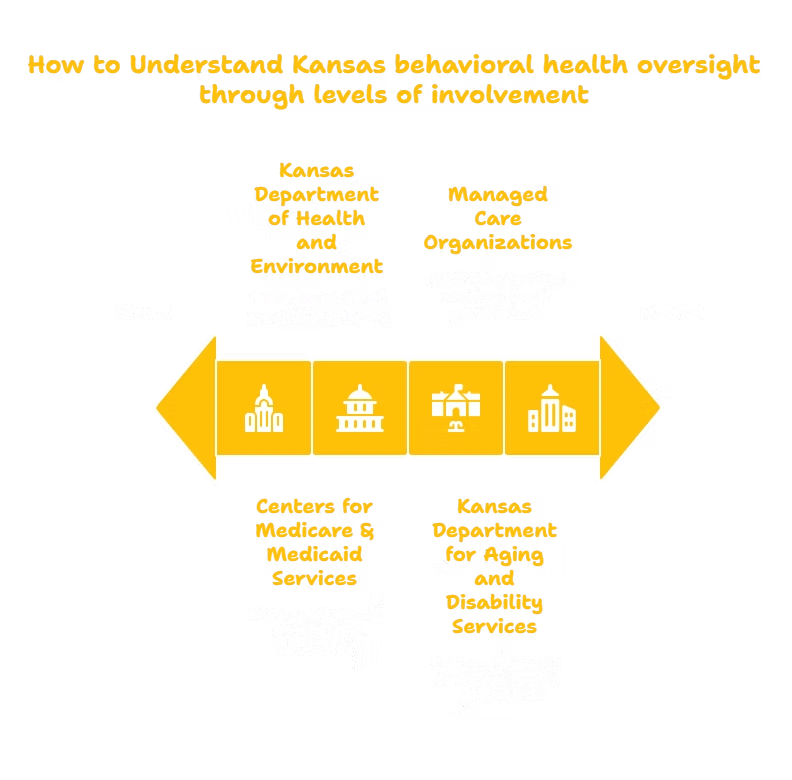
The behavioral health landscape in Kansas is defined by a multi-layered regulatory framework. The Kansas Department for Aging and Disability Services (KDADS), specifically the Behavioral Health Services Division, serves as the primary authority for licensing mental health providers, maintaining program oversight, and setting state-level service standards. Their role ensures that providers operate within the bounds of safety and clinical excellence.
Complementing this, the Kansas Department of Health and Environment (KDHE) Division of Health Care Finance manages Medicaid provider enrollment, establishes behavioral health billing protocols, and implements overall Medicaid policy. Because Kansas utilizes a managed care model, the three Managed Care Organizations (MCOs)—Sunflower, UnitedHealthcare, and Aetna—play a critical role in authorizing specific services, coordinating care for members, and handling provider reimbursement. Finally, the federal Centers for Medicare & Medicaid Services (CMS) provides oversight to ensure all Kansas services align with federal mental health parity standards and Medicaid managed care requirements.
Which Behavioral Health Services Are Approved for Delivery?
Behavioral Health Services are designed to provide clinical, therapeutic, and recovery-focused interventions that address the unique needs of each participant. Approved providers may deliver a comprehensive suite of services, provided they maintain alignment with an Individualized Treatment Plan (ITP) or a Person-Centered Service Plan (PCSP) for every individual served.
- Diagnostic evaluations and psychological assessments
- Individual, family, and group therapy
- Crisis intervention and 24/7 mobile crisis services
- Medication management and psychiatric services
- Behavioral Health Rehabilitation Services (BHRS)
- Community Psychiatric Support and Treatment (CPST)
- Peer support and recovery coaching
- Behavioral support planning under HCBS programs
- Case management and care coordination
What Are the Licensing and Provider Enrollment Requirements?
Becoming an authorized behavioral health provider requires a structured approach to registration and compliance. Prospective agencies must first register their business with the Kansas Secretary of State and obtain an Employer Identification Number (EIN) from the IRS. Furthermore, obtaining a Type 2 National Provider Identifier (NPI) is a foundational step for administrative and billing purposes. If applicable to the service model, providers must secure a Community Mental Health Center (CMHC) or Behavioral Health Organization (BHO) license from KDADS.
Once business registration and facility licensing are secured, the provider must enroll with the Kansas Medical Assistance Program (KMAP). This process involves rigorous credentialing with each of the KanCare MCOs to ensure the agency meets clinical and administrative requirements. During this phase, agencies must establish robust general liability, malpractice, and professional insurance coverage, while drafting essential clinical and quality assurance policies that govern confidentiality, crisis response, and patient rights.
How Should Agencies Prepare for Documentation and Staffing?
The success of a behavioral health provider depends heavily on the maintenance of audit-ready clinical records and the employment of qualified, credentialed staff. Documentation must include clear evidence of assessment, treatment planning, progress reviews, and strict adherence to HIPAA guidelines. Agencies must implement clear policies regarding suicide prevention, emergency response, and the supervision of unlicensed personnel, ensuring that all records can withstand rigorous Medicaid audits.
Staffing requirements are equally stringent to ensure the quality of care. Clinical directors or supervisors must hold advanced licensure such as a Licensed Clinical Social Worker (LCSW), Licensed Clinical Professional Counselor (LCPC), or be a psychologist. Therapists and counselors are required to maintain active Kansas state licenses, while psychiatric services must be provided by licensed practitioners or nurse practitioners with current DEA registration. All personnel, including Behavioral Health Technicians and Peer Support Specialists, must undergo background checks and receive training in trauma-informed care, cultural competency, and crisis intervention protocols.
Which Programs Cover Behavioral Health Services?
Behavioral health support in Kansas is supported through a variety of funding streams. The KanCare Medicaid State Plan covers foundational services such as therapy, rehabilitation, and psychiatry. Beyond the State Plan, the Habilitation Services Program provides additional support pathways for eligible individuals. Specialized needs are often addressed through Home and Community-Based Services (HCBS) waivers, which provide targeted interventions for specific populations.
- Intellectual/Developmental Disability (IDD) Waiver
- Autism Waiver
- Brain Injury (BI) Waiver
- Technology Assisted (TA) Waiver
- Children’s Mental Health Support services
Frequently Asked Questions
What is the typical timeline to launch a new behavioral health program?
The launch process generally spans several months. Business registration and initial policy development typically require 1–2 months, followed by 2–3 months for hiring and licensing. Medicaid enrollment and MCO credentialing usually take 60–90 days, with a final 30–45 day period for billing configuration and program launch.
What core policies must be included in the Policy & Procedure Manual?
A compliant manual must include assessment and treatment planning protocols, documentation standards for all service types, emergency response and suicide prevention procedures, HIPAA compliance, participant rights, grievance protocols, and detailed logs for staff credentialing and supervision.
How does an agency begin the MCO credentialing process?
Once a provider has enrolled with KMAP and holds the necessary KDADS facility licensure, they must initiate individual contracts with Sunflower Health Plan, UnitedHealthcare Community Plan, and Aetna Better Health of Kansas. Each MCO has specific requirements for credentialing their network of providers.
Key Takeaways for Providers
Launching a behavioral health practice in Kansas requires a deep understanding of the intersection between KDADS licensing requirements and the billing protocols of the KanCare MCOs. By focusing on compliant documentation, hiring qualified, licensed staff, and maintaining rigorous quality assurance systems, providers can successfully integrate into the Kansas healthcare ecosystem and deliver high-quality, person-centered support to individuals in need.
Last verified: September 2023. Disclaimer: This article is for informational purposes only and does not constitute legal or professional advice. Requirements for Medicaid and HCBS programs in Kansas are subject to change; providers should consult directly with KDADS, KDHE, and the respective MCOs for the most current regulatory guidance and policy updates.