BEHAVIORAL HEALTH SERVICES PROVIDER IN INDIANA
By Watchen Roberts · 2025-07-21 · 5 min read
PROMOTING EMOTIONAL WELL-BEING, RECOVERY, AND COMMUNITY PARTICIPATION THROUGH COMPREHENSIVE SUPPORT
Behavioral Health Services in Indiana encompass a broad spectrum of assessment, therapy, crisis intervention, and recovery supports designed to assist individuals navigating mental health conditions, emotional disturbances, or substance use disorders. These services are authorized under Indiana Medicaid State Plan benefits, Home and Community-Based Services (HCBS) Waivers, and various state-funded initiatives aimed at fostering long-term stability, personal resilience, and enhanced quality of life for all participants.
As the landscape of community-based care continues to evolve, the integration of clinical excellence with regulatory compliance remains the cornerstone of a successful provider agency. Ensuring that these services are delivered in alignment with the Indiana Family and Social Services Administration (FSSA) standards is critical for both the health of the community and the operational viability of the provider.
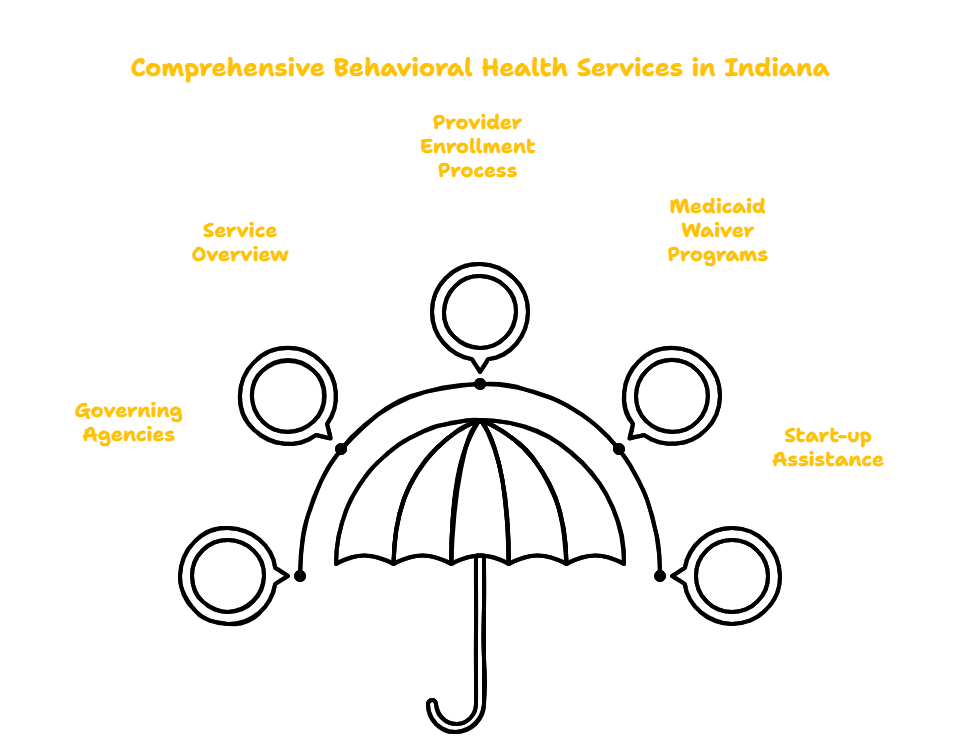
Who are the primary agencies governing behavioral health in Indiana?
The delivery of behavioral health services is overseen by a structured hierarchy of federal and state entities. The Indiana Family and Social Services Administration (FSSA), specifically through the Division of Mental Health and Addiction (DMHA), serves as the primary regulatory body. The DMHA is responsible for establishing delivery standards, overseeing provider certification processes, and conducting rigorous program quality monitoring to ensure that care meets state-mandated benchmarks.
Complementing this, the Indiana Office of Medicaid Policy and Planning (OMPP) acts as the financial steward, administering Medicaid funding and managing the technical aspects of provider enrollment, claims processing, and reimbursement. At the federal level, the Centers for Medicare & Medicaid Services (CMS) provides overarching guidance, ensuring that all Medicaid-funded services align with national standards for person-centered planning, clinical effectiveness, and quality of care within the Home and Community-Based Services (HCBS) framework.
What types of services are approved for delivery in this sector?
Behavioral health services are rooted in evidence-based interventions tailored to meet the unique psychological, emotional, and substance use needs of each participant. By utilizing a person-centered approach, providers help individuals maintain their independence and participate fully in their communities. Every intervention must be documented and executed in accordance with a participant’s Individualized Treatment Plan (ITP).
- Behavioral health assessments and diagnostic evaluations
- Individual, group, and family therapy sessions
- Psychiatric services, including comprehensive medication management
- Mobile crisis intervention and stabilization services
- Community-based recovery support and skills training
- Behavior support planning and positive behavioral interventions
- Substance use disorder treatment, including outpatient and recovery services
- Trauma-informed care services designed for individuals with complex needs
What are the essential licensing and provider enrollment requirements?
Establishing a behavioral health agency requires a meticulous approach to administrative and legal prerequisites. Providers must first register their business entity with the Indiana Secretary of State and obtain an Employer Identification Number (EIN) from the IRS. Securing a Type 2 National Provider Identifier (NPI) is a mandatory step for agency-level billing and identification within the Medicaid system.
Following entity formation, the agency must seek appropriate certification through the DMHA, such as becoming a Community Mental Health Center (CMHC) or a specialized behavioral health clinic. Once certified, the provider must complete the enrollment process via the Indiana Medicaid Provider Enrollment Portal. This phase necessitates the submission of extensive documentation, including professional liability and malpractice insurance, as well as the development of comprehensive internal policies regarding intake, service delivery, and clinical documentation.
How is the Medicaid enrollment and program readiness process structured?
The transition from a business entity to an active Medicaid provider involves a phased readiness review. Upon submitting the initial application through the Indiana Medicaid Provider Portal, the agency must provide proof of licensure, staffing records, and operational infrastructure. The OMPP and DMHA conduct an evaluation of the provider's clinical service models to ensure that the organizational structure is prepared to support the proposed scope of work.
The readiness review often focuses on the robustness of internal systems, such as emergency protocols, participant rights protections, and the ability to maintain audit-ready documentation. Once the application successfully clears this review, the provider is assigned the necessary billing codes. These codes enable the provider to seek reimbursement for therapy, psychiatric consultations, mobile crisis response, and the various behavioral supports outlined in their enrollment agreement.
What documentation and staffing standards must be maintained?
Operational success hinges on strict adherence to record-keeping and clinical staffing standards. A robust Policy & Procedure Manual is the primary tool for maintaining compliance; it must include clear guidelines on HIPAA-compliant documentation, crisis intervention protocols, and grievance resolution. Documentation must be consistent, objective, and clearly linked to the participant’s treatment goals to satisfy potential audits by federal or state reviewers.
- Clinical Director / Supervisor: Must be an LCSW, LCPC, Psychologist, or Psychiatrist with verified clinical supervision experience.
- Behavioral Health Clinicians: Requires active Indiana state licensure and routine background screening.
- Support Specialists / Peer Recovery Coaches: Should hold appropriate state-recognized certifications and undergo required background checks.
- Mandatory Training: All personnel must complete training in trauma-informed care, de-escalation, HIPAA, and abuse prevention.
Frequently Asked Questions
What is the typical timeline to launch a new behavioral health program?
The process generally follows a multi-phase timeline. Business formation and initial certification typically take 2–4 months, followed by a 2–4 month period for staffing and program development. Medicaid enrollment and readiness reviews typically require 60–90 days, with an final 30–45 days allocated for billing system configuration and formal service launch.
Which Medicaid programs cover behavioral health services in Indiana?
These services are reimbursable through the Indiana Medicaid State Plan and several HCBS Waivers, including the Community Integration and Habilitation (CIH) Waiver, the Family Supports Waiver (FSW), the Aged and Disabled (A&D) Waiver, and the Traumatic Brain Injury (TBI) Waiver.
What must be included in the behavioral health service policy manual?
The manual must detail participant intake and assessment, individualized treatment planning, crisis and emergency response, documentation standards, HIPAA and participant rights protections, and internal staff supervision and credentialing procedures.
Key takeaway: Launching a successful behavioral health agency in Indiana requires the alignment of clinical competence with strict regulatory compliance; by focusing on foundational documentation, adherence to DMHA standards, and a robust Medicaid enrollment strategy, providers can establish a sustainable framework for delivering high-quality, community-based care.
Last verified: May 2024. This information is provided for educational purposes and does not constitute legal or professional consulting advice. Prospective providers should consult directly with the Indiana Family and Social Services Administration (FSSA) and the Division of Mental Health and Addiction (DMHA) for the most current regulatory updates.