BEHAVIORAL HEALTH SERVICES PROVIDER IN CALIFORNIA
By Fatumata Kaba · 2025-07-06 · 5 min read
Supporting Emotional Wellness, Positive Behavior, and Independent Living Through Person-Centered Interventions
Establishing a behavioral health services agency in California requires navigating a complex intersection of state-funded habilitative supports and clinical mental health mandates. Providers must integrate regulatory requirements from the California Department of Developmental Services (DDS), the Department of Health Care Services (DHCS), and local Regional Centers to deliver essential services that foster independence for individuals with developmental disabilities or mental health conditions.
Understanding the Governing Framework for Behavioral Health
The regulatory landscape for behavioral health in California is defined by distinct funding streams and oversight bodies. The Department of Developmental Services (DDS) serves as the primary authority for habilitative behavioral interventions, which are administered through 21 nonprofit Regional Centers statewide. These centers are responsible for identifying service needs, authorizing interventions through the Individual Program Plan (IPP), and managing the vendorization process for providers.
Conversely, the Department of Health Care Services (DHCS) governs clinical mental health services, often managed through county-level Behavioral Health Plans under the Medi-Cal umbrella. For providers, understanding the distinction between these two systems—the DDS-funded habilitative system and the DHCS-managed clinical system—is critical. Federal oversight provided by the Centers for Medicare & Medicaid Services (CMS) ensures that these state programs remain in compliance with HCBS waiver mandates and behavioral health parity requirements.
Core Service Offerings and Evidence-Based Interventions
Behavioral health services are rooted in the delivery of evidence-based interventions designed to address challenging behaviors and enhance quality of life. Whether operating under a Regional Center IPP or a Person-Centered Plan (PCP) within the Self-Determination Program, providers must offer services that are data-driven and individualized. Success in this field relies on the ability to translate clinical assessments into actionable, observable goals that help participants gain functional independence.
Approved providers typically deliver a structured suite of services that include the following:
- Functional Behavior Assessments (FBA) to identify the "why" behind behaviors.
- Development and monitoring of Behavior Intervention Plans (BIP).
- Individual and group counseling sessions focused on emotional regulation.
- Training and education for parents and primary caregivers.
- Mental health assessments and ongoing treatment planning.
- Consistent data tracking and documentation of behavioral progress.
- Crisis planning and specialized de-escalation support.
Navigating Licensing and Provider Enrollment Pathways
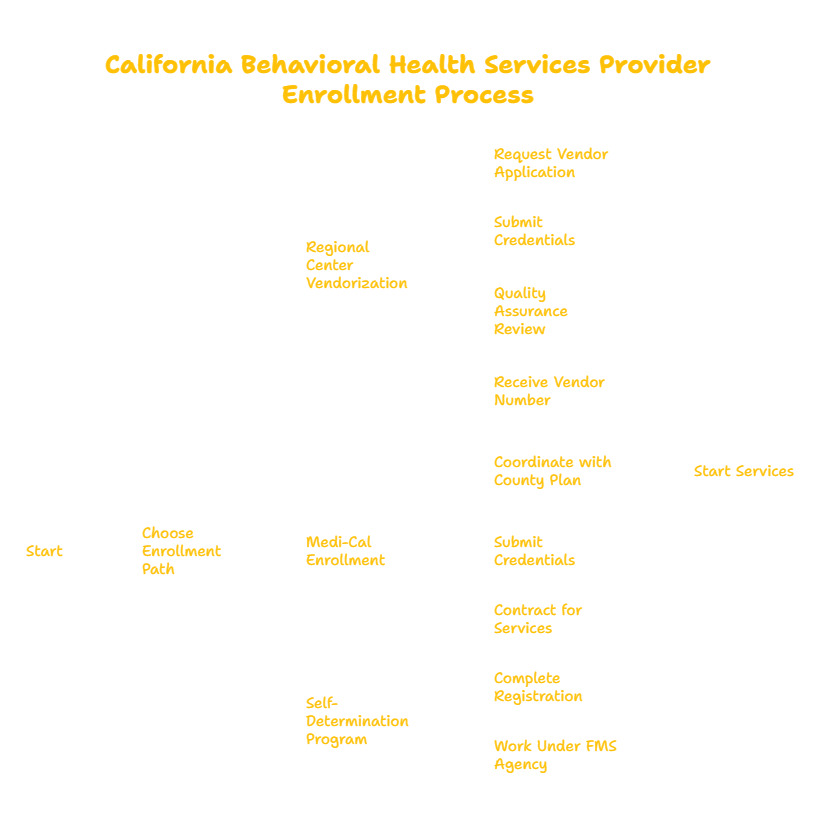
Before launching, a provider must determine the appropriate enrollment pathway based on the type of services offered. The first step involves standard business formation, which includes registration with the California Secretary of State, obtaining an Employer Identification Number (EIN) from the IRS, and securing a Type 2 National Provider Identifier (NPI). Once established, the provider must decide between the Regional Center vendorization track, Medi-Cal enrollment, or the Self-Determination Program.
Regional Center vendorization is the standard route for agencies providing habilitative behavioral services, such as those under Service Code 612. This requires submitting comprehensive documentation, including professional credentials for clinical staff, to the local Regional Center. For those pursuing clinical mental health work, enrollment through the DHCS and coordination with county Behavioral Health Plans is necessary. Alternatively, the Self-Determination Program allows providers to operate under the guidance of a Financial Management Services (FMS) agency, offering a more flexible approach to serving participants directly within their own individualized budgets.
Required Documentation and Operational Compliance
Operational integrity in California’s behavioral health sector is measured by the quality of a provider's documentation and policy infrastructure. Agencies must maintain a robust policy and procedure manual that covers confidentiality, consent, and participant rights. Furthermore, clinical supervisors are responsible for maintaining organized service logs, data sheets, and outcome summaries that justify the necessity of services and prove adherence to the IPP.
Essential components of a compliant provider’s documentation suite include:
- Articles of Incorporation or Fictitious Business Name (FBN) documentation.
- Proof of professional liability and comprehensive insurance coverage.
- Structured templates for FBA development and BIP implementation.
- HIPAA-compliant systems for storing sensitive participant information.
- Clinical supervision and ongoing education logs for all staff members.
- Crisis and incident response procedures for high-risk situations.
Staffing Requirements and Clinical Supervision
The efficacy of a behavioral health agency depends on the caliber of its staff. Clinical roles require high-level credentials, such as a BCBA, LMFT, LPCC, LCSW, or a psychologist license. These professionals are responsible for directing treatment and ensuring that all interventions are clinically sound and ethical. Behavior technicians and support staff, meanwhile, must hold at least a high school diploma, though many roles now require RBT certification or associate-level coursework.
All staff, regardless of clinical seniority, must adhere to strict training requirements to ensure the safety and dignity of the participants they serve. This training curriculum must include person-centered planning, crisis prevention and de-escalation techniques, and mandatory HIPAA compliance. Additionally, agencies must facilitate and track annual continuing education units (CEUs) to ensure that the staff remains current with industry standards and evidence-based practices.
Frequently Asked Questions
What is the typical timeline for launching a behavioral health service agency?
Business formation typically takes 1–2 weeks, while the vendorization or Medi-Cal enrollment process can span 45–90 days depending on the responsiveness of the governing agency. Staff hiring and supervision planning usually require an additional 2–4 weeks.
How does the Self-Determination Program differ from standard Regional Center services?
The Self-Determination Program provides individuals with an individual budget that they control, allowing them to hire providers directly or contract with agencies. In this model, providers work with a Financial Management Services (FMS) agency rather than billing the Regional Center directly for service codes.
What are the primary differences between Regional Center and Medi-Cal funding?
Regional Centers generally fund habilitative, non-clinical behavioral interventions focused on skill acquisition and behavior reduction in the home or community. Medi-Cal Specialty Mental Health Services provide coverage for clinical therapy, psychiatric evaluations, and case management for individuals meeting medical necessity criteria for mental health treatment.
Key Takeaway: Successfully launching a behavioral health agency in California requires a deep understanding of the regulatory distinction between DDS-funded habilitative services and DHCS-managed clinical programs, a focus on strict documentation compliance, and a commitment to maintaining highly qualified, credentialed clinical leadership.
Last verified: [Current Date]. This content is for informational purposes only and does not constitute legal or professional advice. Always verify current requirements with the California Department of Developmental Services (DDS) or the Department of Health Care Services (DHCS) before making business decisions.