BEHAVIORAL HEALTH SERVICES PROVIDER IN ARKANSAS
By Fatumata Kaba · 2025-07-05 · 5 min read
Navigating Behavioral Health Services in Arkansas
Launching a behavioral health services agency in Arkansas requires a strategic understanding of the intersection between Medicaid HCBS waivers and state-regulated mental health systems. Providers are essential to supporting individuals with developmental disabilities and co-occurring behavioral challenges by delivering person-centered, evidence-based interventions that promote long-term stability and independence.
This guide serves as a foundational resource for healthcare entrepreneurs and agency administrators aiming to navigate the regulatory framework established by the Arkansas Department of Human Services (DHS). By aligning business operations with the requirements of the Division of Developmental Disabilities Services (DDS) and the Division of Aging, Adult, and Behavioral Health Services (DAABHS), organizations can effectively position themselves to serve this critical population.
Regulatory Oversight and Governance Framework
Success as a behavioral health provider in Arkansas begins with understanding the specific mandates of the state’s governing agencies. The Arkansas Department of Human Services (DHS) operates multiple divisions that oversee the quality of care and the financial administration of Medicaid-funded services. These agencies maintain strict standards to ensure that all clinical and support interventions align with federal CMS guidelines for Home and Community-Based Services (HCBS).
The Division of Developmental Disabilities Services (DDS) acts as the primary authority for the Community and Employment Supports (CES) Waiver, approving and monitoring providers that deliver behavioral support. Simultaneously, the Division of Aging, Adult, and Behavioral Health Services (DAABHS) regulates mental health facilities, while Arkansas Medicaid—under the Division of Medical Services (DMS)—manages provider enrollment and service reimbursement. Adhering to the directives of these entities is non-negotiable for maintaining billing privileges and regulatory compliance.
Establishing Your Behavioral Health Agency
Establishing a compliant provider agency involves a multi-step sequence of administrative tasks. Before service delivery can commence, the organization must be fully recognized as a legal entity in the state and registered within the federal health system. This foundational phase ensures that the business is positioned to receive Medicaid payments and participate in the CES Waiver program.
Business owners should prioritize the following administrative prerequisites:
- Registering the business with the Arkansas Secretary of State.
- Securing a federal Employer Identification Number (EIN) from the IRS.
- Obtaining a Type 2 National Provider Identifier (NPI) for the organization.
- Securing comprehensive general and professional liability insurance to protect the business and its clients.
- Ensuring all clinical staff hold current, valid licensure from the appropriate boards, such as the Arkansas Psychology Board, Social Work Licensing Board, or Counseling Board.
The Provider Enrollment and Approval Pathway
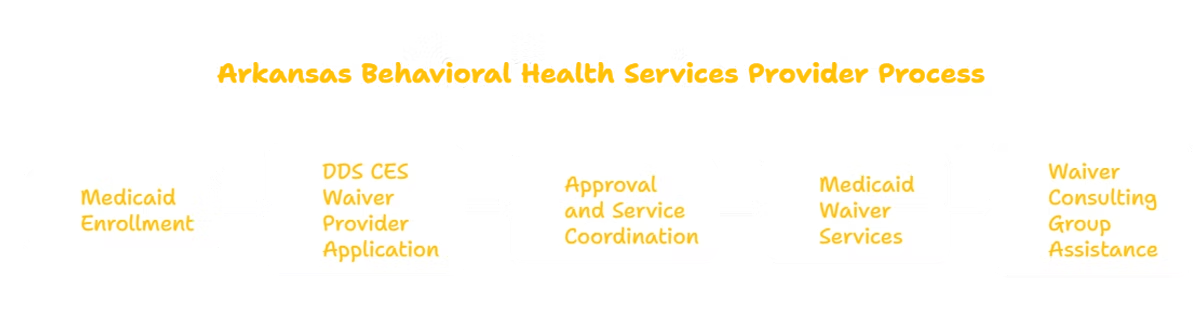
The journey to becoming an approved provider is structured into distinct enrollment phases. First, organizations must navigate the Arkansas Medicaid Provider Portal to submit essential documentation, including W-9 forms and electronic funds transfer (EFT) information. Selecting the correct provider type—such as Behavioral Health Services or a specific CES Waiver designation—is critical for ensuring that claims are routed correctly through the system.
Following Medicaid enrollment, applicants must undergo the specific DDS CES Waiver Provider Application process. This involves submitting representative samples of behavior support plans, crisis protocols, and staff training outlines. Once these submissions are audited and approved, the provider is integrated into the system, allowing them to begin receiving referrals from DDS support coordinators. Coordination with families, interdisciplinary teams, and school districts remains an ongoing requirement throughout the lifespan of the agency.
Mandatory Documentation and Operational Compliance
Maintaining high standards of documentation is the cornerstone of audit preparedness in the Arkansas behavioral health sector. Agencies are required to develop and strictly enforce a robust policy and procedure manual. This document must explicitly detail how the agency manages sensitive client data, ensures HIPAA compliance, and documents the clinical progress of the individuals under their care.
Essential components of an internal documentation system should include:
- Templates for functional behavior assessments (FBAs) and ongoing behavior support plans.
- Detailed crisis prevention and de-escalation protocols for emergency situations.
- Standardized session notes, daily documentation logs, and incident report forms.
- Internal trackers for staff supervision, continuing education units (CEUs), and current licensure verification.
- Clearly defined client rights, consent forms, and privacy policy agreements.
Staffing, Training, and Clinical Requirements
The quality of behavioral health services is directly tied to the competency of the staff. Clinical supervisors, such as Board Certified Behavior Analysts (BCBA) or licensed mental health professionals (LCSW, LPC, LMFT), are required to oversee the development of behavioral strategies and ensure interventions meet clinical best practices. These supervisors must possess specific experience in working with individuals who have developmental or intellectual disabilities.
Direct support staff or behavior technicians are equally vital to the service delivery model. Agencies must ensure that all employees meet the following standards before interacting with clients:
- Possession of a high school diploma or GED equivalent.
- Completion of a standardized positive behavior support training curriculum.
- Certification in CPR, First Aid, and evidence-based crisis management techniques.
- Successful completion of a rigorous background check and registry clearance process.
- Regular training on person-centered planning, ethical considerations, and HIPAA regulations.
Frequently Asked Questions
What is the typical timeline for launching a behavioral health service agency?
The total timeline varies based on operational readiness, but typically ranges from 4 to 7 months. Business formation takes 1–2 weeks, followed by 45–90 days for Medicaid enrollment and CES waiver approval. Licensing, when required, adds 30–60 days, and staffing/credentialing requires an additional 30–45 days.
What specific roles qualify as a Behavior Analyst/Clinical Supervisor?
Qualifying supervisors must be a Board Certified Behavior Analyst (BCBA), a Licensed Psychologist, or a Licensed Clinical Social Worker (LCSW), Licensed Professional Counselor (LPC), or Licensed Marriage and Family Therapist (LMFT) with demonstrated experience in developmental disability services.
How does a new provider receive their first client referrals?
Once a provider has successfully completed the Medicaid enrollment process and the DDS CES Waiver application, they become eligible to appear in the provider network. Referrals are initiated and coordinated by DDS support coordinators who match the needs of the individual with the specific services offered by the provider.
Key Takeaways for Provider Agencies
Entering the Arkansas behavioral health landscape requires a firm commitment to clinical integrity and regulatory compliance. By rigorously following the enrollment pathways established by the Department of Human Services, maintaining meticulous documentation, and investing in the ongoing training of qualified staff, agencies can successfully deliver essential support services. Whether operating under the CES Waiver or other behavioral health programs, the success of the agency is ultimately defined by its ability to maintain quality standards that support the independence and safety of the individuals served.
Last verified: May 2024. This information is provided for educational purposes and does not constitute legal or professional consulting advice. Rules and regulations regarding Medicaid and state waiver programs are subject to change. Always refer to official documentation from the Arkansas Department of Human Services for the most current requirements.