BEHAVIORAL HEALTH SERVICES PROVIDER IN ALABAMA
By Fatumata Kaba · 2025-06-30 · 5 min read
Supporting individuals with intellectual and developmental disabilities (IDD) requires specialized behavioral health services that bridge clinical expertise with community-based support. In Alabama, these services are facilitated through Home and Community-Based Services (HCBS) Medicaid Waivers, ensuring that individuals receive personalized care to improve functional skills and independence while remaining in their own homes and communities.
What Are Behavioral Health Services Under Alabama HCBS Waivers?
Behavioral health services in the context of Alabama’s IDD system are person-centered interventions designed to address emotional, psychological, and behavioral challenges that may impede an individual’s quality of life. These services focus on reducing maladaptive behaviors while simultaneously promoting positive skill acquisition. By utilizing evidence-based practices, providers help individuals better manage their environment and interpersonal relationships, ultimately fostering greater integration into community life.
The scope of these services is comprehensive, covering everything from initial diagnostics to long-term maintenance of behavior support plans. Providers are tasked with identifying the "function" of behaviors and developing structured, data-driven interventions that are both ethical and effective. Because these services are funded through Medicaid HCBS waivers, every intervention must be clearly linked to a participant's person-centered plan and meet the specific quality standards established by the Alabama Department of Mental Health (ADMH).
Who Regulates Behavioral Health Providers in Alabama?
Navigating the regulatory landscape is the most critical step for any agency looking to provide behavioral services in Alabama. Three primary entities define the standards, oversight, and financial components of these programs. The ADMH acts as the primary gatekeeper for the developmental disabilities service system, focusing on the quality of care, clinical standards, and the vetting of providers who work directly with the waiver population.
The Alabama Medicaid Agency manages the fiscal side of the operation, overseeing provider enrollment, billing configurations, and ensuring that claims meet the requirements of the federally approved waivers. At the highest level, the Centers for Medicare & Medicaid Services (CMS) provides federal oversight to ensure that Alabama’s HCBS waivers remain in compliance with national standards, particularly regarding participant health, safety, and the "community-first" mandate.
- Alabama Department of Mental Health (ADMH): Regulates provider eligibility, credentialing, and quality assurance.
- Alabama Medicaid Agency: Manages provider enrollment and Medicaid billing for Behavioral Health Services.
- Centers for Medicare & Medicaid Services (CMS): Provides federal oversight to ensure HCBS waiver compliance.
What Are the Clinical Requirements for Provider Approval?
Before an agency can begin billing, it must demonstrate a robust clinical infrastructure. This begins with the legal formation of the business and extends to the employment of qualified professionals. An agency must employ or contract with licensed clinicians, such as Board Certified Behavior Analysts (BCBAs), Licensed Professional Counselors (LPCs), or Licensed Clinical Social Workers (LCSWs), to oversee the development of behavioral support plans and clinical assessments.
Operational readiness is evaluated during the ADMH program review. Agencies must prove they have established systems for data collection, secure HIPAA-compliant storage for health records, and emergency response protocols. Documentation is the backbone of these services; providers must be prepared to submit example assessment tools, behavior support plan templates, and detailed training curricula to demonstrate they have the capacity to deliver high-quality, safe, and effective interventions.
How Do Agencies Complete the Provider Enrollment Process?
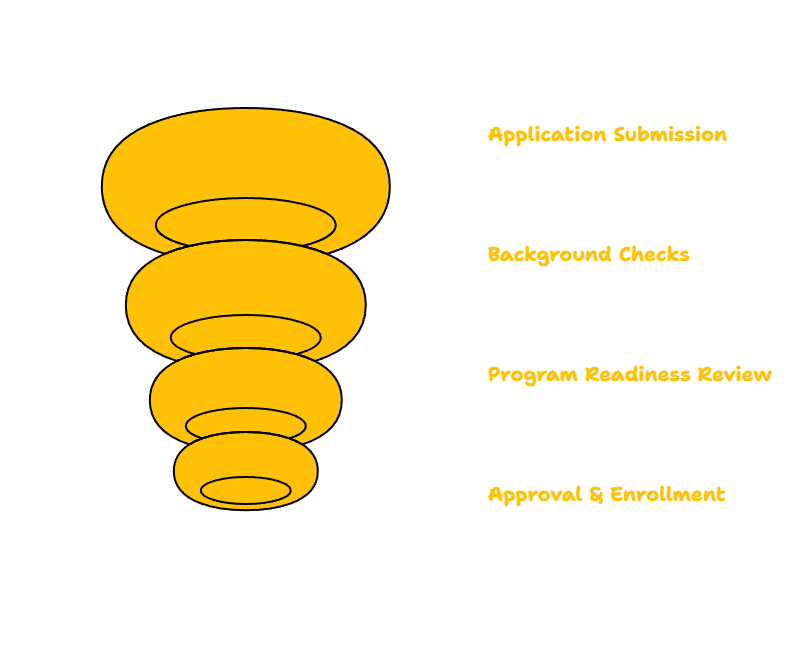
The transition from a business entity to an active Medicaid provider follows a structured, multi-phase timeline. The process begins with the submission of the Behavioral Health Services Provider Application Packet to the ADMH. During this stage, the agency must articulate its clinical service model, including how staff will be supervised and how they will handle complex behavioral crises.
Once the initial application is reviewed, the process moves into background screenings and credentialing. All staff must undergo rigorous criminal background checks, and the agency must verify the licensure and professional standing of all clinical supervisors. A Program Readiness Review follows, where regulators inspect the agency's internal policies—ranging from informed consent procedures to data reporting mechanisms. Only after the ADMH grants official approval can the agency proceed to enroll with the Alabama Medicaid Agency to begin the configuration of billing codes.
What Is the Required Documentation and Staffing Framework?
Compliance is maintained through meticulous record-keeping. Every provider must maintain a comprehensive Policy & Procedure Manual that addresses everything from staff ethics to fraud prevention. Essential documentation includes clear records of staff training, supervision logs, and individual service agreements. Because the services are highly individualized, providers must show how they customize behavior support plans to the unique needs of each participant.
Staffing requirements are strictly tiered to ensure appropriate levels of expertise. Clinical Supervisors must hold at least a Master’s degree in a relevant field and carry the necessary state license or national certification. Behavior Technicians or Support Specialists, who implement the plans on a daily basis, must meet the state-mandated training requirements, including ongoing instruction in crisis prevention and documentation standards. All staff are required to complete ADMH orientation to ensure they understand the nuances of the HCBS waiver system.
Frequently Asked Questions
Which Alabama Medicaid waivers cover behavioral health services?
Behavioral health services are authorized under the Intellectual Disabilities (ID) Waiver, the Living at Home (LAH) Waiver, and the State of Alabama Community Waiver Program.
How long does the provider enrollment process typically take?
While timelines vary based on application volume and agency preparedness, the process typically spans 60 to 90 days for ADMH review and another 60 to 90 days for final Medicaid enrollment.
What are the primary responsibilities of a behavioral health provider?
Providers are responsible for conducting functional behavior analyses (FBA), creating individualized behavior support plans (BSP), providing one-on-one therapy, training caregivers, and maintaining accurate, data-driven progress notes for clinical review.
Key Takeaway
Launching a behavioral health services agency in Alabama requires a disciplined commitment to clinical quality, regulatory compliance, and meticulous operational planning. By aligning your business structure, staff credentials, and documentation protocols with ADMH and Medicaid standards, your agency can provide the essential support necessary for individuals with IDD to thrive in their communities.
Waiver Consulting Group’s Start-Up Assistance Service provides comprehensive support for providers launching under Alabama’s HCBS waiver programs. From business formation and clinical documentation development to staff onboarding, billing code configuration, and regulatory compliance, we provide the technical infrastructure necessary for operational success. Our services include the creation of HIPAA-compliant Policy & Procedure manuals, clinical templates, and quality assurance programs designed to meet the rigorous demands of the ADMH and Alabama Medicaid.
Last verified: October 2023. This information is provided for educational purposes only and does not constitute legal or financial advice. Consult with the Alabama Department of Mental Health and the Alabama Medicaid Agency for the most current regulatory requirements, as statutes and policies are subject to change.