BEHAVIOR SUPPORT SERVICES PROVIDER IN SOUTH DAKOTA
By Fatumata Kaba · 2025-10-15 · 6 min read
PROVIDING PERSON-CENTERED STRATEGIES TO REDUCE CHALLENGING BEHAVIORS AND PROMOTE SKILL DEVELOPMENT IN HOME AND COMMUNITY SETTINGS
Behavior Support Services in South Dakota are essential specialized interventions designed to help individuals with intellectual and developmental disabilities (IDD) acquire positive behavioral skills while reducing behaviors that interfere with their daily independence. These services are authorized under the CHOICES Waiver and the Family Support 360 Waiver, both of which are administered by the South Dakota Department of Human Services (DHS) Division of Developmental Disabilities (DDD) to ensure that participants receive person-centered, high-quality care within their home and community environments.
What Are the Roles and Responsibilities of Governing Agencies?
The regulatory framework for behavior support in South Dakota is built upon a collaborative relationship between state-level oversight and federal compliance standards. The South Dakota Department of Human Services (DHS) – Division of Developmental Disabilities (DDD) serves as the primary governing body responsible for waiver operations. Their authority covers the entire spectrum of provider management, including initial enrollment, ongoing quality assurance, compliance monitoring, and the establishment of mandatory training requirements for all behavior service practitioners.
At the federal level, the Centers for Medicare & Medicaid Services (CMS) provides the foundational guidance that South Dakota must follow to maintain its Home and Community-Based Services (HCBS) waiver status. CMS enforces strict requirements regarding person-centered planning and the oversight of restrictive interventions. Providers must ensure that every behavior support plan aligns with these federal expectations, focusing on positive reinforcement and the rights of the participant above all else.
How Do Providers Deliver Behavior Support Services?
Behavior Support Services encompass a comprehensive, evidence-based approach to assisting participants who struggle with emotional or behavioral regulation. The core of this service is the professional evaluation of the individual’s needs, followed by the systematic planning, implementation, and rigorous monitoring of customized support strategies. By addressing behaviors that interfere with learning, healthy relationships, or safety, providers create a more stable environment for the participant.
Approved providers are tasked with delivering a wide array of clinical and support functions that must be documented according to state standards. These tasks typically include:
- Conducting Functional Behavior Assessments (FBAs) to identify the root cause of behaviors.
- Developing and revising Behavior Support Plans (BSPs).
- Directly implementing behavioral interventions in real-world settings.
- Delivering professional training to staff members and family caregivers on specific strategies.
- Maintaining consistent data collection and progress monitoring logs.
- Creating crisis intervention and de-escalation plans to ensure participant safety.
- Collaborating closely with case managers, medical professionals, and other involved therapists.
What Are the Licensing and Provider Approval Requirements?
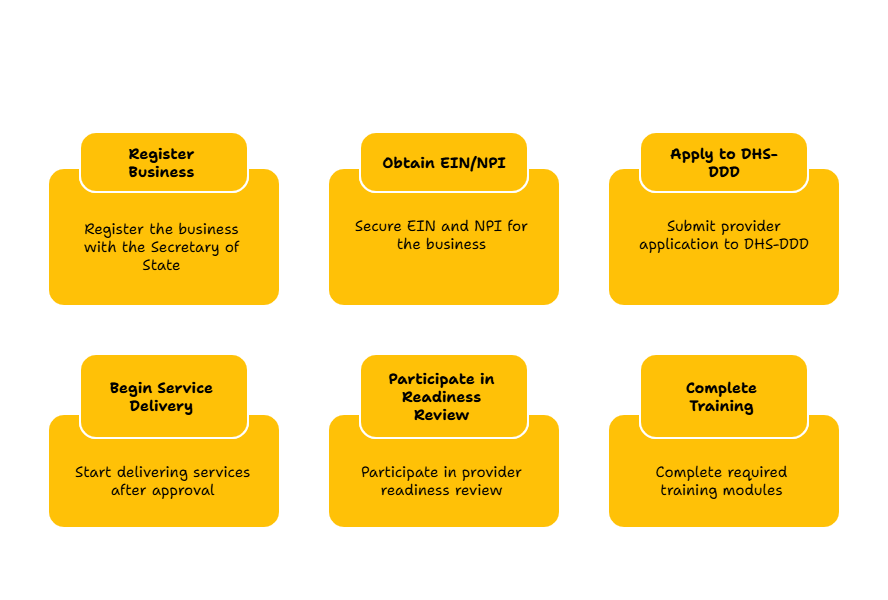
Launching a Behavior Support Services agency in South Dakota requires meticulous preparation to meet state-specific operational criteria. Before a provider can be authorized to bill for waiver services, the business must establish a formal legal structure, including registration with the South Dakota Secretary of State. This foundational step is followed by obtaining a federal Employer Identification Number (EIN) and a Type 2 National Provider Identifier (NPI) for organizational billing.
Once the business entity is established, the prospective provider must apply to the DHS-DDD for official designation as a Behavior Support provider. This process is not merely administrative; it involves submitting comprehensive documentation of professional credentials. Because this service is clinical in nature, the agency must demonstrate that it employs or contracts with highly qualified professionals—such as Board Certified Behavior Analysts (BCBAs), Licensed Psychologists (LP), Licensed Clinical Social Workers (LCSW), or other master’s-level behavior specialists—who meet the rigorous standards of the department.
How Should New Agencies Manage the Enrollment Process?
The provider enrollment process is structured to ensure that only qualified entities serve vulnerable populations. The journey typically begins with the business setup and the procurement of necessary credentials. After the initial registrations are complete, the agency must compile a formal application for the DHS-DDD, which includes detailed credentials, sample clinical plans, and the required operational documentation.
Following the submission of the application, agencies must undergo a readiness review. This phase ensures that the provider is not only clinically prepared but also administratively ready to handle the specific reporting and privacy requirements associated with Medicaid waiver programs. New providers should prepare for a timeline involving the following stages:
- Business Setup: 1–2 months for entity registration and policy development.
- Medicaid Enrollment: 2–3 months for credential review and state approval.
- Staffing: 30–60 days for hiring qualified clinicians and vetting staff.
- Operational Readiness: Final review followed by the receipt of Individual Support Plan (ISP) authorizations.
What Are the Documentation and Staffing Requirements?
Compliance hinges on an agency's ability to maintain high-quality documentation and uphold strict staffing standards. An essential asset for any new provider is a comprehensive Policy & Procedure Manual. This document must explicitly outline assessment protocols, data tracking standards, staff training logs, crisis response procedures, HIPAA compliance measures, and internal billing verification processes. Without these written protocols, an agency will struggle to pass state audits or maintain eligibility.
Staffing requirements are equally stringent to ensure the safety and progress of participants. All behavior support professionals must hold appropriate licensure or professional credentials in behavioral health or psychology. Furthermore, all staff, including behavioral technicians or direct support professionals who implement the plans, must undergo mandatory background checks, abuse prevention training, and instruction in CPR/First Aid. These team members must also participate in ongoing annual skills assessments and supervision reviews to ensure their interventions remain effective and compliant.
Frequently Asked Questions
Which Medicaid waiver programs cover Behavior Support Services in South Dakota?
Behavior Support Services are authorized under the CHOICES Waiver, which serves adults with IDD, and the Family Support 360 Waiver, which provides services to children and adults in family-based settings. Additional funding may be available through school transition programs or EPSDT for individuals under the age of 21, provided the services meet the definition of medical necessity.
What qualifications are required for a Behavior Support Professional?
Qualified professionals typically hold a master’s degree in a relevant field such as psychology, education, or social work. Common credentials include Board Certified Behavior Analyst (BCBA), Licensed Professional Counselor (LPC), Licensed Psychologist (LP), or Licensed Master Social Worker (LMSW), combined with demonstrated experience in conducting Functional Behavior Assessments (FBAs) and designing effective behavior support plans.
How does a provider ensure compliance during the audit process?
Compliance is maintained by strictly adhering to the protocols established in the agency’s Policy & Procedure Manual. This includes consistent data collection, regular review of BSP efficacy, timely submission of required reports to the DHS-DDD, and meticulous record-keeping of staff training and supervision. Participating in proactive readiness reviews and maintaining current documentation for all clinicians are the most effective ways to ensure ongoing compliance.
Successful entry into the South Dakota Behavior Support Services market requires a deep understanding of both clinical best practices and Medicaid administrative requirements. By prioritizing the development of robust internal policies and ensuring that all staff meet the stringent professional criteria set by the Department of Human Services, agencies can establish sustainable programs that meaningfully improve the lives of participants in the HCBS system.
Last verified: October 2023. Disclaimer: This article is intended for educational purposes only and does not constitute legal, medical, or clinical advice. Regulations regarding Medicaid waivers and provider requirements are subject to change; always consult directly with the South Dakota Department of Human Services (DHS) or the Centers for Medicare & Medicaid Services (CMS) for the most current state and federal guidelines.