AUTISM-SPECIFIC SERVICES PROVIDER IN MONTANA
By Fatumata Kaba · 2025-08-06 · 5 min read
EMPOWERING INDIVIDUALS WITH AUTISM THROUGH PERSONALIZED SUPPORT AND INTEGRATED CARE
Autism-specific services in Montana provide targeted, evidence-based support for individuals with Autism Spectrum Disorder (ASD) to enhance their daily living skills, social interactions, and community engagement. These services are authorized and reimbursed through the Montana Medicaid Home and Community-Based Services (HCBS) waiver programs, requiring providers to adhere to rigorous state and federal standards for person-centered care. Becoming a provider in this space involves a structured enrollment process with the Montana Department of Public Health and Human Services (DPHHS) and a commitment to maintaining high-quality therapeutic environments.
What Are the Governing Agencies and Oversight Requirements?
The delivery of autism-specific services in Montana is heavily regulated to ensure participant safety and the efficacy of therapeutic interventions. The primary entity is the Montana Department of Public Health and Human Services (DPHHS), which holds the responsibility for administering Medicaid waiver funding, managing provider enrollment, overseeing service authorizations, and processing reimbursements for authorized care.
Within the state structure, the Children's Autism Waiver Program (CAWP) operates under the DPHHS to maintain specialized oversight. This unit is dedicated to monitoring service quality, ensuring the protection of participants, and verifying compliance specifically for autism-related services. Additionally, because these programs utilize Medicaid funding, the Centers for Medicare & Medicaid Services (CMS) provides federal oversight to ensure adherence to national Medicaid standards and the core principles of person-centered planning.
What Services Do Autism-Specific Providers Deliver?
Autism-specific services are designed to address the unique challenges associated with ASD, including deficits in communication, social interaction, sensory processing, and independent living skills. Providers are expected to deliver a mix of therapeutic and skill-building interventions that are tailored to the participant's specific Individualized Service Plan (ISP). These services are intended to foster independence and improve the individual's ability to participate in their home and community life.
Approved providers generally deliver the following core interventions:
- Behavioral Therapy: Utilizing Applied Behavior Analysis (ABA) to mitigate behavioral challenges and foster adaptive skills.
- Communication Support: Speech and language therapy focused on enhancing both verbal and non-verbal communication methods.
- Social Skills Training: Guided activities and environments that promote teamwork, social interaction, and community engagement.
- Occupational Therapy: Application of sensory integration techniques to improve daily functioning and physical coordination.
- Family Support and Training: Educational programs designed to help family members understand and manage the specific needs of their loved ones.
- Individualized Skill Development: Coaching in self-regulation, personal care, and activities of daily living to promote long-term independence.
How Do Providers Navigate Licensing and Enrollment?
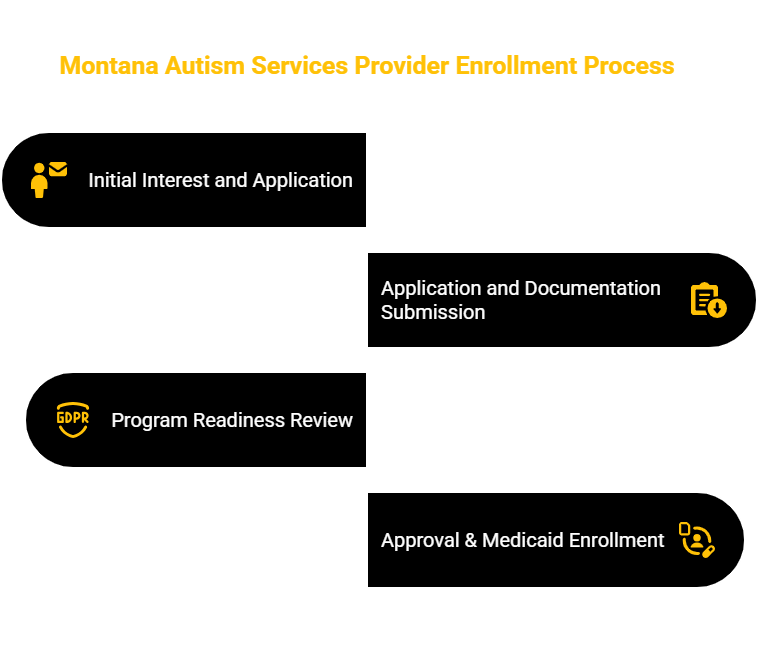
Establishing an autism-specific services agency requires a methodical approach to business formation and regulatory compliance. Before engaging with the Medicaid system, an entity must be properly registered with the Montana Secretary of State and secure a federal Employer Identification Number (EIN) and a Type 2 National Provider Identifier (NPI). These foundational steps provide the legal and administrative infrastructure necessary to operate as a healthcare provider in Montana.
Once the business is legally established, the provider must navigate the Montana Medicaid Provider Enrollment Portal. This process includes proving that the agency holds all necessary professional licenses—such as those for Board Certified Behavior Analysts (BCBA) or Speech-Language Pathologists—and maintains appropriate general and professional liability insurance. Furthermore, providers must develop comprehensive internal policies governing behavior intervention, participant rights, safety protocols, and emergency management to meet state readiness requirements.
What Are the Professional Staffing and Training Expectations?
The quality of autism-specific services is directly tied to the qualifications and expertise of the clinical team. Montana mandates that roles such as the Autism Services Program Director require advanced credentials, typically a Master’s degree in psychology, behavioral sciences, or a related field, with BCBA certification being strongly preferred. This leadership position is critical for supervising therapeutic delivery and ensuring adherence to clinical best practices.
All clinical staff, including behavioral therapists, RBTs, and speech-language pathologists, must maintain active state licensure or certification. Beyond their primary clinical credentials, the agency must ensure all staff members undergo a rigorous onboarding process. This includes:
- Completion of specialized autism-specific behavioral training modules.
- Mandatory education on HIPAA compliance and the protection of participant rights.
- Training in safety protocols, emergency preparedness, and crisis de-escalation.
- Ongoing annual competency evaluations and documented continuing professional development.
- Verification of criminal background clearances and health screenings for all personnel.
Frequently Asked Questions
Which Medicaid waivers cover autism-specific services?
Autism-specific services are integrated into several Montana Medicaid HCBS waiver programs, including the Children's Autism Waiver, the Comprehensive Waiver for Individuals with Developmental Disabilities, the Big Sky Waiver (Aged and Disabled), the Traumatic Brain Injury (TBI) Waiver, and the Community Supports Waiver for Adults with Physical Disabilities.
What documentation is required for the initial provider application?
Providers must submit their Articles of Incorporation, proof of business registration, NPI/EIN verification, professional licenses for staff, certificates of liability insurance, and a robust Policy & Procedure Manual covering everything from behavior intervention protocols to HIPAA compliance and Medicaid billing standards.
What is the typical timeline for launching an autism services agency?
The launch process is estimated to take between 5 and 9 months in total. This includes 1–2 months for business formation, 2–3 months for staffing and credentialing, 60–90 days for the Medicaid Provider Enrollment and readiness review process, and 30–45 days for final billing system setup.
WCG Start-Up Assistance for Montana Providers
Waiver Consulting Group (WCG) provides comprehensive support for organizations aiming to launch Medicaid-compliant autism-specific services in Montana. Our assistance covers the end-to-end process of business registration, Medicaid enrollment, and state licensure. We assist in the development of detailed policy manuals for autism care, behavioral intervention workflows, staff credentialing frameworks, and quality assurance systems. Furthermore, we support providers in setting up Medicaid billing systems and establishing effective outreach strategies to engage families and community healthcare partners, ensuring your agency is prepared for long-term operational success.
Key Takeaway: Successfully launching an autism-specific provider agency in Montana requires a meticulous focus on regulatory compliance, the recruitment of highly qualified clinical staff, and a deep understanding of the DPHHS Medicaid waiver standards. By focusing on robust policy development and strict adherence to the Medicaid enrollment timeline, new providers can ensure they are well-positioned to deliver essential care to individuals with ASD while maintaining the necessary operational standards.
Last verified: 2024. This information is provided for educational purposes only and does not constitute legal or professional advice. Always consult with the Montana Department of Public Health and Human Services (DPHHS) for the most current guidance on provider enrollment and program requirements.