AUTISM SERVICES PROVIDER IN ALABAMA
By Fatumata Kaba · 2025-06-27 · 5 min read
Becoming an autism services provider in Alabama is a specialized undertaking that requires strict alignment with the Alabama Department of Mental Health (ADMH) and the Alabama Medicaid Agency. Organizations must establish robust, evidence-based clinical programs that meet stringent Home and Community-Based Services (HCBS) waiver standards to support individuals diagnosed with autism spectrum disorder (ASD) in achieving greater independence.
This guide serves as a foundational resource for prospective providers navigating the regulatory landscape, staffing requirements, and enrollment processes necessary to deliver high-quality behavioral interventions across the state. By adhering to these structured mandates, providers can ensure their agency is positioned to serve the autism community while remaining fully compliant with state and federal oversight.
Understanding the Regulatory Framework for Autism Services
The delivery of autism services in Alabama is governed by a tripartite regulatory structure. The Alabama Department of Mental Health (ADMH) serves as the primary entity responsible for regulating specific autism services, approving providers, and ensuring that all interventions meet established evidence-based practice standards. Their oversight ensures that agencies provide the quality of care expected under the HCBS waivers.
Complementing ADMH, the Alabama Medicaid Agency manages the fiscal and operational aspects of these services, including provider enrollment, billing processes, and reimbursement protocols. Finally, the Centers for Medicare & Medicaid Services (CMS) provides federal oversight, setting the broad integrity guidelines for Medicaid-funded programs. Coordination between these three bodies is essential for any agency aiming to operate sustainably and legally in the state.
Developing a Compliant Autism Service Delivery Model
Autism services must be inherently person-centered, focusing on skill acquisition, behavioral improvement, and social engagement. Providers are expected to utilize functional assessments to guide individualized treatment plans, ensuring that every intervention is tailored to the unique developmental needs of the individual. Success in this field relies on evidence-based methodologies that are both measurable and outcome-focused.
Approved providers often deliver a wide array of specialized supports designed to integrate the individual into their home and community environment. These services require a high level of clinical oversight and systematic documentation to demonstrate progress. Essential components of these service models include:
- Applied Behavior Analysis (ABA) therapy.
- Comprehensive behavioral assessments and dynamic intervention planning.
- Structured communication and social skills development training.
- Functional living and adaptive skills instruction.
- Parent and caregiver education, coaching, and support programs.
- Sensory integration and regulation strategies.
- Crisis planning and behavioral safety protocols.
Navigating Licensing and Operational Prerequisites
Before initiating the formal application, a provider must establish a solid legal and operational foundation. This begins with standard business formation, including registering the agency with the Alabama Secretary of State and obtaining a Federal Employer Identification Number (EIN) from the IRS. Furthermore, a Type 2 National Provider Identifier (NPI) is mandatory for billing and organizational identification purposes.
Beyond legal formation, agencies must cultivate an environment of clinical excellence. This involves employing or contracting with highly credentialed professionals, such as Board Certified Behavior Analysts (BCBAs) or licensed behavior analysts. Operational success is further contingent upon the development of clinical policies that align with ADMH requirements and the implementation of HIPAA-compliant systems for data collection, therapy documentation, and record retention.
The Step-by-Step ADMH Provider Enrollment Process
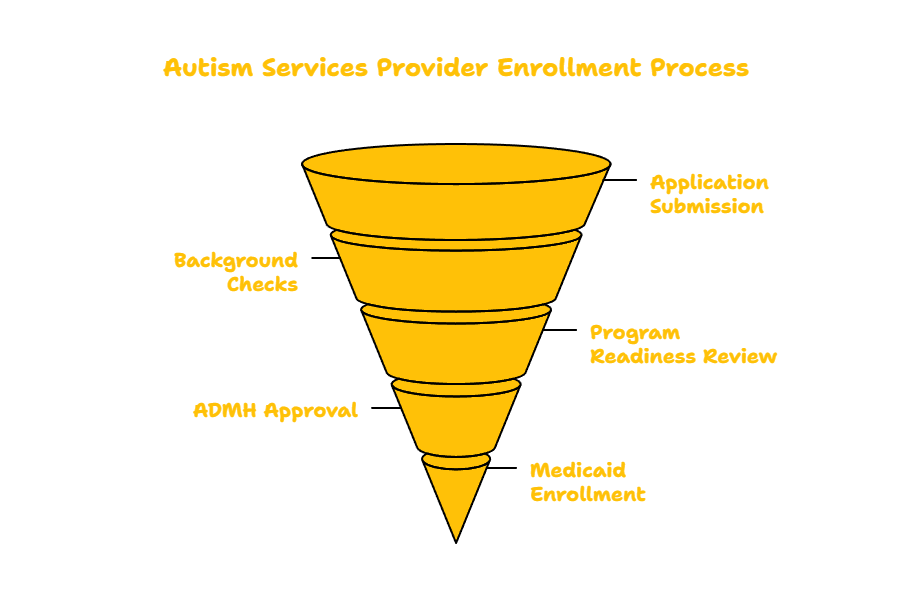
The path to becoming an approved provider begins with requesting the Autism Services Provider Application Packet from the ADMH. During this phase, applicants must submit a detailed service plan that outlines their intervention models, staffing hierarchy, and methods for therapy delivery. Documentation such as sample treatment plans, behavioral assessment tools, and data-tracking formats must be included to demonstrate the agency's clinical competence.
Once the application is submitted, the agency will undergo a rigorous credentialing and readiness review. This involves thorough background checks and drug screenings for all staff, alongside the verification of all clinical licenses and certifications. The ADMH will also evaluate the agency’s readiness by reviewing emergency response protocols, supervision structures, and consent procedures. Upon final approval by the ADMH, the provider may then enroll with the Alabama Medicaid Agency to begin the process of billing for authorized services.
Staffing, Training, and Clinical Supervision Requirements
Clinical integrity is maintained through specific staffing roles and mandatory training intervals. The Clinical Director or BCBA serves as the cornerstone of the program, ensuring that all ABA interventions are grounded in best practices and compliant with state standards. Below the BCBA, Registered Behavior Technicians (RBTs) deliver the bulk of direct services, provided they hold the appropriate certification and work under active, professional supervision.
To ensure high standards are maintained, all personnel are required to complete comprehensive training. This includes the initial ADMH orientation, HCBS waiver-specific training, and ongoing annual education regarding ethics, abuse prevention, and advanced behavioral interventions. Because safety is a primary concern, all staff must also be proficient in crisis management and behavioral de-escalation techniques.
Frequently Asked Questions
Which Medicaid waivers currently authorize autism services in Alabama?
Autism services are authorized under the Intellectual Disabilities (ID) Waiver, the Living at Home (LAH) Waiver, and the State of Alabama Community Waiver Program.
What is the typical timeline for launching an autism service agency?
The timeline varies by agency, but the general progression includes one week for business formation, 60–90 days for the ADMH application review, 30–60 days for clinical onboarding, and 60–90 days for Medicaid enrollment.
What documentation is critical for the ADMH provider application?
Essential documentation includes the Articles of Incorporation, IRS EIN letter, NPI confirmation, staff licensure/certifications, and a comprehensive Policy & Procedure Manual covering HIPAA compliance, emergency protocols, and treatment planning.
Key Takeaway
Successfully launching and maintaining an autism services provider agency in Alabama requires an unwavering commitment to administrative precision and clinical quality. By meticulously following the regulatory pathway outlined by the ADMH and the Alabama Medicaid Agency, providers can build a sustainable organization capable of delivering vital, evidence-based supports to individuals with autism spectrum disorder, ultimately fostering better outcomes and improved quality of life for the communities they serve.
Last verified: October 2023. Disclaimer: This information is for educational purposes only and does not constitute legal or professional advice. Requirements for Medicaid waivers and state-licensed programs are subject to change; always consult directly with the Alabama Department of Mental Health and the Alabama Medicaid Agency for the most current regulations and policy updates.