ASSISTIVE TECHNOLOGY SERVICES PROVIDER IN OKLAHOMA
By Fatumata Kaba · 2025-09-08 · 5 min read
Becoming an Assistive Technology (AT) services provider in Oklahoma allows organizations to provide essential specialized equipment and devices that significantly enhance the functional independence and community integration of individuals with disabilities. By navigating the regulatory frameworks established by the Oklahoma Health Care Authority (OHCA) and the Oklahoma Department of Human Services (OKDHS), qualified providers can deliver life-changing support ranging from mobility aids and communication tools to environmental control systems funded through Medicaid HCBS waivers and State Plan services.
Understanding the Governing Regulatory Landscape
The provision of Assistive Technology in Oklahoma is overseen by a structured network of state and federal agencies. The Oklahoma Health Care Authority (OHCA) serves as the primary administrator for SoonerCare (Medicaid), holding the authority to approve and regulate AT services through both State Plan services and Home and Community-Based Services (HCBS) waivers. Providers must align their operations with OHCA’s standards to ensure all equipment and training meet federal requirements for medical necessity and safety.
In addition to OHCA, the Oklahoma Department of Human Services (OKDHS) plays a critical role, particularly in coordinating services for individuals enrolled in the Developmental Disabilities Services (DDS) programs and the ADvantage Waiver. While the Oklahoma Department of Rehabilitation Services (DRS) manages non-Medicaid vocational and independent living AT programs, Medicaid-funded providers must prioritize adherence to the Centers for Medicare & Medicaid Services (CMS) standards, which emphasize person-centered planning and fiscal integrity in the delivery of assistive technology.
Core Assistive Technology Service Delivery Requirements
Assistive Technology encompasses any item, piece of equipment, or product system—whether acquired commercially, modified, or customized—that is used to increase, maintain, or improve the functional capabilities of individuals with disabilities. Providers are expected to perform a holistic set of functions that go beyond simple equipment sales, focusing instead on the full lifecycle of the technology from assessment to long-term maintenance.
- Assessment & Evaluation: Conducting formal evaluations to determine device needs based on individual goals and documented functional limitations.
- Device Acquisition & Customization: Procuring, adapting, or building equipment tailored to meet the specific requirements of the participant.
- Training & Education: Providing comprehensive instruction to individuals and their caregivers regarding the safe use, operation, and maintenance of the equipment.
- Repair & Maintenance: Troubleshooting and providing ongoing servicing to ensure the continued effectiveness and safety of the devices.
- Home Integration Support: Assessing and modifying the home environment to ensure the seamless compatibility and accessibility of the new technology.
Navigating the Provider Enrollment and Credentialing Process
The enrollment process requires a disciplined approach to business setup and regulatory compliance. Initially, a provider must establish a formal business entity, obtain an EIN from the IRS, and secure a Type 2 NPI. Once the organizational structure is in place, the provider must enroll specifically as an Assistive Technology provider through the OHCA SoonerCare Provider Portal or via the specific channels required by OKDHS for DDS waiver services.
During the enrollment phase, the state may conduct a readiness review to verify that the provider is prepared to manage the specialized nature of AT services. This involves submitting comprehensive documentation, including proof of general and product liability insurance, as well as evidence of established relationships with licensed therapists (such as OTs, PTs, or SLPs) and durable medical equipment (DME) vendors. Approval is finalized when the provider receives a SoonerCare billing ID, allowing for the submission of claims for authorized services.
Essential Documentation and Operational Compliance
Maintaining a rigorous documentation system is the hallmark of a successful Medicaid-compliant provider. Agencies must develop and maintain a robust Assistive Technology Policy & Procedure Manual. This manual serves as the foundation for the organization’s operational integrity and must detail the entire process from the initial referral to the final delivery and follow-up support.
- Assessment and Ordering: Clearly defined workflows for justifying equipment, ordering, and verifying receipt.
- Staff Qualifications: Detailed records of background checks, required certifications, and ongoing training logs for all personnel.
- Service Logs and Tracking: Accurate records of delivery, training checklists, and maintenance performed on each device.
- Medicaid Billing Controls: Established procedures for ensuring that billing records match inventory and service logs to prevent audit discrepancies.
- HIPAA and Rights Documentation: Strict adherence to participant privacy and rights, including formal processes for collecting and acting on consumer feedback.
Staffing, Training, and Professional Competencies
A provider agency must ensure its workforce possesses the appropriate mix of technical expertise and clinical understanding. The Assistive Technology Coordinator serves as the central point of contact and should ideally have a background in rehabilitation, occupational therapy, engineering, or DME coordination, paired with a solid understanding of Medicaid billing compliance. In instances where complex devices are required, the provider must coordinate with licensed therapists who are authorized to write formal justification reports.
All staff—including equipment technicians and trainers—must undergo consistent training to remain proficient in both technical and regulatory requirements. This includes mandatory training in HIPAA and person-centered planning, alongside regular reviews of Medicaid compliance procedures. Ongoing professional development is equally critical, as the field of assistive technology evolves rapidly; staff should be encouraged to stay current on emerging accessibility tools and best practices in device integration.
Frequently Asked Questions
What Medicaid waiver programs cover Assistive Technology in Oklahoma?
Assistive Technology is authorized under several programs, including the ADvantage Waiver, the Medically Fragile Waiver, the In-Home Supports Waiver (for adults or children via DDS), the Community Waiver (DDS), and the Living Choice Program. Additionally, limited AT coverage is available through the State Plan SoonerCare program, particularly for children through the EPSDT benefit.
What is the typical timeline for launching an AT provider agency?
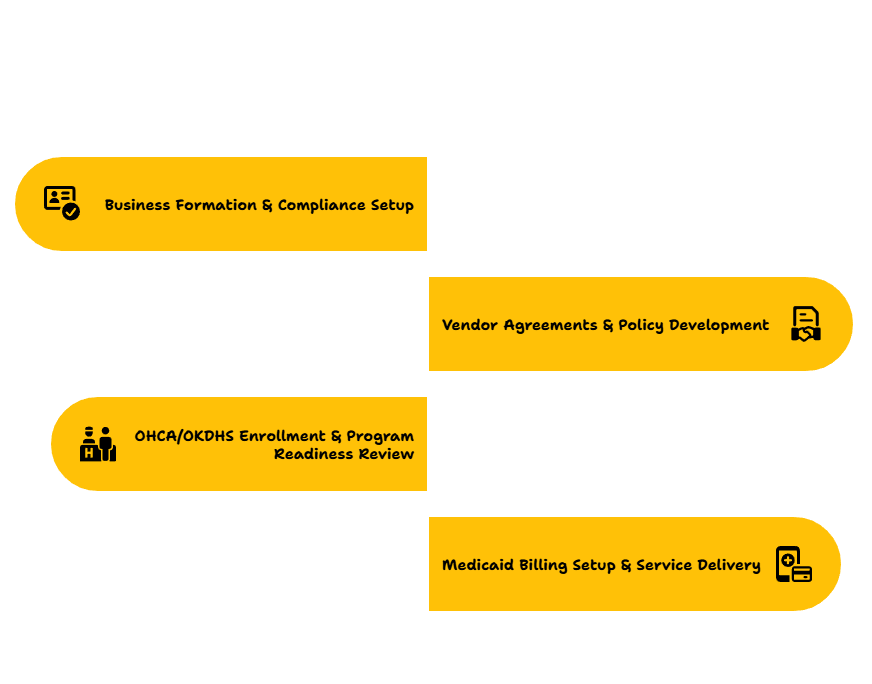
The launch process typically spans 6 to 9 months. This includes 1–2 months for business formation, 2–3 months for policy development and vendor agreements, 60–90 days for Medicaid enrollment and readiness reviews, and a final 30–45 days for billing system activation and service initiation.
Are background checks mandatory for staff?
Yes, all staff and vendors involved in the delivery of assistive technology services must pass required background checks to ensure the safety and security of the waiver participants they serve.
Waiver Consulting Group’s Start-Up Assistance Service
WCG provides specialized consulting to help providers launch and scale Medicaid-compliant Assistive Technology Services throughout Oklahoma. Services include comprehensive support for business setup, Medicaid enrollment, and the creation of waiver-specific credentialing systems. We assist in the development of operational policy manuals, staff training templates, and audit-ready tracking systems for billing and inventory. Furthermore, WCG offers guidance on building effective partnerships with therapists and DME vendors, as well as implementing quality assurance frameworks to ensure long-term regulatory success.
Key Takeaway: Successful operation as an Assistive Technology provider in Oklahoma requires a dual focus on technical competency regarding adaptive devices and strict adherence to OHCA and OKDHS Medicaid administrative standards. By establishing robust policy frameworks, ensuring staff are appropriately trained, and maintaining meticulous documentation, providers can effectively navigate the regulatory environment and improve the lives of Oklahoma’s HCBS waiver participants.
Last verified: October 2023. Disclaimer: This article is for informational purposes only and does not constitute legal or professional medical advice. Always consult with the Oklahoma Health Care Authority (OHCA) and official state guidelines for the most current regulations and program requirements.