ENVIRONMENTAL MODIFICATION SERVICES PROVIDER IN NEW MEXICO
By Fatumata Kaba · 2025-09-05 · 5 min read
ENHANCING SAFETY AND ACCESSIBILITY THROUGH HOME MODIFICATIONS
Environmental Modification Services in New Mexico represent a critical component of the state’s Home and Community-Based Services (HCBS) ecosystem, providing essential home adaptations for individuals with disabilities or mobility challenges. These services are specifically designed to ensure that living environments are safe, accessible, and fully conducive to independent living, thereby preventing institutionalization and promoting community integration.
Authorized under various New Mexico Medicaid HCBS waiver programs, these services empower participants to remain in their homes by bridging the gap between physical infrastructure and individual accessibility needs. For provider agencies, entering this service sector requires a rigorous commitment to state compliance, technical expertise in construction, and adherence to the person-centered planning mandates established by both state and federal oversight agencies.
What Are the Governing Agencies for Environmental Modification Services?
The delivery of Environmental Modification Services is overseen by a multi-layered regulatory framework. The New Mexico Human Services Department (HSD) serves as the primary authority, administering Medicaid waiver funding and managing the critical infrastructure of provider enrollment, service authorization, and reimbursement protocols. Any organization seeking to provide these services must first align its operational model with the standards dictated by the HSD.
Complementing this, the Developmental Disabilities Supports Division (DDSD) ensures that service delivery remains focused on the participant’s quality of life, managing compliance and monitoring the efficacy of the home modifications within the context of the Individualized Service Plan (ISP). At the federal level, the Centers for Medicare & Medicaid Services (CMS) provides the overarching regulatory umbrella, ensuring that all modifications satisfy national requirements for person-centered planning and participant protections.
What Does the Scope of Environmental Modification Services Include?
Environmental Modification Services encompass a broad range of structural and assistive improvements tailored to the specific needs identified during a professional assessment. These modifications are not merely aesthetic; they are functional requirements documented in the participant’s Individualized Service Plan (ISP) to mitigate safety risks and facilitate daily living activities. Approved providers are responsible for delivering high-quality, code-compliant installations that meet the unique needs of the population they serve.
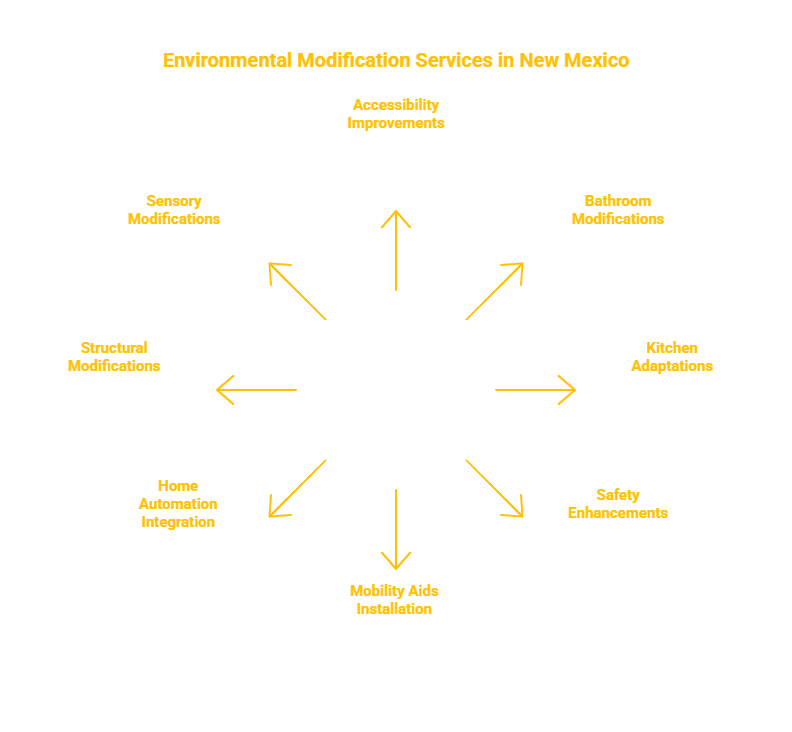
Commonly approved modifications include:
- Accessibility Improvements: Installation of durable ramps, widened doorways to accommodate mobility devices, and secure handrails.
- Bathroom Modifications: Roll-in showers, grab bars, accessible sinks, and elevated toilet seats.
- Kitchen Adaptations: Lowered countertops, accessible cabinetry, and appliances modified for safe operation.
- Safety Enhancements: Installation of specialized safety alarms, high-visibility lighting, and slip-resistant flooring.
- Mobility Aids Installation: Professional setup of stairlifts and vertical platform lifts.
- Home Automation Integration: Smart home technologies, including remote lighting, climate control, and security management.
- Structural Modifications: Hallway adjustments and entryway improvements for seamless transition.
- Sensory Modifications: Visual and auditory signal integration for individuals with sensory impairments.
How Do Agencies Meet Licensing and Provider Approval Requirements?
Launching a service agency requires meticulous preparation of both business infrastructure and operational compliance. Before an agency can bill Medicaid, it must establish itself as a recognized legal entity in New Mexico and obtain all necessary tax and identification credentials, including an IRS EIN and a Type 2 NPI. Furthermore, the agency must secure appropriate contractor licenses through the New Mexico Regulation and Licensing Department (RLD) to ensure that all structural work meets state building codes and safety regulations.
Beyond technical licensure, providers must demonstrate professional competency through a robust policy and procedure manual. This documentation must address the lifecycle of a modification project, from initial safety assessments to the final quality assurance sign-off. Providers must also maintain comprehensive general and professional liability insurance to protect against the risks inherent in construction and home adaptation projects.
What Is the Process for New Mexico Medicaid Provider Enrollment?
The enrollment process is a structured sequence that ensures only qualified agencies are authorized to provide HCBS-funded modifications. Agencies initiate the process by completing an application through the New Mexico Medicaid Provider Enrollment Portal. This submission must be comprehensive, including Articles of Incorporation, proof of business identity, contractor licensing, and evidence of insurance coverage.
Following the submission, the HSD and DDSD conduct a Program Readiness Review. This phase is designed to evaluate the provider’s operational integrity, specifically regarding their modification protocols, staff qualifications, and quality control systems. Only after a successful review are agencies granted the authority to bill Medicaid for services using the designated billing codes. Agencies should be prepared for a multi-month period of verification and documentation review to move from application to active billing status.
What Are the Essential Staffing and Competency Standards?
The credibility of an Environmental Modification provider rests on its staff’s technical expertise and adherence to ethical standards. The program requires an Environmental Modification Program Director who holds a bachelor’s degree in construction management or a related field, supplemented by direct experience in managing accessibility projects. All physical modifications must be carried out by licensed contractors who possess specific experience in accessibility-focused construction and hold valid, clean background checks.
Staffing requirements also extend to accessibility specialists, who should possess recognized certifications, such as the Certified Aging-in-Place Specialist (CAPS) credential. Ongoing training is a regulatory mandate; staff must participate in continuous professional development that covers HIPAA compliance, client rights, safety training, and risk management. Annual competency evaluations are required to ensure that all team members remain updated on current safety protocols and the changing needs of the waiver participant population.
Frequently Asked Questions
Which Medicaid waiver programs cover these modifications?
Environmental Modification Services are available under several New Mexico Medicaid waivers, including the Developmental Disabilities (DD) Waiver, the Mi Via Waiver, the Medically Fragile Waiver, and the Supports Waiver, alongside the broader Home and Community-Based Services (HCBS) Waiver.
How long does the launch process typically take?
The timeline varies by agency readiness, but the estimated duration is as follows: 1–2 months for business formation, 2–3 months for staffing and credentialing, 60–90 days for Medicaid enrollment and readiness reviews, and 30–45 days for final billing setup.
What must be included in the policy and procedure manual?
The manual must detail safety and risk assessment protocols, project planning guidelines, contractor vetting processes, compliance with ADA and local building codes, documentation standards for billing, and emergency preparedness procedures.
Key Takeaway
Successful entry into the New Mexico Environmental Modification market requires an agency to balance high-level construction management with the strict documentation and compliance requirements of the HSD and DDSD. By prioritizing credentialed staff, thorough policy development, and a rigorous approach to the Medicaid enrollment process, providers can establish a sustainable and impactful operation that fulfills a vital need for New Mexico’s HCBS waiver participants.
Last verified: October 2023. Disclaimer: This information is for educational purposes only and does not constitute legal or professional consulting advice. Regulations, policies, and program requirements are subject to change by the New Mexico Human Services Department, the Developmental Disabilities Supports Division, and the Centers for Medicare & Medicaid Services. Agencies should verify all current requirements through the official New Mexico Medicaid Provider Enrollment Portal and corresponding state department websites prior to making business decisions.