ASSISTIVE TECHNOLOGY SERVICES PROVIDER IN NEVADA
By Fatumata Kaba · 2025-09-04 · 5 min read
ENHANCING INDEPENDENCE AND ACCESSIBILITY THROUGH INNOVATIVE TECHNOLOGY SOLUTIONS
Assistive Technology Services in Nevada provide adaptive tools and technologies designed to help individuals with disabilities or mobility challenges maintain autonomy within their homes and communities. These services, authorized under Nevada Medicaid Home and Community-Based Services (HCBS) waiver programs, integrate modern technological solutions to support daily living, communication, mobility, and personal safety for participants.
What Are the Governing Agencies and Regulatory Frameworks in Nevada?
The delivery of Assistive Technology Services in Nevada is governed by a multi-tiered regulatory structure that ensures quality, safety, and fiscal responsibility. The Nevada Department of Health and Human Services (DHHS) serves as the primary authority, administering Medicaid waiver funding and managing the essential functions of provider enrollment, service authorization, and the reimbursement process.
Working in tandem with the DHHS, the Aging and Disability Services Division (ADSD) is responsible for the oversight of service delivery. Their role includes ensuring that all providers adhere to established quality standards and comply with the specific requirements set forth for HCBS waiver programs. At the federal level, the Centers for Medicare & Medicaid Services (CMS) provides the necessary oversight to ensure that state-run Medicaid programs align with federal mandates regarding person-centered planning, participant protection, and the overall quality of care provided in home and community-based settings.
How Are Assistive Technology Services Structured for Medicaid Participants?
Assistive Technology Services encompass a broad range of devices and equipment tailored to enhance the functional capabilities of individuals. These services are delivered based on the participant’s Individualized Service Plan (ISP), ensuring that the technological interventions are not only appropriate for the individual’s physical or cognitive needs but are also integrated into their daily routine.
Approved providers are authorized to deliver a comprehensive suite of support services, which typically include the following:
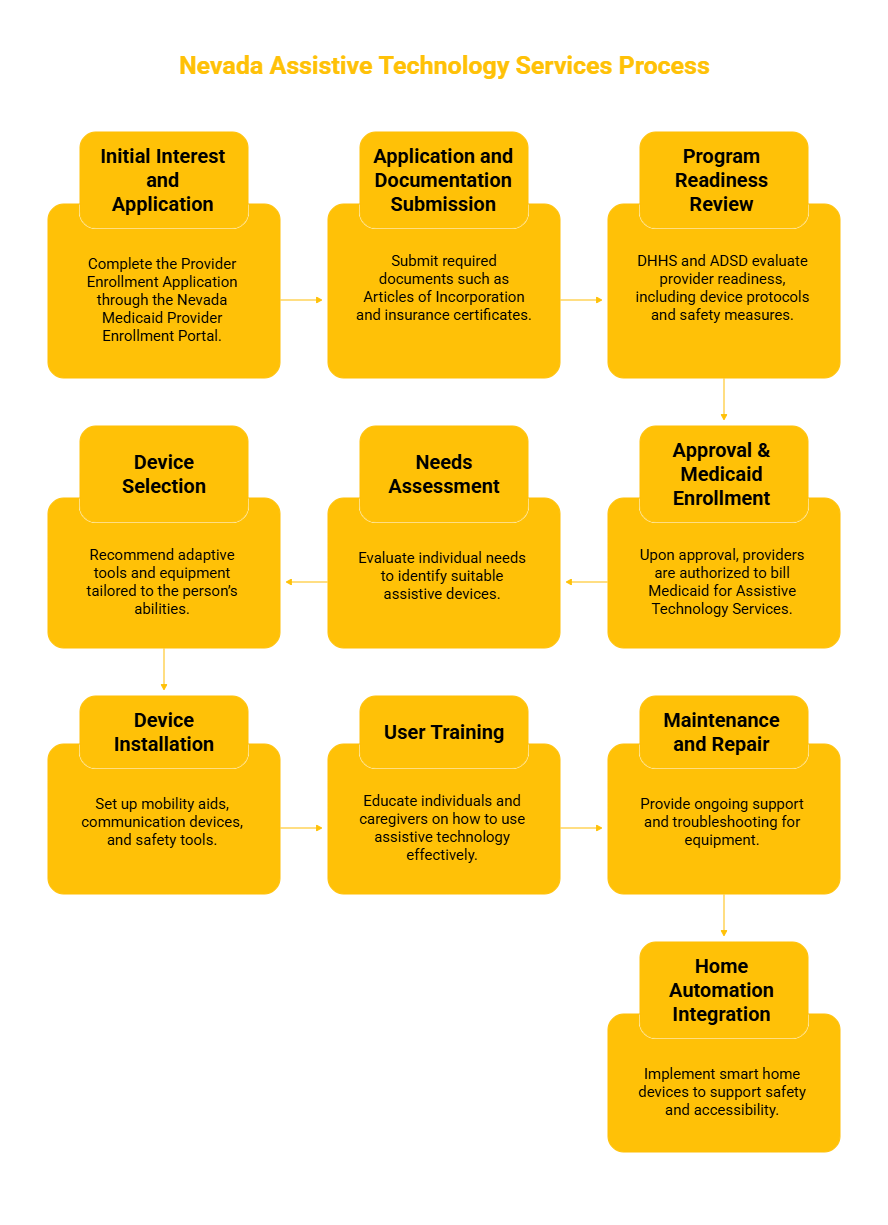
- Needs Assessment: Conducting professional evaluations to identify the specific barriers an individual faces and selecting the appropriate technological interventions.
- Device Selection and Installation: Recommending and physically installing mobility aids, communication devices, or smart home safety tools.
- User Training: Providing structured education for both the participant and their caregivers to ensure the effective and safe use of the new technology.
- Maintenance and Repair: Offering ongoing technical support to troubleshoot equipment issues and ensure consistent functionality.
- Adaptive Communication: Implementing specialized tools that facilitate independence for those with speech, hearing, or vision impairments.
What Are the Mandatory Licensing and Provider Enrollment Steps?
Becoming an approved Medicaid provider for Assistive Technology Services is a structured process that requires rigorous attention to administrative and regulatory detail. Initially, a business entity must be properly registered with the Nevada Secretary of State and secure the necessary federal identifiers, including an Employer Identification Number (EIN) and a Type 2 National Provider Identifier (NPI).
Once the business structure is established, the provider must navigate the Nevada Medicaid Provider Enrollment Portal. This application process requires the submission of extensive documentation, including proof of general and professional liability insurance, professional certifications, and detailed policy manuals. The state conducts a program readiness review to evaluate the provider's operational capacity, including their established protocols for device management, staff training, and participant safety measures. Only after a successful review and final approval can the provider begin billing Medicaid for services.
What Documentation and Staffing Standards Are Required?
Operational excellence in this field is maintained through strict adherence to documentation and staffing protocols. Providers must maintain a comprehensive Policy and Procedure Manual that covers all aspects of the service lifecycle, from initial assessment and installation to ongoing maintenance and grievance handling. HIPAA compliance and strict adherence to client rights are foundational to these operations, and all records must be audit-ready to satisfy Medicaid billing requirements.
Staffing requirements are equally stringent to ensure high-quality service delivery. The Assistive Technology Program Director typically holds a bachelor’s degree in a relevant field such as engineering or rehabilitation technology, with an Assistive Technology Professional (ATP) certification preferred. Specialists and support technicians must possess technical expertise in device implementation and maintenance, supported by consistent background clearances and ongoing professional development training.
Which Medicaid Waiver Programs Include Assistive Technology?
Assistive Technology Services are integrated into several key Nevada Medicaid HCBS waivers, each serving specific populations. These programs include the HCBS Waiver for Persons with Intellectual and Developmental Disabilities (HCBS-IDD), the Frail Elderly (FE) Waiver, the Physical Disabilities Waiver, the Traumatic Brain Injury (TBI) Waiver, and the Aged and Disabled (AD) Waiver.
Within these programs, the scope of services is designed to be flexible. Whether it involves installing essential home modifications like ramps and lifts, deploying smart home automation to monitor safety, or providing sophisticated communication software, the goal is always to maximize the participant’s independence. By focusing on these specific waiver populations, providers can play a critical role in reducing the need for institutional care and supporting aging in place.
Frequently Asked Questions
How long does the provider enrollment process typically take?
The timeline varies based on organizational readiness, but the enrollment and readiness review phase generally takes between 60 and 90 days. Including the initial phases of business formation, policy development, and staff hiring, the entire launch process often spans several months.
What specific certifications should staff hold?
While requirements may vary by specific service delivery, certifications such as the Assistive Technology Professional (ATP) are highly regarded. Staff should also receive documented training in HIPAA compliance, device-specific installation protocols, and client safety measures.
What are the primary reasons for a failed readiness review?
Common obstacles include incomplete policy and procedure manuals, a lack of clear documentation regarding staff credentialing or background checks, and failures to demonstrate a sound, audit-compliant system for device maintenance and Medicaid billing.
Key Takeaways for Prospective Providers
Launching a Medicaid-compliant Assistive Technology service in Nevada requires a balance of administrative rigor and technical expertise. By focusing on the foundational requirements of state agency alignment, robust staff training, and strict adherence to the standards set forth by the Nevada Department of Health and Human Services, agencies can successfully provide essential tools that fundamentally improve the quality of life for Medicaid participants across the state.
WAIVER CONSULTING GROUP’S START-UP ASSISTANCE SERVICE — NEVADA ASSISTIVE TECHNOLOGY SERVICES PROVIDER. WCG supports agencies in launching Medicaid-compliant Assistive Technology Services in Nevada, offering: Business registration, Medicaid enrollment, and licensing support; Policy manual development for device installation, training, and maintenance; Staff credentialing, training program templates, and technical guidance; Medicaid billing setup and audit-prepared financial management; Branding, website development, and client engagement strategies; Quality assurance systems for device safety, user satisfaction, and compliance; Collaboration with healthcare providers and community organizations for referrals.
Last verified: October 2023. Disclaimer: The information provided in this article is for educational purposes only and does not constitute legal or professional Medicaid consulting advice. Requirements for Nevada Medicaid HCBS waivers are subject to change; always refer to the official Nevada DHHS and ADSD provider manuals and the Nevada Medicaid Provider Enrollment Portal for the most current regulations and policy updates.