ASSISTIVE TECHNOLOGY SERVICES PROVIDER IN NEBRASKA
By Fatumata Kaba · 2025-08-08 · 5 min read
Enhancing Independence Through Technology Solutions and Adaptive Devices
Assistive Technology (AT) services in Nebraska are designed to foster greater independence for individuals with disabilities, chronic health conditions, or mobility challenges. By providing essential technology solutions, adaptive devices, and professional training, these services allow participants to achieve greater self-sufficiency in their daily living, communication, and personal safety goals, all while being authorized under Nebraska Medicaid Home and Community-Based Services (HCBS) waiver programs.
For provider agencies, entering this field requires a rigorous commitment to the standards set by the Nebraska Department of Health and Human Services (DHHS). Success in this sector depends on a provider's ability to not only source and install high-quality technology but also to maintain seamless compliance with Medicaid billing, documentation, and person-centered planning regulations.
Who Regulates Assistive Technology Services in Nebraska?
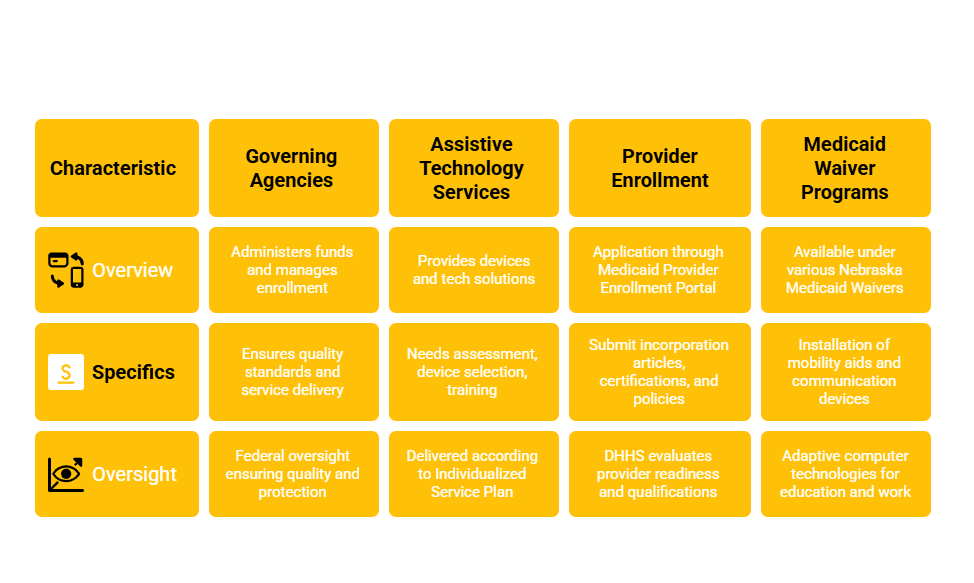
The delivery of Assistive Technology Services is governed by a hierarchical structure of oversight that ensures participant safety and fiscal responsibility. At the state level, the Nebraska Department of Health and Human Services (DHHS) serves as the primary authority, managing Medicaid waiver funding, overseeing the provider enrollment process, and directing service authorization and reimbursement protocols.
Supporting these efforts is the Nebraska Medicaid and Long-Term Care (MLTC) Division, which holds responsibility for the quality standards and operational compliance of service delivery. Furthermore, the Centers for Medicare & Medicaid Services (CMS) provides federal oversight, ensuring that all Medicaid-funded AT services align with national HCBS quality, person-centered planning, and participant protection standards. Providers must remain aligned with these entities to ensure continuous authorization and reimbursement.
What Scope of Services Must an AT Provider Deliver?
Assistive Technology Services encompass a comprehensive lifecycle of support, starting from the initial identification of functional deficits to the ongoing maintenance of sophisticated adaptive equipment. Approved providers are expected to offer a multi-faceted approach to care that integrates seamlessly with the individual's existing support system and Individualized Service Plan (ISP).
Providers are responsible for a full range of technical and consultative tasks, including:
- Needs Assessment: Conducting formal evaluations of an individual’s functional requirements to determine the appropriate technological intervention.
- Device Selection and Acquisition: Recommending and sourcing specific adaptive devices that align with the participant’s unique abilities and long-term goals.
- Installation and Training: Setting up complex equipment—ranging from mobility aids to communication systems—and providing hands-on education to the participant and their caregivers.
- Ongoing Support: Maintaining functionality through troubleshooting, routine repairs, and the integration of smart home technologies to improve safety and accessibility.
What Are the Prerequisites for Provider Enrollment?
The enrollment process for Nebraska Medicaid is a structured pathway designed to ensure that only qualified, capable agencies serve the waiver population. Before beginning the application, an organization must complete fundamental business and regulatory preparations, which include registering the entity with the Nebraska Secretary of State and obtaining a unique EIN from the IRS and a Type 2 NPI.
In addition to legal and tax status, providers must demonstrate a high degree of technical competence. This includes obtaining the necessary professional certifications for assistive technology assessment and installation. Agencies are also required to maintain comprehensive general and professional liability insurance and develop robust internal policies that govern every aspect of service delivery, from initial device assessment to the resolution of participant grievances.
How Do You Navigate the Medicaid Provider Enrollment Process?
The enrollment journey begins with the submission of the Provider Enrollment Application via the Nebraska Medicaid Provider Enrollment Portal. Applicants must provide thorough documentation, including Articles of Incorporation, professional certifications, and detailed policy manuals. Once submitted, the DHHS performs a program readiness review to assess the agency's operational capacity, including staff qualifications and internal protocols for device management.
Upon successful review and approval, the provider is officially authorized to deliver services under the specified HCBS waivers. Following this authorization, the agency must initiate the Medicaid billing setup to begin submitting claims for services rendered. Throughout this process, maintaining meticulous documentation—such as service tracking logs and proof of staff training—is critical for passing subsequent audits and maintaining eligibility to provide care.
What Are the Staffing and Credentialing Standards?
Staffing requirements are rigorous, reflecting the technical nature of assistive technology. An agency must typically employ an Assistive Technology Program Director who holds a Bachelor’s degree in a relevant field and maintains industry-standard credentials, such as the Assistive Technology Professional (ATP) certification. This leadership ensures that the agency’s technical recommendations are clinically sound.
Specialists and support technicians must also possess specialized training in device implementation and maintenance. All staff, regardless of their role, are required to undergo comprehensive background checks and health screenings. Furthermore, every team member must participate in ongoing training regarding HIPAA compliance, crisis management, and the protection of participant rights to ensure a high standard of professional conduct.
Frequently Asked Questions
Which Medicaid waivers cover Assistive Technology Services in Nebraska?
Assistive Technology Services are accessible through several HCBS waiver programs, including the Aged and Disabled (AD) Waiver, the Traumatic Brain Injury (TBI) Waiver, the Developmental Disabilities (DD) Waiver, the Children with Disabilities Waiver, and the general Home and Community-Based Services (HCBS) Waiver.
What specific types of technology are typically covered?
Coverage generally includes a wide array of devices such as mobility aids like ramps and lifts, communication devices for individuals with speech impairments, adaptive computer hardware and software for education or employment, sensory aids for vision or hearing impairments, and smart home automation systems for improved safety.
How long should a provider expect the launch process to take?
The total timeline varies based on an agency’s readiness, but generally, business formation takes 1–2 months, staff hiring and credentialing take 2–3 months, the Medicaid enrollment and readiness review take 60–90 days, and the final billing setup takes approximately 30–45 days.
Key Takeaway
Launching an Assistive Technology service provider agency in Nebraska requires a strategic focus on regulatory compliance, specialized staffing, and a commitment to person-centered technology solutions. By aligning internal operational policies with the standards of the Nebraska DHHS and the CMS, providers can ensure long-term stability and success in supporting individuals with disabilities within the Medicaid HCBS framework.
Last verified: 2024. This information is intended for professional guidance and does not constitute legal or financial advice. Please consult with the Nebraska Department of Health and Human Services (DHHS) for the most current program requirements, fee schedules, and regulatory updates.