ASSISTIVE TECHNOLOGY SERVICES PROVIDER IN MONTANA
By Fatumata Kaba · 2025-08-06 · 5 min read
ENHANCING INDEPENDENCE THROUGH TECHNOLOGICAL SOLUTIONS FOR DAILY LIVING AND COMMUNICATION
Assistive Technology Services in Montana provide individuals with disabilities access to specialized devices and technologies that support independence, communication, mobility, and safety. These services are essential components of Montana’s Home and Community-Based Services (HCBS) waivers, designed to empower participants to achieve greater autonomy and participate fully in their communities.
Operating as an Assistive Technology (AT) provider requires strict adherence to state regulatory frameworks and Medicaid enrollment standards. By facilitating the acquisition, customization, and maintenance of adaptive equipment, providers serve a vital role in the person-centered care model, ensuring that technological barriers to daily living are effectively mitigated for Montanans with disabilities.
Navigating the Regulatory Framework and Governing Agencies
The delivery of assistive technology in Montana is governed by a collaboration between state and federal authorities. Establishing a compliant business model begins with understanding the distinct roles these agencies play in authorizing services and protecting vulnerable populations. Providers must ensure their operational standards align with the oversight provided by these entities.
The Montana Department of Public Health and Human Services (DPHHS) serves as the primary administrator for Medicaid and the various HCBS waiver programs. They are responsible for defining the scope of allowable assistive technology services, setting reimbursement protocols, and managing the Individual Service Plan (ISP) and Person-Centered Plan (PCP) requirements that dictate participant eligibility. Concurrently, the Montana Department of Labor and Industry (DLI) maintains oversight concerning general business licensing, professional healthcare standards, and workplace compliance.
- Montana Department of Public Health and Human Services (DPHHS): Administers Medicaid and HCBS waiver programs, managing service definitions and provider enrollment requirements.
- Montana Department of Labor and Industry (DLI): Oversees general business licensing, professional certifications, and compliance for healthcare and technology service providers.
- Centers for Medicare & Medicaid Services (CMS): Provides federal oversight to ensure state programs adhere to federal Medicaid waiver compliance standards.
Core Components of Assistive Technology Services
Assistive Technology Services are defined by their ability to provide functional improvements to a participant's life through equipment and training. These services are never "one-size-fits-all"; they must be meticulously tailored to the unique goals documented in the participant's PCP or ISP. Providers act as intermediaries who identify the right tool for the specific need and ensure the technology is successfully integrated into the user's daily routine.
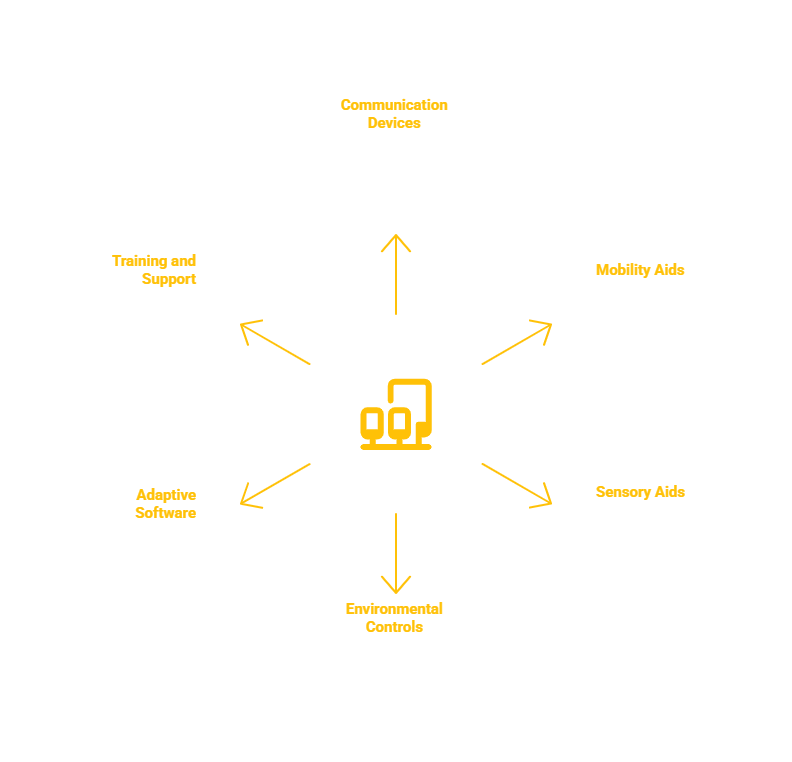
The scope of service includes the procurement of durable devices, as well as the technical support required to keep them operational. This encompasses communication devices—such as speech-generating systems—and physical mobility aids like stair lifts or power-assist wheelchairs. Furthermore, environmental control units and adaptive computer software play a growing role in allowing individuals to manage their home environments and digital accessibility autonomously.
- Communication Aids: Speech-generating devices, text-to-speech software, and augmentative communication systems.
- Mobility and Sensory Support: Powered wheelchairs, stair lifts, hearing aids, and advanced visual assistance tools.
- Environmental and Digital Access: Smart home adaptations, adaptive switches, and computer accessibility software.
- Clinical and Technical Support: Professional assessment of needs, initial device configuration, ongoing maintenance, and comprehensive user training.
Step-by-Step Medicaid Provider Enrollment
Becoming an approved Medicaid provider is a structured process that requires precision in documentation and regulatory alignment. Before engaging with the DPHHS, an agency must be fully registered as a legal entity within the state and hold all relevant business and tax identifications. The process is designed to ensure that only qualified, stable organizations handle the specialized needs of HCBS waiver participants.
The enrollment trajectory typically begins with a pre-application phase, where agency founders must contact the DPHHS to confirm current specific requirements for the assistive technology provider category. Following this, the agency must submit proof of legal incorporation, tax documentation, and, if applicable, Durable Medical Equipment (DME) licensure. The final phase involves a verification of safety standards, ensuring that all distributed technology meets federal and state quality assurance benchmarks before a Medicaid provider number is issued.
- Step 1: Pre-Application: Engage with DPHHS to review current provider requirements and category-specific mandates.
- Step 2: Business Foundations: Secure EIN, Type 2 NPI, and relevant business registrations (Secretary of State).
- Step 3: Compliance Verification: Submit proof of liability insurance, DME licensure, and detailed service descriptions for evaluation.
- Step 4: Activation: Upon successful review of documentation and safety compliance, receive the official Medicaid provider number and service authorization.
Operational Requirements: Staffing and Documentation
Operational success relies on a robust internal infrastructure. A provider agency must maintain a comprehensive policy and procedure manual that covers everything from the initial client intake assessment to long-term equipment repair logs. Documentation is the backbone of the audit process; therefore, every device supplied must be accompanied by records showing it was the correct choice for the participant’s ISP, that the participant was trained on its use, and that maintenance schedules are being met.
Staffing must be handled with equal rigor. The Assistive Technology Coordinator serves as the bridge between clinical requirements and technical solutions, necessitating a strong background in rehabilitation technology. Technical staff responsible for installation and repairs must undergo consistent training on safety protocols and documentation standards. Background checks and proof of clean driving records are standard requirements for staff who visit participant homes to install or troubleshoot equipment.
Frequently Asked Questions
What types of HCBS waivers cover Assistive Technology?
Assistive Technology Services in Montana are generally accessible through the Big Sky Waiver (BSW), Community First Choice/Personal Assistance Services (CFC/PAS), and standard Medicaid Home Health Services, depending on the specific medical and functional necessity documented by the participant's care team.
How long should I expect the enrollment process to take?
The timeline varies based on organizational readiness, but the Medicaid provider enrollment phase generally takes between 60 and 90 days. Other phases, such as business formation and staff training, should occur concurrently or prior to the final enrollment submission to ensure the agency is operational immediately upon approval.
Is a Durable Medical Equipment (DME) license always required?
A DME supplier license may be required depending on the specific types of devices being provided. Agencies should consult with the Montana Department of Labor and Industry and the DPHHS during the pre-application phase to determine if their specific service inventory triggers the need for a formal DME supplier license.
Key Takeaway
Launching an Assistive Technology Service in Montana is a highly regulated endeavor that requires a commitment to both technical precision and administrative compliance. By following the established protocols for Medicaid enrollment, maintaining rigorous documentation, and focusing on the individualized needs of waiver participants, providers can successfully integrate these critical services into the state's healthcare ecosystem. Success is predicated on thorough preparation, adherence to DPHHS guidelines, and a dedication to the long-term support of participant independence.
Last verified: October 2023. Disclaimer: This information is for educational purposes and does not constitute legal or professional advice. Always verify current state regulations and policy manuals directly through the Montana Department of Public Health and Human Services (DPHHS) official website before finalizing business decisions.