ASSISTIVE TECHNOLOGY SERVICES PROVIDER IN MISSOURI
By Fatumata Kaba · 2025-08-07 · 5 min read
ENHANCING INDEPENDENCE THROUGH TECHNOLOGICAL SOLUTIONS FOR DAILY LIVING AND COMMUNICATION
Assistive Technology (AT) Services in Missouri empower individuals with disabilities by providing specialized devices that foster autonomy, improve communication, and ensure safety within home and community settings. As a critical component of Missouri’s Home and Community-Based Services (HCBS) waivers, these services bridge the gap between limitation and capability, allowing participants to live more independently while reducing the need for more restrictive, institutional care.
What is the Role of Regulatory Agencies in Missouri AT Services?
The provision of assistive technology under Missouri Medicaid is governed by a collaborative framework involving state and federal oversight. The Missouri Department of Health and Senior Services (DHSS) serves as the primary administrator for HCBS Waiver programs. DHSS is responsible for defining the scope of covered services, determining participant eligibility, and ensuring that the technology provided aligns with the participant's Person-Centered Plan (PCP) or Individual Service Plan (ISP).
The Missouri Department of Social Services (DSS) manages the operational side of provider enrollment and service authorization. This agency ensures that entities seeking to offer AT services meet all state requirements for Medicaid billing and compliance. At the federal level, the Centers for Medicare & Medicaid Services (CMS) provides overarching guidance, ensuring that Missouri’s waiver programs adhere to federal mandates regarding quality of care, safety, and fiscal accountability.
How Do Providers Determine the Scope of Assistive Technology Services?
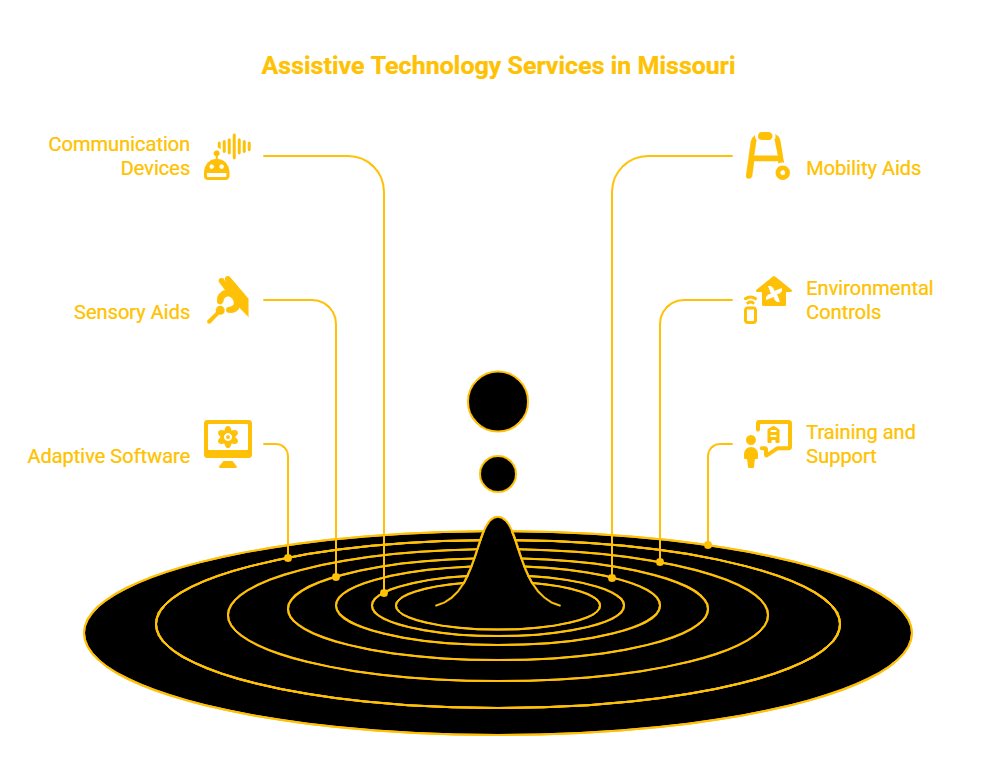
Assistive Technology services are highly individualized, focusing on the specific functional needs of the waiver participant. The service is not "one size fits all"; instead, it requires a thorough assessment to identify the tools that will provide the greatest impact on the individual's daily life. Common categories of support include communication devices, such as speech-generating systems and text-to-speech tools, as well as mobility aids like powered wheelchairs and custom stair lifts.
Beyond physical mobility and communication, providers often facilitate the installation of environmental controls. These include smart home adaptations, adaptive switches, and software designed to assist with computer access. A central component of these services is not merely the procurement of hardware, but also the delivery of training and ongoing support. Providers are responsible for ensuring that the participant, their family, and their caregivers understand how to use, maintain, and troubleshoot the equipment effectively.
What are the Prerequisites for Provider Approval and Enrollment?
Before an agency can begin delivering services, it must navigate a formal enrollment process with the state. Initial steps include registering the business with the Missouri Secretary of State, obtaining a federal Employer Identification Number (EIN), and securing a Type 2 National Provider Identifier (NPI). Depending on the specific technology being provided, the agency may also need to secure a Durable Medical Equipment (DME) Supplier License.
The enrollment process involves several distinct phases to ensure administrative and clinical readiness. Providers must first engage with the Missouri Department of Social Services to verify all programmatic requirements. Following this, the agency must submit a comprehensive application packet, which includes proof of liability insurance, business credentials, and clear descriptions of the services provided. Compliance verification is a mandatory step, requiring evidence that all devices meet state and federal safety standards before a Medicaid provider number is assigned.
- Articles of Incorporation or Business Name Registration
- IRS EIN Letter
- NPI confirmation (Type 2)
- Durable Medical Equipment (DME) Supplier License (where applicable)
- Proof of professional liability insurance
- Comprehensive policy and procedure manual
What Documentation and Staffing Standards Must be Maintained?
A compliant Assistive Technology agency must maintain robust internal documentation. This includes a detailed policy and procedure manual that covers client intake, assessment protocols, procurement processes, and quality assurance. Furthermore, providers must keep meticulous logs of device maintenance, repairs, and staff training to ensure that equipment remains functional and safe for the user over the long term.
Staffing requirements are designed to ensure that the agency possesses the technical expertise necessary to handle complex devices. The Assistive Technology Coordinator role generally requires documented experience in rehabilitation technology or similar device services. Technicians and specialists who perform setups and maintenance must possess technical training and, as part of standard vetting, undergo thorough background checks and maintain clean driving records. Ongoing training for these staff members is critical and must cover installation standards, configuration, safety protocols, and HIPAA-compliant documentation practices.
Which Medicaid Waivers Cover Assistive Technology in Missouri?
Assistive Technology Services are accessible to qualified participants enrolled in specific Missouri HCBS Waivers. These include the Aged and Disabled Waiver (ADW), the Independent Living Waiver, and the Medically Fragile Adult Waiver. Each waiver program has specific eligibility criteria, but all share the common goal of supporting participants through the assessment, customization, and long-term maintenance of vital assistive tools.
The timeline for launching an AT business requires careful planning and adherence to regulatory milestones. While business formation can often be completed in 1–2 weeks, the Medicaid provider enrollment process typically spans 60–90 days. Additional time must be allocated for staff recruitment and training (30–45 days) and for establishing procurement channels that guarantee compliance with safety regulations (2–4 weeks). Establishing clear workflows early in this timeline is essential for a smooth launch.
Frequently Asked Questions
How does a participant qualify for Assistive Technology services?
Participation is determined by the participant's care team, typically through the assessment process associated with their specific HCBS waiver. The device must be deemed medically necessary or essential for independence, and it must be explicitly outlined in the individual’s Person-Centered Plan (PCP) or Individual Service Plan (ISP).
Are there requirements for device safety and quality?
Yes. All devices provided must meet state and federal safety standards. Providers are responsible for ensuring that equipment is safe, appropriate for the user's disability, and properly maintained. Maintenance logs and quality assurance protocols must be available for audit at all times.
What services are included in the Assistive Technology scope of work?
The scope includes the initial assessment, the acquisition of the hardware or software, customized configuration to meet the specific user's needs, training for the user and their caregivers, and ongoing maintenance or repairs as necessary to keep the technology functional.
Waiver Consulting Group provides comprehensive startup assistance for agencies and entrepreneurs aiming to launch compliant Assistive Technology services in Missouri. We offer guidance on business registration, Medicaid provider enrollment, policy development, and the creation of operational forms such as client assessment tools and maintenance logs. Our services extend to staff training documentation, risk management protocols, and facilitating referral networking with rehabilitation specialists, helping providers build a solid foundation for delivering quality, compliant care.
Key takeaway: Becoming a successful Assistive Technology provider in Missouri requires a rigorous commitment to both technical expertise and regulatory compliance; agencies that prioritize high-quality assessment and thorough documentation will be best positioned to meet the needs of waiver participants and maintain their standing with state oversight agencies.
Last verified: September 2023. This information is for educational purposes only and does not constitute legal or professional advice. Always verify requirements directly with the Missouri Department of Health and Senior Services (DHSS) or the Missouri Department of Social Services (DSS) before making business decisions.