ASSISTIVE TECHNOLOGY SERVICES PROVIDER IN ILLINOIS
By Fatumata Kaba · 2025-07-19 · 5 min read
Assistive Technology (AT) Services in Illinois provide critical support for individuals with disabilities by integrating specialized devices and systems into their daily lives to foster independence, communication, and community participation. Authorized under Illinois Medicaid Home and Community-Based Services (HCBS) waivers, these services require providers to maintain strict compliance with state and federal regulations, encompassing everything from initial clinical assessments to the long-term technical maintenance of adaptive hardware and software.
Understanding the Regulatory Landscape for Illinois AT Providers
Operating an Assistive Technology service in Illinois requires navigating a multi-layered regulatory environment. The Illinois Department of Human Services (DHS), specifically through the Division of Rehabilitation Services (DRS) and the Division of Developmental Disabilities (DDD), acts as the primary authority. These divisions are responsible for overseeing participant assessment protocols, authorizing service delivery, ensuring provider compliance, and upholding the rights of individuals participating in waiver programs.
The financial and operational framework is managed by the Illinois Department of Healthcare and Family Services (HFS), which administers Medicaid waiver funding. HFS oversees the critical functions of provider enrollment, billing, and quality assurance. Furthermore, all services must align with the federal standards set by the Centers for Medicare & Medicaid Services (CMS). CMS ensures that Assistive Technology is delivered in a manner that honors participant-centered goals, promotes true community integration, and strictly adheres to medical necessity requirements under Medicaid HCBS rules.
Defining the Scope of Assistive Technology Services
Assistive Technology services are not limited to the provision of hardware; they represent a comprehensive lifecycle of support. The core objective is to enable participants to perform daily tasks independently that they would otherwise struggle to complete. Approved providers must demonstrate proficiency in a range of clinical and technical domains to ensure that each participant receives a solution tailored to their unique functional limitations and personal goals.
The service model typically follows a structured path of delivery:
- Assessment and clinical evaluation of the individual’s assistive technology needs.
- Procurement and precise customization of AT devices to match user capabilities.
- Professional installation, fitting, and seamless integration of the technology into the participant’s home or workplace.
- Thorough training sessions for the participant and their caregivers to ensure safe and effective device usage.
- On-going technical support, maintenance, and periodic reassessments for necessary upgrades.
Licensing and Enrollment Prerequisites for New Agencies
Before an agency can begin billing for AT services, it must establish a formal legal and operational foundation. This begins with the registration of the business entity through the Illinois Secretary of State, followed by the acquisition of a federal Employer Identification Number (EIN) and a Type 2 National Provider Identifier (NPI). These identifiers are essential for all subsequent Medicaid enrollment filings within the IMPACT system.
Providers must also address specific equipment-related requirements. If the agency acts as a supplier, it must maintain a Durable Medical Equipment (DME) supplier license, or alternatively, enter into formal, documented partnerships with licensed vendors. Agency leaders must draft and implement comprehensive policies covering assessment coordination, procurement cycles, and staff training. Furthermore, maintaining adequate general and professional liability insurance is a non-negotiable requirement for protecting both the organization and the individuals served.
Navigating the Illinois Provider Enrollment Process
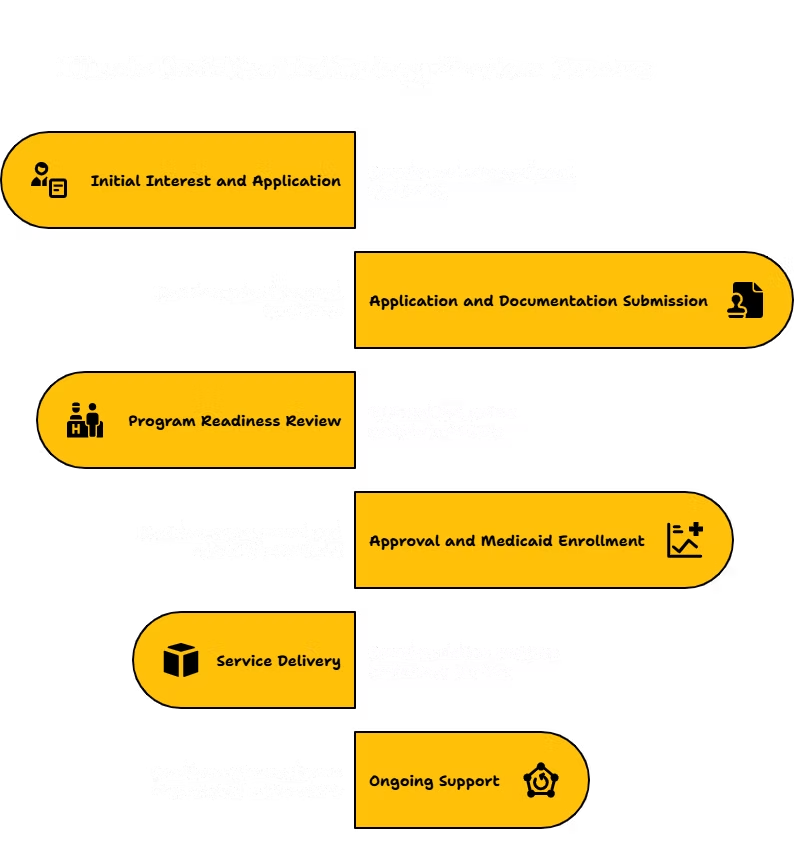
The journey to becoming an approved Medicaid provider is a systematic process requiring attention to detail. Initially, agencies must submit their enrollment application through the Illinois Medicaid Provider Enrollment Portal (IMPACT). This submission acts as the gateway for authorization under specific waiver programs, such as those for individuals with developmental disabilities, brain injuries, or physical disabilities.
During the enrollment phase, the provider must be prepared to submit all supporting documentation, including organizational bylaws, proof of insurance, NPI information, and staff credentialing records. Following the initial application, the agency will undergo a Program Readiness Review conducted by DHS and/or HFS. This review confirms the agency’s ability to conduct appropriate AT assessments, manage documentation, and comply with state billing standards. Only after a successful review and formal approval will the provider be assigned the necessary billing codes to initiate service delivery.
Staffing and Clinical Competency Requirements
The quality of an AT program is largely defined by the qualifications of its staff. The Program Director or Supervisor generally should hold an Assistive Technology Professional (ATP) certification or possess extensive experience in related fields such as occupational therapy, rehabilitation engineering, or special education. These leaders are responsible for maintaining the agency's adherence to clinical standards and overseeing the performance of AT specialists.
Staff members, including specialists and technicians, must undergo rigorous training programs that cover several essential areas:
- Assistive technology-specific assessment and device integration methods.
- Participant safety protocols and proper equipment handling.
- Regulatory compliance training, including HIPAA, abuse prevention, and participant rights.
- Emergency preparedness and infection control practices.
In cases requiring clinical evaluations, the agency must have access to licensed professionals such as Occupational Therapists (OT), Physical Therapists (PT), Speech-Language Pathologists (SLP), or certified Rehabilitation Engineers to validate the necessity and design of the assistive solutions.
Frequently Asked Questions
What documentation is essential for an agency’s Policy & Procedure Manual?
The manual must detail participant intake and assessment procedures, procurement and fitting protocols, technical maintenance guidelines, HIPAA-compliant privacy policies, grievance procedures, and systems for tracking staff training and Medicaid billing audit readiness.
Which Illinois Medicaid waiver programs cover Assistive Technology?
AT services are supported under the Adults with Developmental Disabilities Waiver, the Children and Young Adults with Developmental Disabilities Waiver, the Persons with Brain Injury (BI) Waiver, the Persons with Disabilities (PD) Waiver, and the Elderly Waiver (Community Care Program) for specified needs.
What is the typical timeline for launching an AT services program?
The timeline ranges from business formation to service launch over a span of approximately 6 to 9 months, including 1–2 months for registration, 2–3 months for staffing and setup, 60–90 days for IMPACT enrollment and readiness reviews, and 30–45 days for final billing configuration.
Waiver Consulting Group: Specialized Support for AT Providers
Waiver Consulting Group (WCG) assists assistive technology providers, rehabilitation specialists, and adaptive device suppliers in launching Medicaid-compliant services across Illinois. Our scope of work includes facilitating business registration, guiding Medicaid enrollment, and ensuring DME compliance. We assist in the development of comprehensive Policy & Procedure Manuals, staff credentialing templates, and participant intake documentation. Additionally, WCG supports agencies with Medicaid billing system setup, professional branding, and the development of quality assurance programs to ensure long-term sustainability and compliance with state regulations.
Key takeaway: Success as an Assistive Technology provider in Illinois hinges on the integration of rigorous clinical standards with strict administrative adherence to the IMPACT enrollment system and Medicaid waiver requirements, ensuring that every technological intervention is both medically necessary and properly documented.
Last verified: 2024. This information is intended for educational purposes and should not be considered legal or professional advice. Always verify requirements directly with the Illinois Department of Human Services (DHS) or the Illinois Department of Healthcare and Family Services (HFS) for the most current regulatory updates.