ASSISTIVE TECHNOLOGY SERVICES PROVIDER IN CALIFORNIA
By Fatumata Kaba · 2025-07-06 · 5 min read
Assistive Technology (AT) services in California provide essential support for individuals with developmental disabilities by facilitating the acquisition, customization, and maintenance of devices that enhance communication, mobility, and community integration. Providers operate within a structured framework overseen by the Department of Developmental Services (DDS) and the Department of Health Care Services (DHCS) to ensure that participants receive high-quality, personalized equipment that directly supports their functional independence.
How Does the Regulatory Framework for Assistive Technology Work in California?
The delivery of Assistive Technology in California is governed by a multi-layered system designed to ensure safety and clinical efficacy. The California Department of Developmental Services (DDS) maintains oversight for services delivered through the statewide network of 21 nonprofit Regional Centers. These centers act as the primary gatekeepers, responsible for approving vendors, authorizing specific AT services within a client’s Individual Program Plan (IPP), and monitoring ongoing service quality.
In addition to the regional structure, the Department of Health Care Services (DHCS) manages Medi-Cal programs, which authorize durable medical equipment (DME) under broader Medicaid regulations. On a federal level, the Centers for Medicare & Medicaid Services (CMS) provides necessary oversight to ensure that all Home and Community-Based Services (HCBS) comply with federal requirements. This regulatory landscape demands that providers maintain strict adherence to both state-level service mandates and federal compliance standards.
What Are the Core Responsibilities of an Assistive Technology Provider?
An Assistive Technology provider is responsible for the end-to-end management of a client's device-related needs. This involves far more than simply supplying equipment; it requires a comprehensive approach that includes functional needs assessments, expert device selection, installation, and rigorous customization. Providers must ensure that the selected technology aligns with the goals identified in a participant’s Person-Centered Plan (PCP) or IPP.
Beyond procurement, providers must offer ongoing training to participants, caregivers, and relevant staff members to ensure the technology is used safely and effectively. Maintenance, repair, and technical support are critical components of the service model, as is the documentation of how each device improves the user's daily functioning. Examples of covered technology include, but are not limited to:
- Augmentative and Alternative Communication (AAC) devices and speech-generating software
- Adaptive environmental controls and specialized keyboards or switches
- Customized wheelchair modifications, positioning systems, and lifting equipment
- Vision and hearing aids or sensory-focused tools
- Automated medication dispensers and remote monitoring or reminder systems
What Are the Prerequisites for Becoming a Vendor?
To operate as an authorized AT provider, an organization must satisfy specific business and operational requirements. The initial stage involves standard business registration with the California Secretary of State, obtaining an Employer Identification Number (EIN) from the IRS, and securing a Type 2 National Provider Identifier (NPI). These foundational steps allow a business to interface properly with the state’s billing and authorization systems.
Following business formation, prospective providers must choose their path for service delivery. This typically involves submitting a vendor application to a local Regional Center to obtain a specific service code, such as Service Code 125, or enrolling as a provider through a Financial Management Service (FMS) for the Self-Determination Program. Regardless of the path, providers must maintain comprehensive insurance, robust documentation systems, and a qualified staff consisting of Assistive Technology Professionals (ATP), therapists, or highly trained technicians.
How Is the Regional Center Vendorization Process Structured?
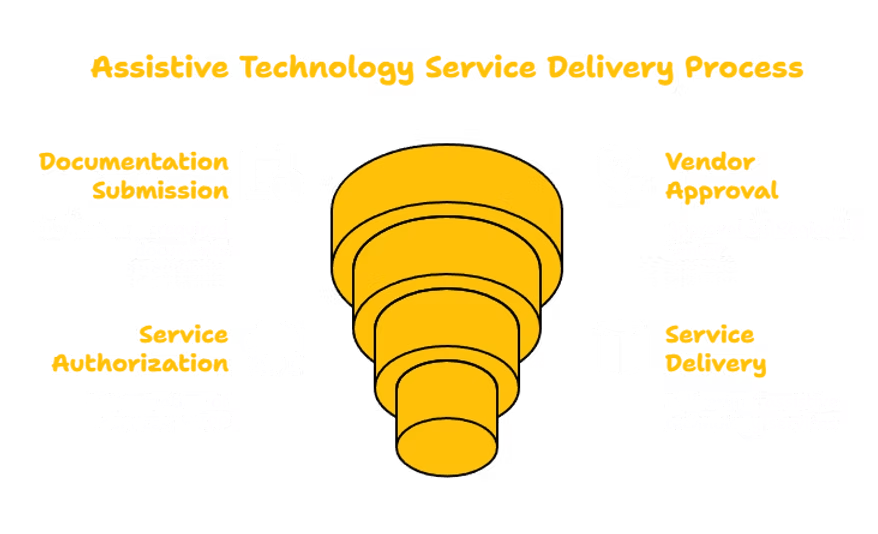
The journey toward becoming a vendor begins by contacting the local Regional Center to request an application package for the relevant service category. During the application phase, providers must submit detailed documentation, including their business license, a clear description of services, policies regarding device handling, and structured training procedures. The Regional Center evaluates these materials to ensure the provider can meet the functional needs of the local population.
Once the application is submitted, the Regional Center will review the qualifications of the staff, such as resumes and certifications of clinicians or technicians. Upon successful approval, the provider is assigned a vendor number, which serves as the formal authorization to begin accepting service referrals. Throughout this process, it is vital to keep all business records and compliance manuals updated, as they will be subject to periodic review by the Regional Center to ensure continued adherence to California state standards.
What Documentation and Staffing Standards Must Be Maintained?
A successful provider must demonstrate operational maturity through meticulous record-keeping. Essential documentation includes, at a minimum, a formal Policy and Procedure manual that covers client assessment workflows, equipment procurement and maintenance tracking, HIPAA compliance, incident reporting, and service logs. These documents are necessary to provide transparency in how services are delivered and to ensure that all participant rights are protected.
Staffing requirements are equally stringent. Organizations should aim to employ certified Assistive Technology Professionals (ATP) or licensed therapists (OT/PT) who possess specific experience in disability-related technology. Support technicians must also demonstrate proficiency in adaptive equipment and must be provided with ongoing training in safety, ethics, person-centered delivery, and confidentiality. These requirements ensure that every staff member is prepared to troubleshoot issues and provide effective training to end-users.
Frequently Asked Questions
What is the difference between Regional Center vendorization and the Self-Determination Program?
Regional Center vendorization is the traditional route where a provider is directly approved by a specific center to provide services. The Self-Determination Program (SDP) allows participants more control, where providers may work through an Financial Management Service (FMS) to provide services directly requested by the participant within their individual budget.
What types of staff are required to provide AT services?
Services generally require an Assistive Technology Consultant or Specialist, such as an ATP, OT, or PT. Additionally, support staff or technicians are required to handle installation and device training. All staff must be trained on privacy laws and specific equipment safety protocols.
How long does the launch process take for a new provider?
Business formation typically takes 1–2 weeks, while the Regional Center vendorization or SDP onboarding process generally spans 30–90 days. Hiring staff and finalizing documentation usually requires an additional 2–4 weeks before service delivery and referrals can be activated.
Key Takeaway
Launching a successful Assistive Technology service in California requires a strategic approach that balances administrative compliance with clinical expertise. By aligning business operations with the specific requirements of the Department of Developmental Services and maintaining clear, documented procedures for device management and staff training, providers can build a sustainable model that improves the functional outcomes of participants across the state.
Last verified: October 2023. Disclaimer: This information is provided for educational purposes only and does not constitute legal or professional advice. Always verify current requirements with your local Regional Center and the California Department of Developmental Services as policies and procedures are subject to change.