ASSISTIVE TECHNOLOGY SERVICES PROVIDER IN ARIZONA
By Fatumata Kaba · 2025-07-01 · 5 min read
SUPPORTING ACCESS AND INDEPENDENCE THROUGH CUSTOMIZED DEVICES AND TECHNOLOGY FOR INDIVIDUALS WITH DISABILITIES
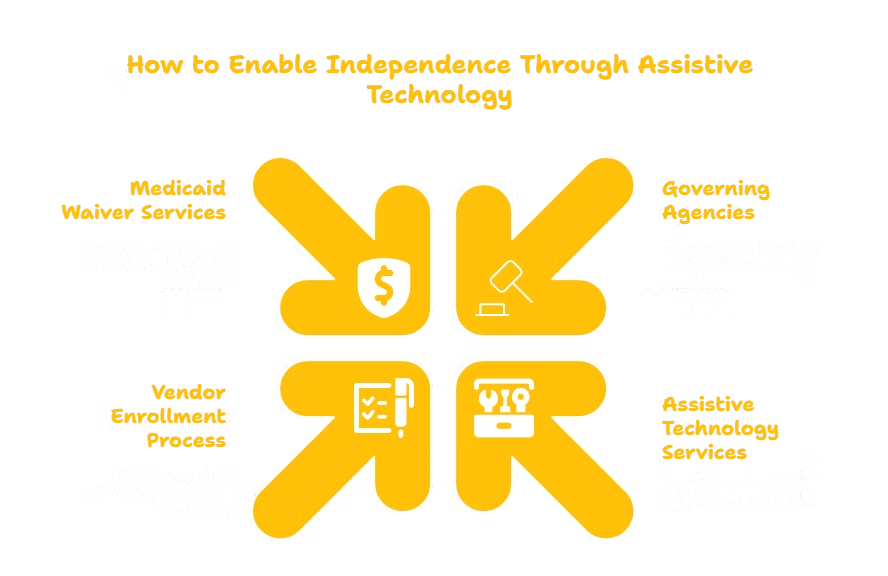
Assistive Technology (AT) services in Arizona are vital home and community-based supports that provide individuals with developmental or physical disabilities the tools necessary to increase their functional independence. By facilitating the acquisition, customization, and maintenance of specialized equipment, these services allow participants to navigate their daily environments with greater ease while remaining integrated within their homes and communities under the Arizona Long Term Care System (ALTCS) and Division of Developmental Disabilities (DDD).
What is the Role of Governing Agencies in Arizona Assistive Technology?
The delivery of assistive technology is governed by a tripartite structure of federal and state oversight. The Arizona Department of Economic Security (DES) – Division of Developmental Disabilities (DDD) serves as the primary gateway for providers. The DDD is responsible for approving Qualified Vendors, authorizing specific services for eligible members, and conducting ongoing monitoring to ensure that the devices provided are appropriate for the individual's documented functional needs.
The Arizona Health Care Cost Containment System (AHCCCS) acts as the state’s Medicaid agency, managing the administrative and financial aspects of the program. This includes the enrollment of providers into the Medicaid system and the processing of reimbursement claims. Furthermore, the Centers for Medicare & Medicaid Services (CMS) provides the overarching federal framework, ensuring that all Arizona HCBS initiatives remain in full compliance with national Medicaid standards for quality and accessibility.
- Arizona Department of Economic Security (DES) – Division of Developmental Disabilities (DDD): Approves Qualified Vendors, authorizes services, and monitors the delivery and appropriateness of assistive devices.
- Arizona Health Care Cost Containment System (AHCCCS): Administers Medicaid reimbursement and provider enrollment for assistive technology services.
- Centers for Medicare & Medicaid Services (CMS): Provides federal oversight of HCBS services and ensures compliance with Medicaid standards.
How Do Providers Successfully Navigate the DDD Qualified Vendor Enrollment Process?
The path to becoming a Qualified Vendor in Arizona is a structured process that requires rigorous attention to administrative detail. Prospective providers must first attend the mandatory DDD Qualified Vendor orientation, which provides essential insights into the scope of work, billing limitations, and the specific HCBS rules governing assistive technology. Following orientation, the applicant must register through the Qualified Vendor Application and Directory System (QVADS).
The QVADS submission is the cornerstone of the approval process. Applicants must present a comprehensive business and service plan that outlines their operational strategy, staff credentials, and assessment methodology. Crucially, the application must demonstrate how the organization will handle the technical aspects of the business, including inventory management, warranty fulfillment, and the maintenance of clinical documentation. Once the application is vetted and approved, the provider signs a Qualified Vendor Agreement and is listed in the official directory, making their services accessible to Support Coordinators and members.
- Phase 1: Orientation: Completing the required DDD Qualified Vendor orientation to understand billing and service rules.
- Phase 2: QVADS Application: Submitting a detailed service plan, staff credentials, and robust internal policies.
- Phase 3: Contracting: Finalizing the Qualified Vendor Agreement and obtaining active listing status.
What Are the Essential Documentation and Operational Requirements for Providers?
Maintaining compliance as an Assistive Technology provider requires an organized, auditable system of record-keeping. Every agency must maintain a comprehensive Policy & Procedure Manual that serves as the foundation for daily operations. This manual must explicitly detail participant intake procedures, how the provider handles device recommendations, the protocols for installation, and the standards for training both the participant and their caregivers on device operation.
Additionally, providers must establish standardized forms and digital trackers to manage the lifecycle of the technology they provide. This includes formal documentation of functional needs assessments, participant consent forms, and detailed logs of all device repairs, replacements, or service modifications. Because these services are Medicaid-funded, the ability to produce clean, chronological documentation of services—linking the device to a specific functional improvement—is essential for billing integrity and regulatory compliance.
Which Staffing Roles and Qualifications are Required for AT Services?
The quality of assistive technology services relies heavily on the expertise of the staff involved in assessment and setup. Agencies should employ or contract professionals who possess backgrounds in fields such as occupational therapy, rehabilitation technology, or special education. These Assistive Technology Specialists/Coordinators are responsible for the clinical or functional evaluation of the participant's environment and the selection of appropriate devices that meet their specific developmental or physical requirements.
Support technicians, who often handle the physical installation and configuration of equipment, must also be properly vetted and trained. Beyond technical skill, all staff members must complete mandatory training on HIPAA regulations, data privacy, and the specific rights of individuals with disabilities. Ongoing professional development is expected, as technology in the disability space evolves rapidly; staff must participate in annual refresher courses to stay current with safety standards, sanitation protocols, and new developments in assistive hardware and software.
Frequently Asked Questions
How long does the launch process usually take for an AT provider?
The timeline varies based on organizational readiness, but generally, business formation takes 1–2 weeks, the QVADS application process takes 60–90 days, staff onboarding takes 30–45 days, and AHCCCS Medicaid enrollment takes 45–60 days.
Are all assistive technology devices covered under the Medicaid Waiver?
Coverage is limited to devices that directly improve a participant’s functional ability in daily life. All recommendations must be based on a formal assessment and approved by the DDD to ensure they align with the participant’s specific waiver goals.
What happens if a device needs repair or replacement?
Providers are required to maintain a written policy on warranties, repairs, and replacements. As a Qualified Vendor, your service plan must include a defined workflow for managing equipment lifecycle, ensuring that the participant is not left without essential support due to technical failure.
Key Takeaway
Launching an Assistive Technology services agency in Arizona requires a disciplined approach to both technical equipment sourcing and Medicaid compliance. By strictly adhering to the DDD and AHCCCS requirements—specifically regarding the QVADS application process, staff training, and clinical documentation—providers can establish a sustainable and impactful business that significantly improves the quality of life for individuals with disabilities.
Last verified: October 2023. This content is for informational purposes only and does not constitute legal or professional advice. Always consult directly with the Arizona Department of Economic Security (DES) and AHCCCS for the most current regulatory updates and specific contractual obligations regarding your provider status.