ASSISTED LIVING FACILITY (ALF) PROVIDER IN ARIZONA
By Fatumata Kaba · 2025-07-01 · 5 min read
Assisted Living Facility (ALF) services in Arizona provide essential residential care for individuals with disabilities, chronic conditions, or age-related needs who require support with daily activities but do not necessitate the intensive clinical oversight of a nursing home. These services, authorized through the Arizona Long Term Care System (ALTCS) and other Home and Community-Based Services (HCBS) waivers, are structured to foster resident independence, community integration, and personalized, high-quality care.
What Are the Governing Agencies Overseeing Arizona ALF Providers?
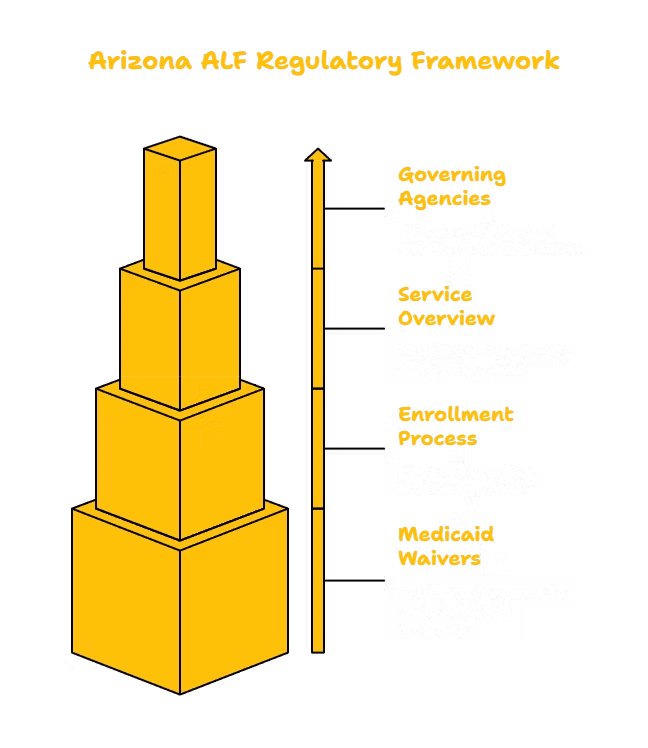
The regulatory landscape for Arizona ALFs is defined by a multi-tiered oversight structure involving state and federal entities. The Arizona Department of Health Services (ADHS) – Division of Licensing Services serves as the primary regulatory body, responsible for issuing facility licenses and ensuring that residential settings maintain compliance with established health and safety standards.
Beyond state licensure, providers must engage with the Arizona Health Care Cost Containment System (AHCCCS). As Arizona’s Medicaid agency, AHCCCS manages provider enrollment and governs the delivery of HCBS waiver services. At the federal level, the Centers for Medicare & Medicaid Services (CMS) provides overarching guidance, ensuring that all waiver programs adhere to federal mandates regarding participant-centered care and Medicaid integrity.
How Does the Assisted Living Facility Service Model Function?
ALF services are designed to address the social, physical, and personal care needs of residents within a community-based environment. Providers are expected to deliver a robust suite of services, including assistance with Activities of Daily Living (ADLs) such as bathing, dressing, grooming, toileting, eating, and mobility. These services are not one-size-fits-all; they must be tailored to the specific goals and requirements outlined in each resident's person-centered plan.
In addition to personal care, authorized providers manage medication administration or assistance, health monitoring, and coordination with external medical professionals. Facilities also maintain responsibility for housekeeping, laundry, personal errand assistance, nutritional support, and the facilitation of organized social activities. By maintaining 24-hour supervision and emergency response protocols, facilities ensure a safe, supportive living experience that aligns with Arizona’s licensing requirements.
- Assistance with all Activities of Daily Living (ADLs)
- Medication administration and health monitoring
- Nutritional support, including daily meal provision
- Personal laundry, housekeeping, and errand assistance
- 24-hour supervision and emergency response protocols
What Are the Prerequisites for Licensing and Provider Approval?
Launching an ALF in Arizona requires a disciplined approach to business formation and regulatory compliance. Initially, entrepreneurs must register their business entity with the Arizona Corporation Commission and obtain a federal Employer Identification Number (EIN) and a Type 2 National Provider Identifier (NPI). These foundational steps allow a provider to establish their legal and administrative presence.
Following business formation, the prospective provider must secure an Assisted Living Facility license from the ADHS. This phase involves rigorous adherence to Arizona Administrative Code Title 9, Chapter 10. The facility must meet specific physical plant standards, which include comprehensive fire safety inspections, accessibility compliance, and valid occupancy permits. Establishing a comprehensive Policy & Procedure Manual that reflects these standards is a mandatory step before proceeding to Medicaid enrollment.
Navigating the AHCCCS Provider Enrollment and MCO Contracting Process
Once a facility is licensed, the path to becoming a Medicaid-approved provider involves AHCCCS enrollment. Prospective providers should begin by requesting an application packet from AHCCCS or a relevant Managed Care Organization (MCO). Attending provider orientation sessions is highly recommended to understand the specific billing, documentation, and reporting expectations of the Medicaid program.
The application phase requires the submission of the ADHS license, business organizational documents, and detailed staffing plans. Applicants must also provide samples of resident agreements, service plans, and emergency protocols. Following submission, AHCCCS or the contracted MCO conducts a program readiness review. This often includes site inspections to confirm that the facility meets environmental safety standards and that internal processes, such as participant intake and person-centered planning, are fully developed. Upon approval, the provider registers as an AHCCCS Medicaid provider and contracts with appropriate MCOs serving the ALTCS population.
What Are the Essential Staffing and Documentation Standards?
Staffing requirements in an Arizona ALF are strictly regulated to ensure resident safety. The facility must employ an Administrator or Manager who has successfully completed the Arizona Assisted Living Facility Manager Training Program and holds a valid ADHS-issued Manager Certificate. Direct Care Workers are required to complete an Arizona-approved caregiver training program, maintain current CPR/First Aid certification, and pass thorough background checks.
Documentation is a critical component of maintaining active status. Providers must maintain a robust Policy & Procedure manual covering admission/discharge procedures, individualized service planning, medication management, and incident reporting. All staff members must undergo initial training on resident rights, elder abuse prevention, and HCBS principles, supplemented by ongoing annual in-service education and competency reviews to remain compliant with state regulations.
Frequently Asked Questions
What is the typical timeline to launch an ALF in Arizona?
The timeline varies based on facility readiness, but generally follows these phases: Business formation and licensing preparation takes 2–4 weeks; ADHS licensing and inspection takes 60–90 days; staff hiring and training takes 30–45 days; and AHCCCS enrollment and MCO contracting takes 60–90 days.
What specific programs authorize ALF services under Medicaid?
Assisted Living Facility services are authorized under the Arizona Long Term Care System (ALTCS) – Elderly and Physically Disabled (EPD) program, the ALTCS – Developmental Disabilities (DD) program, and various Arizona HCBS waivers managed through AHCCCS MCO contracts.
Are Medication Technicians required in all facilities?
A Medication Technician is required if the facility intends to provide specific medication administration services. These staff members must complete a Medication Assistant Training Program and pass a competency evaluation to be authorized for this role.
WAIVER CONSULTING GROUP’S START-UP ASSISTANCE SERVICE — ARIZONA ASSISTED LIVING FACILITY PROVIDER
WCG supports healthcare entrepreneurs in launching Medicaid-approved Assisted Living Facilities under Arizona’s HCBS Waiver programs. Our scope of work includes business registration, ADHS licensing guidance, AHCCCS application support, policy manual development, staff credentialing systems, and Medicaid billing configuration.
Key Takeaway: Succeeding as an Assisted Living Facility provider in Arizona requires strict adherence to both ADHS health and safety licensing standards and the Medicaid billing and service documentation requirements established by AHCCCS. By prioritizing comprehensive staff training, rigorous documentation, and clear person-centered planning, providers can successfully deliver high-quality residential support that aligns with state HCBS waiver expectations.
Last verified: September 2023. This information is provided for educational purposes only and does not constitute legal or professional consulting advice. Requirements for Medicaid waivers and state licensing are subject to change; please consult directly with ADHS and AHCCCS for the most current regulatory updates.