ADULT HEALTH SERVICES PROVIDER IN VERMONT
By Fatumata Kaba · 2026-04-09 · 5 min read
DELIVERING DAYTIME MEDICAL MONITORING, THERAPEUTIC SUPPORT, AND SOCIAL ENGAGEMENT FOR ADULTS WITH CHRONIC CONDITIONS OR DISABILITIES
Adult Health Services in Vermont serve as a critical component of the state’s long-term care continuum, providing structured, medically supervised daytime support for individuals managing chronic conditions or disabilities. By offering a blend of professional nursing oversight, therapeutic activities, and essential socialization, these services enable participants to remain in their homes and communities while delaying the need for institutional care and providing vital respite for primary caregivers.
Understanding the Role of Vermont’s Governing Agencies
The regulatory landscape for Adult Health Services in Vermont is structured to ensure high standards of care and fiscal accountability. Providers must navigate a triad of oversight bodies to achieve and maintain compliance. The Vermont Department of Disabilities, Aging and Independent Living (DAIL) serves as the primary architect of the program, overseeing service standards, program licensing, and ongoing quality assurance within the HCBS waiver framework.
Complementing DAIL’s clinical and operational oversight, the Department of Vermont Health Access (DVHA) functions as the administrative engine for financial operations. DVHA is responsible for the enrollment of Medicaid providers and the systematic processing of claims, ensuring that services rendered align with authorized Individual Support Plans (ISPs). Furthermore, the Vermont Division of Licensing and Protection (DLP) acts as the enforcement arm, conducting the necessary inspections and licensing evaluations for facilities providing skilled nursing and medical services.
Core Service Components and Clinical Scope
Adult Health Services are not merely social gatherings; they are clinical environments designed to meet the complex needs of medically frail individuals. A successful service model integrates physical health monitoring with cognitive and social stimulation. By centralizing these services, providers create a multidisciplinary care hub that addresses the diverse requirements of the participant population.
Providers are expected to offer a robust suite of services that cater to both health and daily living needs. Essential service components include:
- Nursing assessments, ongoing health monitoring, and chronic condition management
- Medication administration and management oversight
- Physical, occupational, and speech therapy coordination (when specifically authorized)
- Structured therapeutic activities, cognitive exercises, and wellness programs
- Assistance with activities of daily living (ADLs) such as bathing, grooming, and mobility
- Nutritional meals that accommodate specific dietary requirements
- Behavioral supports and social work interventions
- Transportation coordination to and from the center, as defined within the participant's ISP
Navigating Licensing and Provider Approval
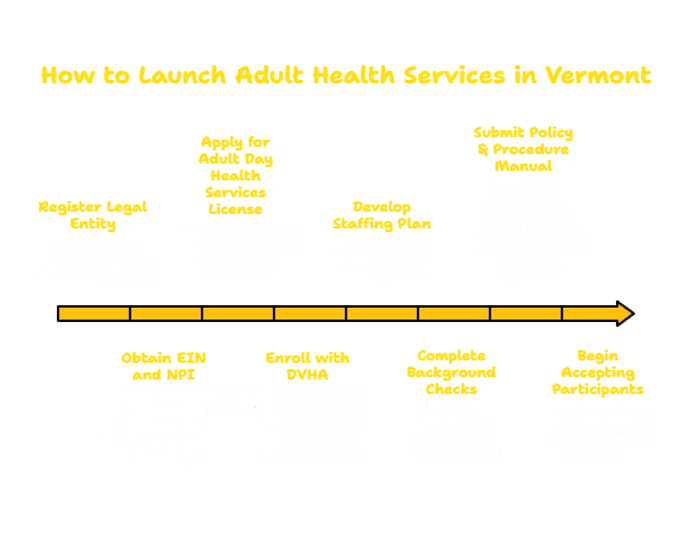
Establishing an Adult Health Services agency in Vermont requires a methodical, sequential approach to regulatory compliance. The process begins with establishing a formal legal business entity, securing a federal Employer Identification Number (EIN), and obtaining a Type 2 National Provider Identifier (NPI). These foundational steps provide the administrative structure necessary to interact with state Medicaid systems.
Once the legal entity is formed, the provider must apply for the specific Adult Health Services license through the Division of Licensing and Protection (DLP). This phase involves rigorous documentation, including the submission of comprehensive Policies and Procedures manuals that outline everything from infection control to emergency preparedness. Upon licensure, the provider must finalize the enrollment process with the Department of Vermont Health Access (DVHA) to become a recognized Medicaid provider, a prerequisite for billing and reimbursement under the various HCBS waiver programs.
Staffing Requirements and Clinical Oversight
The quality of care in an Adult Health Services center is heavily dependent on the caliber and credentials of the staff. Regulatory requirements dictate a balance between high-level clinical supervision and direct, compassionate support. At the helm of clinical operations must be a Registered Nurse (RN) licensed in Vermont, tasked with health assessments, complex medication administration, and oversight of the nursing staff.
Beyond the RN, the staffing model typically includes Licensed Practical Nurses (LPNs) for hands-on clinical care, as well as Program Aides or Personal Care Attendants who provide support with ADLs. An Activity Coordinator is also essential to ensure that participants engage in meaningful, therapeutic programming. All staff members, regardless of role, must participate in mandatory training covering HIPAA compliance, client rights, CPR/First Aid, and emergency response, with annual competency reviews to ensure ongoing adherence to state standards.
Strategic Alignment with Medicaid Waiver Programs
Understanding which Medicaid waiver programs support these services is essential for business sustainability. The primary vehicle for these services is the Choices for Care (CFC) Waiver, which supports older adults and individuals with physical disabilities in accessing community-based alternatives to nursing homes. Other pathways, such as the Brain Injury Program and the Developmental Disabilities Services Waiver (DDSW), may provide coverage for Adult Health Services, provided the service is clinically indicated and explicitly documented in the participant’s Individual Support Plan (ISP).
Successful providers align their service delivery with the specific goals of these waivers. Because all services are reimbursed based on authorized care plans, it is vital for administrative staff to maintain clear, contemporaneous documentation. Regular review of the ISP ensures that the services provided remain in alignment with the specific needs of the individual, facilitating smooth authorization renewals and reducing the risk of audit findings.
Frequently Asked Questions
What is the typical timeline for launching an Adult Health Services agency?
The timeline involves several distinct phases. Initial business setup and facility preparation generally span one to two months. The licensing and Medicaid enrollment process is more intensive, typically requiring two to four months to complete. Finally, finalizing policies and recruiting staff usually adds another four to six weeks to the schedule.
Are transportation services required for all providers?
Transportation is a critical component of the service model, though its inclusion depends on the participant's ISP and the agency’s capacity. If transportation is offered, it must be clearly addressed in the agency's policies and procedures, with strict adherence to safety and tracking protocols.
What are the essential documents needed for state approval?
Agencies must maintain a comprehensive documentation portfolio, including business registration documents, the active Adult Health Services license, Medicaid enrollment verification, and a robust Policy and Procedure Manual. The manual should cover clinical monitoring, medication administration, emergency protocols, HIPAA compliance, and staff training credentials.
Key Takeaway
Successful operation of an Adult Health Services agency in Vermont requires strict adherence to the regulatory requirements set forth by DAIL, DVHA, and the DLP. By integrating high-quality clinical supervision with structured social and therapeutic activities, providers fulfill a vital community need while ensuring compliance with Medicaid waiver guidelines and maintaining a sustainable business model.
Last verified: 2024. This information is for general educational purposes only and does not constitute legal or professional consulting advice. Requirements for Medicaid providers are subject to change; please consult the official Vermont state agency websites directly for the most current regulations and policy guidance.