ADULT HEALTH SERVICES PROVIDER IN RHODE ISLAND
By Fatumata Kaba · 2025-10-09 · 5 min read
Delivering Comprehensive Health, Personal Support, and Wellness Services to Adults with Disabilities, Chronic Conditions, or Age-Related Needs
Adult Health Services in Rhode Island encompass a comprehensive array of Medicaid-funded supports designed for individuals requiring ongoing assistance with personal care, medical monitoring, and wellness activities. These vital services are primarily delivered in home-based or community settings and are authorized through the Rhode Island Medicaid State Plan, the 1115 Global Waiver, and various Home and Community-Based Services (HCBS) Waivers to prevent institutionalization and promote independence.
What Are the Roles of Governing Agencies in Rhode Island?
The regulatory framework for Adult Health Services involves a collaborative effort between state and federal entities to ensure participant safety and fiscal integrity. The Rhode Island Executive Office of Health and Human Services (EOHHS) serves as the primary administrator, overseeing Medicaid programs, waiver service authorizations, and the essential provider enrollment process.
Complementing this, the Rhode Island Department of Health (RIDOH) holds the regulatory authority for licensing healthcare and home care agencies, ensuring that all providers adhere to stringent nursing and personal care standards. Furthermore, the Department of Behavioral Healthcare, Developmental Disabilities & Hospitals (BHDDH) manages services specifically for individuals with intellectual and developmental disabilities. At the federal level, the Centers for Medicare & Medicaid Services (CMS) establishes the overarching guidelines that dictate the quality and scope of home-based care and wellness supports.
What Scope of Services Can Approved Providers Deliver?
Adult Health Services are non-institutional supports specifically designed to help adults maintain or improve their functional status while managing chronic conditions. By offering a blend of medical and social support, providers create a stable environment that allows participants to remain in their homes rather than transitioning into institutionalized care.
Approved providers often deliver the following suite of services:
- Skilled Nursing Care: Medication administration, complex wound care, and chronic condition management.
- Personal Care Services: Hands-on assistance with bathing, grooming, dressing, mobility, and toileting.
- Health Monitoring: Regular tracking of vital signs, symptom progression, and strict medication adherence.
- Nutritional Support: Structured meal planning, preparation, feeding assistance, and specialized dietary monitoring.
- Home Health Aide Services: Supervised in-home assistance with Activities of Daily Living (ADLs) and Instrumental Activities of Daily Living (IADLs).
- Adult Day Health: Structured daytime care providing meals, nursing oversight, and social activities.
- Respite & Companion Services: Providing temporary relief for primary caregivers and social engagement for isolated adults.
- Therapy Coordination: Facilitating referrals for physical, occupational, and speech therapy, alongside behavioral support.
How Do You Navigate Licensing and Provider Approval?
Establishing an Adult Health Services agency requires a systematic approach to business and healthcare compliance. The process begins with standard business formation through the Rhode Island Secretary of State, followed by the acquisition of an EIN and a Type 2 NPI. Because these services are often clinical in nature, obtaining the appropriate RIDOH licensure is a mandatory step for any entity delivering skilled or in-home care services.
Once licensure is secured, the agency must enroll as a Medicaid provider through EOHHS or the designated RI provider portal. This phase often requires the submission of an Adult Health Services Policy & Procedure Manual, which serves as the blueprint for your agency’s operations. Additionally, providers must maintain comprehensive insurance coverage, including general liability, workers' compensation, and professional malpractice insurance for those providing skilled nursing services.
What Are the Essential Staffing and Training Requirements?
The quality of care provided is directly dependent on the qualifications and training of the staff. Agencies must ensure that all Registered Nurses (RNs) possess active Rhode Island licensure, CPR certification, and relevant care coordination experience. Certified Nursing Assistants (CNAs) and Home Health Aides (HHAs) must maintain current RIDOH certification, hold valid CPR/First Aid cards, and clear comprehensive background checks.
Beyond baseline credentials, all staff members are required to undergo rigorous professional development to ensure compliance and patient safety. Essential training modules include:
- HIPAA compliance and strict patient confidentiality protocols.
- Abuse prevention, detection, and mandatory reporting procedures.
- Participant engagement strategies that prioritize dignity and person-centered care.
- Comprehensive emergency preparedness and infection control protocols.
- Annual performance reviews and objective skills assessments.
Which Medicaid Waiver Programs Support These Services?
Understanding the funding pathways is critical for successful service authorization and billing. Adult Health Services are primarily accessed through the Medicaid State Plan, which covers foundational support like PCA, HHA, and nursing services. For more intensive or specific needs, the 1115 Global Waiver provides the framework for HCBS in home and day settings.
Specialized populations may be served through BHDDH IDD Waivers, which authorize care for adults with developmental disabilities residing in the community. Furthermore, the Katie Beckett/TEFRA program supports transition-aged youth, while Self-Directed Waiver options allow participants to exercise greater control over their care by choosing their own providers. Navigating these disparate programs requires meticulous attention to service codes and authorization requirements.
Frequently Asked Questions
What is the typical timeline to launch an Adult Health Services agency in Rhode Island?
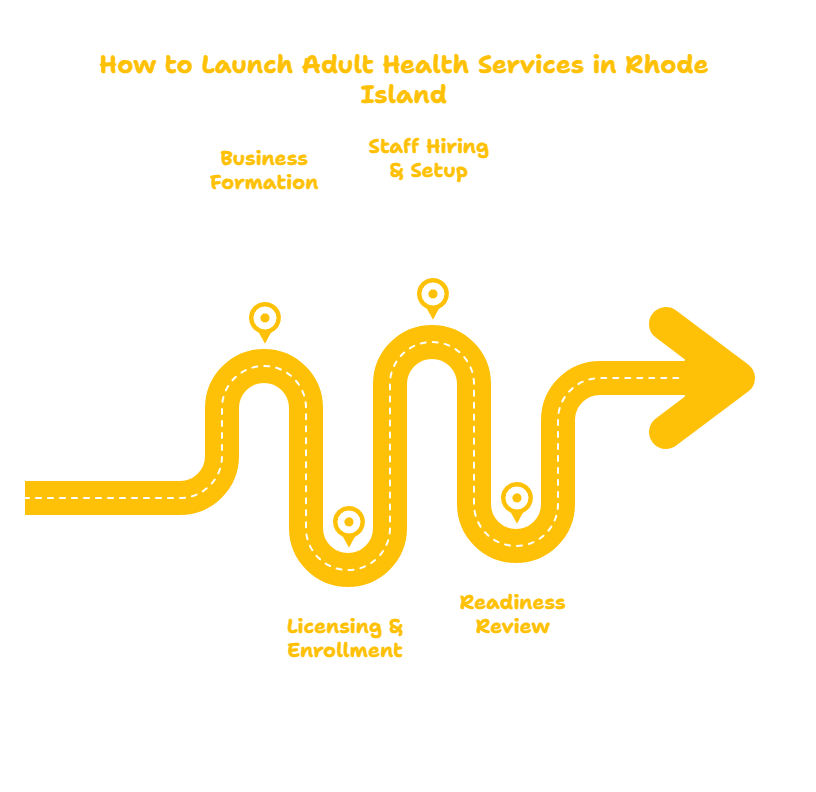
The timeline generally spans several months, beginning with a 1–2 month period for business formation and policy development. The subsequent licensure and enrollment phase typically takes 2–3 months, followed by 30–60 days for staff hiring and service setup. Readiness reviews are conducted prior to the initiation of participant referrals.
Is an Adult Health Services Policy & Procedure Manual required for Medicaid enrollment?
Yes, submitting a comprehensive manual is often required as part of the readiness review process. It must clearly outline care planning, service delivery, documentation standards, billing workflows, medication safety protocols, emergency procedures, and quality assurance measures.
How does a provider ensure compliance with EOHHS and RIDOH requirements?
Compliance is maintained by adhering to state-mandated documentation standards, including shift notes, incident reports, and billing logs. Regular internal audits of care plans and staff credentials, paired with adherence to HIPAA and mandatory reporting laws, are essential for maintaining good standing with the EOHHS and RIDOH.
Key Takeaway for Providers
Success in the Rhode Island Adult Health Services sector is built upon the dual pillars of rigorous regulatory compliance and high-quality, person-centered care delivery. By aligning agency operations with the specific requirements of EOHHS, RIDOH, and the governing Medicaid waiver programs, providers can secure the approvals necessary to serve vulnerable populations while fostering long-term clinical and business stability.
Waiver Consulting Group provides professional support to adult health service providers in Rhode Island, focusing on the complexities of Medicaid startup, RIDOH licensure, policy manual development, and documentation workflows to ensure long-term program integrity.
Last verified: 2024. This information is intended for educational purposes only and does not constitute legal or professional advice. Always consult directly with the Rhode Island Executive Office of Health and Human Services (EOHHS) or the Rhode Island Department of Health (RIDOH) for the most current regulatory guidance and policy updates.