ADULT HEALTH SERVICES PROVIDER IN PENNSYLVANIA
By Fatumata Kaba · 2025-10-08 · 6 min read
Supporting the health, wellness, and independence of adults through medically necessary and person-centered care.
Adult Health Services in Pennsylvania are essential Medicaid-funded supports designed to help individuals with disabilities, chronic illnesses, and aging-related needs maintain their health, function, and independence within their own homes or communities. These services are administered through the Pennsylvania Department of Human Services (DHS), including the Office of Long-Term Living (OLTL), the Office of Developmental Programs (ODP), and Community HealthChoices (CHC) Managed Care Organizations (MCOs), ensuring a robust framework for delivering quality, person-centered care.
What Are the Governing Agencies for Pennsylvania Adult Health Services?
Navigating the regulatory landscape of Pennsylvania’s Medicaid HCBS environment requires a clear understanding of the various oversight bodies. The Department of Human Services (DHS) serves as the primary entity, with specific departments managing distinct populations. The Office of Long-Term Living (OLTL) coordinates services specifically for older adults and individuals with physical disabilities, while the Office of Developmental Programs (ODP) oversees supports for individuals with intellectual and developmental disabilities.
Beyond state-level administration, the Community HealthChoices (CHC) MCOs act as the primary interface for authorizing and reimbursing services for enrolled Medicaid participants. These organizations operate under federal guidance established by the Centers for Medicare & Medicaid Services (CMS), which ensures all HCBS waivers adhere to national quality and safety standards. Additionally, the Pennsylvania Department of State serves a critical role in the foundational stage, as it is responsible for the legal registration of business entities and the licensure of various healthcare professionals and facilities.
How Do Providers Deliver Adult Health Services?
Adult Health Services are comprehensive, addressing a wide spectrum of medical and supportive needs intended to ensure safe and dignified living. Providers act as an extension of the primary healthcare team, delivering interventions that range from highly specialized clinical care to essential daily living support. These services are typically delivered following a strict plan of care that emphasizes participant choice and medical necessity.
Approved providers are authorized to deliver a variety of services, including:
- Skilled Nursing Care: Medication administration, complex chronic disease management, and wound care performed by licensed RNs or LPNs.
- Home Health Aide Support: Assistance with bathing, hygiene, dressing, and mobility, all conducted under the supervision of a Registered Nurse.
- Personal Assistance Services (PAS): Non-medical support with Activities of Daily Living (ADLs) and Instrumental Activities of Daily Living (IADLs), such as meal preparation, light housekeeping, and errands.
- Nutrition & Meal Services: Dietary planning, feeding assistance, or the provision of home-delivered meals tailored to specific medical requirements.
- Adult Day Services: Providing structured activities, continuous medical oversight, and nutritional meals within a state-licensed facility setting.
- Health Monitoring & Coordination: Ongoing wellness checks, symptom reporting, and active communication with the participant’s broader healthcare team.
What Are the Licensing and Enrollment Prerequisites?
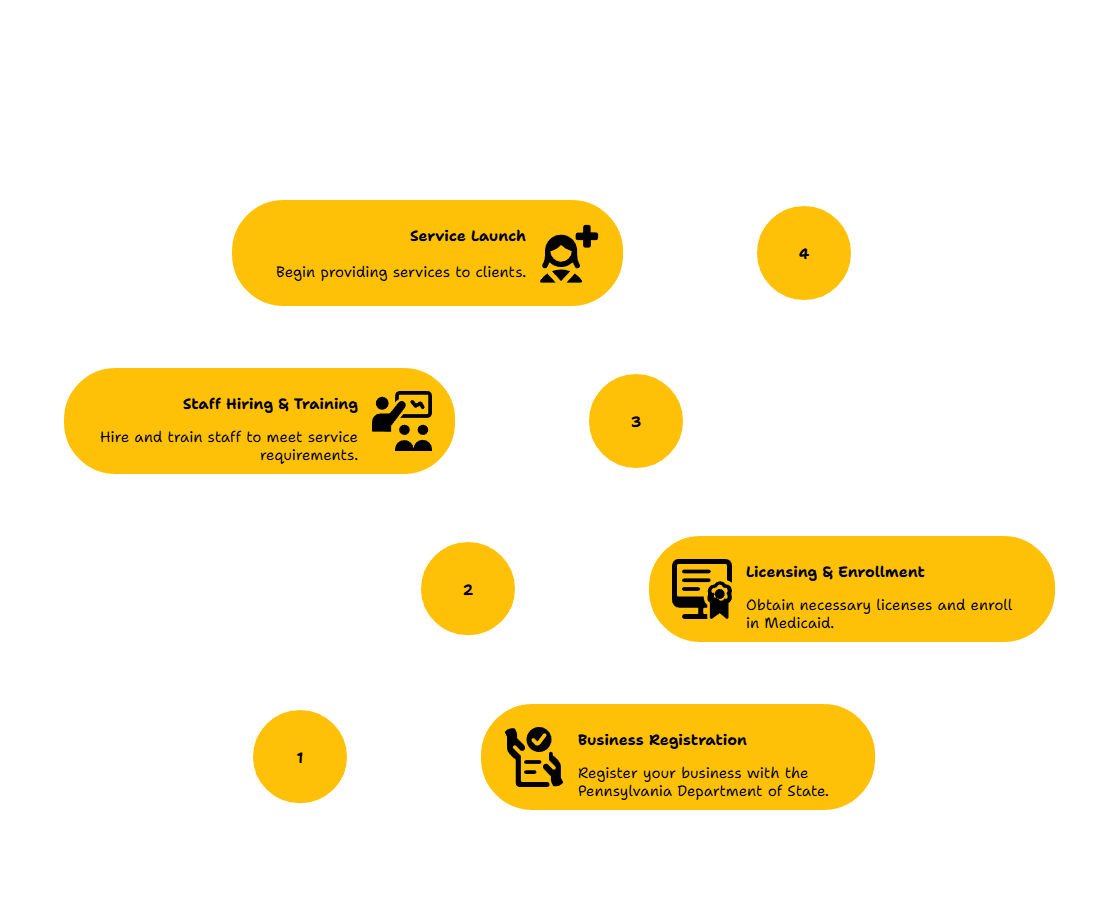
Entering the Pennsylvania Medicaid market is a multi-step process that demands rigorous adherence to state and federal compliance protocols. Before providing care, an organization must establish a solid administrative foundation. This begins with formal business registration through the Pennsylvania Department of State and the acquisition of a federal Employer Identification Number (EIN) and a Type 2 National Provider Identifier (NPI).
For agencies intending to offer skilled services, obtaining a Home Care or Home Health Agency license from the Pennsylvania Department of Health is mandatory. Following licensure, the provider must enroll in the PROMISe™ system—the gateway for all Medicaid provider billing in Pennsylvania. Success in this sector also requires securing comprehensive liability, workers’ compensation, and, where applicable, professional malpractice insurance. Finally, all providers must maintain a comprehensive Policy & Procedure Manual that aligns strictly with DHS and CMS standards to ensure operational integrity.
What Is the Required Documentation for Compliance?
Documentation serves as the backbone of Medicaid reimbursement and regulatory audits. Agencies must be prepared to demonstrate that every service rendered is medically necessary and authorized under the participant's individual plan of care. This requires sophisticated record-keeping practices and internal auditing processes.
Providers should maintain organized records that include:
- Business documentation including Articles of Incorporation and confirmation of EIN/NPI.
- Current state-issued Home Care or Home Health licenses.
- Proof of comprehensive insurance coverage.
- A detailed Policy & Procedure Manual covering plan of care development, ADL/IADL support, emergency response, infection control, and HIPAA compliance.
- Staff credentialing files including background checks and evidence of required training.
- Clinical and operational templates, such as shift notes, incident reports, EVV (Electronic Visit Verification) logs, and Medicaid billing records.
What Are the Staffing and Training Requirements?
The quality of care provided is directly linked to the qualifications and competency of the staff. A Registered Nurse (RN) often serves as the Clinical Supervisor, responsible for the oversight of care plans and the clinical guidance of direct care staff. Home Health Aides and Personal Care Aides must maintain current CPR/First Aid certifications, pass required background checks, and complete formal training programs that align with state-approved curricula.
Beyond clinical qualifications, providers are responsible for a structured training program. All employees must undergo orientation and annual training covering HIPAA, participant rights, safety protocols, and abuse prevention. If the agency utilizes EVV, staff must also be fully trained on the specific technology used for shift reporting. Ongoing skill competency checks are essential to maintaining the high standards expected by state regulators and managed care organizations.
Which Medicaid Waiver Programs Support These Services?
Adult Health Services are delivered through several distinct funding streams, each tailored to specific demographics and levels of care. Community HealthChoices (CHC) is the primary managed care program for dual-eligible individuals age 21 and older who require long-term services and supports. Additionally, the Aging, Independence, and OBRA waivers under the Office of Long-Term Living provide specialized pathways for older adults, individuals with physical disabilities, and those who began services prior to age 60, respectively.
For individuals with intellectual and developmental disabilities, the Consolidated and Community Living waivers offer a pathway for medical and personal health supports. Furthermore, Medicaid State Plan services cover specific physician-ordered interventions such as home health benefits and personal care. Understanding the nuances of these programs is vital for providers to properly bill for services and ensure they are operating within the scope of their respective service agreements.
Frequently Asked Questions
How long does the provider enrollment process typically take?
The timeline to launch is generally divided into phases: business formation and manual development (1–2 months), licensing and Medicaid enrollment (2–3 months), and staff hiring/training (30–60 days). The final activation of referrals occurs upon contracting approval and care plan authorization.
What is the role of the PROMISe™ system?
PROMISe™ (Provider Reimbursement and Operations Management Information System) is the mandatory portal used in Pennsylvania for enrolling as a Medicaid provider and submitting claims for reimbursement. It acts as the central hub for all financial interactions between the provider and the state.
What are the primary responsibilities of a Clinical Supervisor?
The Clinical Supervisor, typically an RN, is responsible for overseeing the clinical aspects of the agency. This includes assessing participants, developing individualized plans of care, supervising direct care staff, and ensuring that all medical interventions comply with state regulations and the participant's specific health requirements.
Key Takeaway: Establishing a successful Adult Health Services provider in Pennsylvania requires a dual focus on rigorous regulatory compliance—such as licensure, PROMISe™ enrollment, and MCO contracting—and the development of a robust clinical infrastructure. By strictly adhering to the requirements set forth by the DHS, ODL, and ODP, providers can ensure the delivery of high-quality, sustainable care that supports the health and independence of Pennsylvania's most vulnerable populations.
Last verified: October 2023. Disclaimer: This article is for informational purposes only and does not constitute legal or professional consulting advice. State regulations, Medicaid waiver policies, and provider requirements are subject to change. Always consult the official Pennsylvania Department of Human Services (DHS) and Centers for Medicare & Medicaid Services (CMS) websites for the most current guidance and regulatory updates.