ADULT HEALTH SERVICES PROVIDER IN OREGON
By Fatumata Kaba · 2025-10-06 · 6 min read
DELIVERING INTEGRATED MEDICAL AND PERSONAL SUPPORT SERVICES TO PROMOTE WELL-BEING AND INDEPENDENCE FOR ADULTS ACROSS OREGON
Adult Health Services in Oregon are specialized Medicaid-funded supports designed to address the complex medical, functional, and supportive care needs of adults living with disabilities, chronic health conditions, and age-related limitations. By facilitating high-quality care within the client’s own home or community setting, these programs serve as a critical component of the Oregon Health Plan (OHP), the K Plan (1915(k)), and various Home and Community-Based Services (HCBS) waivers administered by the Oregon Department of Human Services (ODHS).
How Do Governing Agencies Regulate Adult Health Services?
The regulatory framework for adult health services in Oregon is multi-tiered, involving state and federal oversight to ensure consistent, safe, and ethical service delivery. The Oregon Department of Human Services (ODHS), specifically the Aging and People with Disabilities (APD) division, acts as the primary authority. It manages the authorization of services through a network of local APD offices and Area Agencies on Aging (AAAs), which function as the direct point of contact for service planning and delivery verification.
Complementing the role of the ODHS, the Oregon Health Authority (OHA) maintains responsibility for Medicaid provider enrollment and rigorous policy compliance through the Oregon Health Plan. On a federal level, the Centers for Medicare & Medicaid Services (CMS) oversees these programs to ensure Oregon remains in alignment with federal HCBS regulations and quality standards. Furthermore, all provider entities must remain in good standing with the Oregon Secretary of State (SOS) to ensure ongoing corporate compliance and legal operational status.
What Scope of Care Can Providers Deliver?
Providers authorized to offer adult health services deliver a blend of skilled and non-skilled care tailored to the individual’s unique care plan. The primary objective is to maintain health and functional independence while minimizing the need for institutionalization. This requires a professional team capable of managing diverse needs, ranging from routine daily assistance to complex medical oversight.
Approved providers generally deliver services that include the following core components:
- Skilled Nursing Services: Specialized care including medication administration, complex wound care, ongoing health monitoring, and management of chronic diseases.
- Personal Care Services: Essential support with Activities of Daily Living (ADLs), such as bathing, toileting, dressing, and mobility assistance.
- Health Monitoring and Medication Management: Tracking routine vitals and symptoms, maintaining health documentation, overseeing medication regimens, and providing education to the client.
- Nutrition and Therapeutic Support: Meal planning, feeding assistance, specialized diet preparation, and authorized physical, occupational, or speech therapy.
- Care Coordination and Adult Day Health: Developing individualized care plans, ensuring seamless service implementation, and providing daytime supervision and social engagement in licensed settings.
What Are the Requirements for Provider Licensing and Approval?
Entering the Medicaid provider space requires a methodical approach to business formation and regulatory adherence. Before delivering services, an agency must formally register with the Oregon Secretary of State and secure necessary federal identifiers, including an Employer Identification Number (EIN) from the IRS and a Type 2 National Provider Identifier (NPI). This foundational infrastructure is essential for all billing and enrollment activities.
Beyond standard business registration, providers must navigate specific healthcare mandates. If the agency plans to provide skilled nursing, it must obtain appropriate licensure through the Oregon State Board of Nursing (OSBN) or the Oregon Health Authority. If operating an adult day health center, the facility must meet state-specific site licensure standards. All agencies are further required to carry comprehensive insurance, including general liability, workers’ compensation, and professional malpractice coverage, while maintaining a robust Adult Health Services Policy & Procedure Manual that reflects current Oregon Administrative Rules (OARs).
How Does the Oregon Provider Enrollment Process Function?
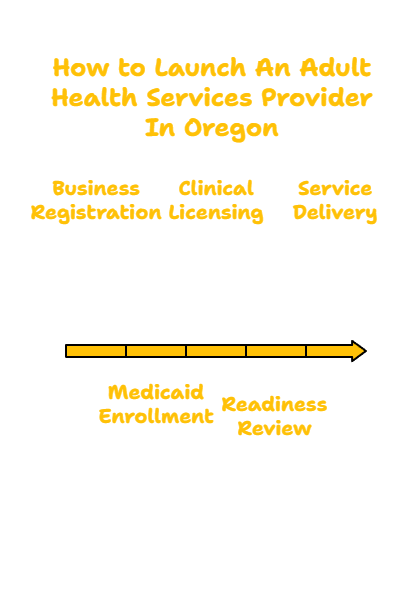
The transition from a business entity to an active Medicaid provider is a sequenced process that demands high attention to detail. The process begins with the establishment of the legal entity and acquisition of all required insurance policies and identifiers. Once these foundational items are complete, the provider must submit a formal Medicaid provider application through the Oregon Health Plan Provider Portal.
The subsequent stages focus on clinical verification and operational readiness. For agencies providing skilled nursing or operating physical facilities, licensure must be obtained from the OHA or OSBN as part of the enrollment sequence. After these approvals, the agency must undergo a readiness review, which includes verifying staff onboarding procedures and ensuring all documentation systems—from incident reporting to electronic visit verification (EVV)—are fully operational. Once the agency is officially enrolled and contracts are finalized, they may begin receiving service authorizations and referrals from APD offices.
What Staffing and Documentation Standards Are Mandatory?
The quality of an Adult Health Services program is inherently tied to the competence of its staff and the rigor of its documentation. A clinical supervisor, typically a Registered Nurse (RN) with an active Oregon license, is required to oversee clinical operations, care plan development, and staff training. This leadership role is supported by a team of Certified Nursing Assistants (CNAs), Home Health Aides, or Personal Care Aides, all of whom must pass comprehensive background checks and complete mandatory training in CPR, first aid, and specific care delivery models.
Operational success also relies on meticulous documentation. Agencies must maintain detailed records that meet Medicaid standards, including:
- Clinical Records: Care plan development and review logs, medication management and safety protocols, and personal care delivery notes.
- Compliance Documentation: HIPAA compliance statements, client rights documentation, incident reporting logs, and risk mitigation strategies.
- Administrative Records: Quality assurance schedules, staff performance reviews, and verifiable EVV (Electronic Visit Verification) records for every shift performed.
Frequently Asked Questions
What is the typical timeline for launching an Adult Health Services agency in Oregon?
Launching a compliant agency generally spans several months. Business registration and manual development typically take 1–2 months, followed by 2–3 months for Medicaid enrollment and clinical licensure. Staff hiring and credentialing often require an additional 30–60 days, with actual service delivery commencing only after all authorizations are secured.
Which Medicaid waiver programs support these services?
Services are primarily delivered through the K Plan (1915(k)), which covers in-home nursing and personal care, as well as various APD HCBS waivers for older adults and individuals with physical disabilities. Additionally, the State Plan Home Health Benefit and specific transition services, such as Living Choices, provide avenues for care for those moving from institutional settings back into the community.
What core resources should be included in an agency’s Policy & Procedure Manual?
A compliant manual must clearly define the agency’s care plan development process, medication management protocols, and guidelines for personal care delivery. It must also incorporate comprehensive chapters on HIPAA compliance, client rights, incident reporting procedures, and the specific processes the agency uses for quality assurance and Medicaid billing.
Key Takeaway
Establishing an Adult Health Services provider agency in Oregon requires strict adherence to both state and federal regulatory frameworks, encompassing everything from initial business registration to the ongoing maintenance of clinical documentation and staff credentialing. By prioritizing compliance with ODHS, OHA, and CMS standards, providers can build sustainable, high-quality programs that effectively support the health and independence of adults across the state.
Last verified August 2024. The information contained herein is for educational purposes only and does not constitute legal or professional consulting advice. For specific guidance on regulatory compliance or program implementation, please consult with the relevant state authorities or qualified professional legal counsel.