ADULT HEALTH SERVICES PROVIDER IN NEW HAMPSHIRE
By Fatumata Kaba · 2025-07-27 · 5 min read
Adult Health Services in New Hampshire represent a vital component of the state’s long-term care infrastructure, providing essential medical and wellness support to individuals with disabilities, chronic conditions, and age-related needs. By delivering personalized interventions within home and community-based settings, these providers play a critical role in helping participants maintain independence and avoid institutionalization through programs authorized by the New Hampshire Department of Health and Human Services (DHHS).
Understanding the Regulatory Landscape and Oversight
The delivery of Adult Health Services is governed by a multi-tiered regulatory framework designed to ensure participant safety, high-quality care, and fiscal accountability. At the state level, the New Hampshire Department of Health and Human Services (DHHS) serves as the primary authority, managing Medicaid waiver funding, provider enrollment, and reimbursement protocols. The Bureau of Elderly and Adult Services (BEAS) works alongside the DHHS to oversee service delivery, ensuring that providers adhere to stringent quality standards and state-mandated compliance measures.
On a federal level, the Centers for Medicare & Medicaid Services (CMS) provides necessary oversight for all Medicaid-funded services. CMS ensures that New Hampshire’s waiver programs remain consistent with federal requirements regarding person-centered planning, participant protections, and the overarching goals of Home and Community-Based Services (HCBS). Providers must maintain a deep understanding of these state and federal expectations to remain in good standing.
The Scope of Adult Health Services
Adult Health Services are highly personalized, meaning the scope of work is always dictated by the participant’s Individualized Service Plan (ISP). This ensures that services remain relevant to the specific medical and social needs of the individual. Providers are responsible for translating these plans into actionable health interventions that improve the physical and mental well-being of the participant.
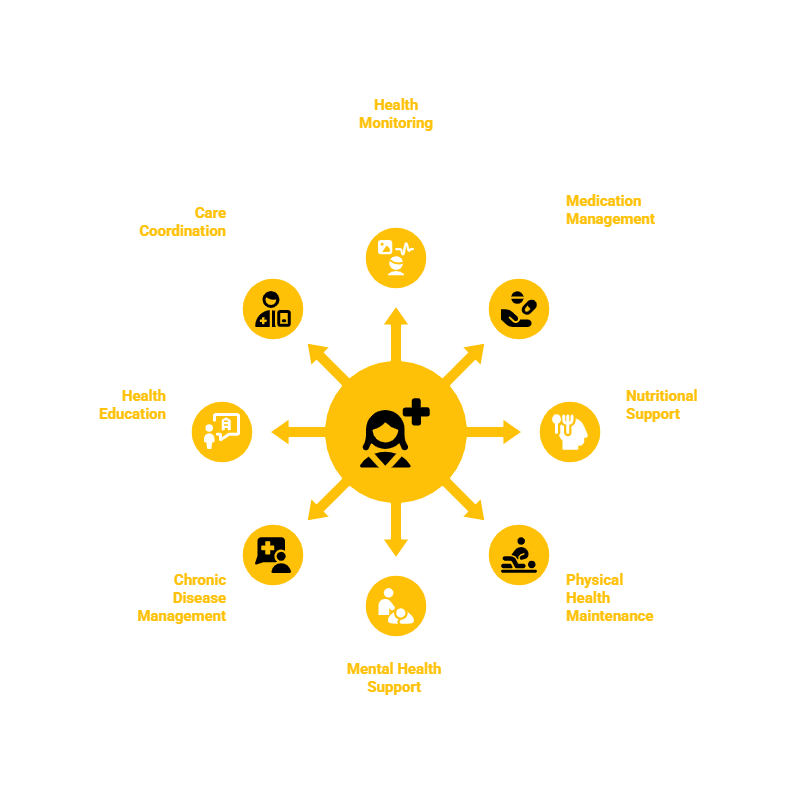
Core service components typically include:
- Health Monitoring and Assessment: Routine vital sign tracking, chronic condition oversight, and comprehensive wellness evaluations.
- Medication Management: Structured assistance with medication schedules, administration, and ongoing adherence support.
- Nutritional and Physical Support: Development of dietary counseling, meal planning, and mobility support through therapeutic exercise.
- Mental Health and Education: Professional counseling, stress management, and health literacy training for both participants and their informal caregivers.
- Care Coordination: Active collaboration with the broader medical team to ensure seamless communication and continuity of care.
Licensing and Initial Provider Requirements
Launching an Adult Health Services agency requires meticulous attention to administrative and legal prerequisites. Before a provider can begin the enrollment process, they must establish a formal business entity registered with the New Hampshire Secretary of State. This foundation is followed by obtaining a federal Employer Identification Number (EIN) and a Type 2 National Provider Identifier (NPI), which are essential for all future billing and identification purposes.
Beyond basic business registration, prospective providers must prepare for operational readiness. This involves securing appropriate general and professional liability insurance, which protects the agency and its clients during service delivery. Furthermore, providers must develop an extensive internal policy manual that outlines specific protocols for health monitoring, emergency response, and medication safety. Ensuring all staff meet rigorous background check standards and health screening requirements is a non-negotiable step in the approval process.
Navigating the New Hampshire Medicaid Enrollment Process
The pathway to becoming an authorized provider involves a structured application sequence managed through the New Hampshire Medicaid Provider Enrollment Portal. The process begins with the initial application submission, where the agency declares its intent to provide specific HCBS waiver services. Applicants must be prepared to submit all supporting documentation, including their Articles of Incorporation, proof of insurance, and relevant healthcare licenses at the time of application.
Once the initial application is submitted, the DHHS and BEAS conduct a program readiness review. This evaluation is comprehensive; it examines the provider’s health care protocols, safety infrastructure, and the qualifications of their proposed staff. The state must be satisfied that the agency is operationally sound and capable of meeting the specific clinical needs of the Medicaid population. Only after this rigorous review and final approval can the provider begin billing Medicaid using the designated service codes.
Staffing, Training, and Clinical Competency
The quality of an Adult Health Services agency is inherently linked to the qualifications and training of its personnel. At the leadership level, an Adult Health Program Director must be appointed to oversee operations. This individual typically holds a bachelor’s or master’s degree in healthcare administration or nursing, coupled with proven experience in managing health services. Clinical care is then carried out by licensed professionals, including Registered Nurses (RNs) and Licensed Practical Nurses (LPNs), who provide the skilled care necessary for chronic disease management.
All staff members, including personal care workers and health aides, are subject to mandatory, ongoing professional development. This training curriculum must cover:
- HIPAA compliance and the strict protection of sensitive participant health information.
- Evidence-based practices for chronic disease monitoring and infection control.
- Annual competency evaluations to ensure that staff skills remain aligned with current healthcare standards.
- Safety protocols and emergency preparedness, including clear procedures for rapid response.
Frequently Asked Questions
What Medicaid waiver programs include Adult Health Services?
Adult Health Services are primarily accessed through the Choices for Independence (CFI) Waiver, the Developmental Disabilities (DD) Waiver, the Acquired Brain Disorder (ABD) Waiver, the In-Home Support (IHS) Waiver for Children, and general Home and Community-Based Services (HCBS) waivers.
What is the typical timeline for launching a new agency?
The launch process generally spans 6 to 9 months. This includes 1–2 months for business formation, 2–3 months for staff hiring and program development, 60–90 days for the Medicaid enrollment and readiness review, and a final 30–45 days for billing setup.
What documentation is essential for the provider enrollment application?
Required documentation includes Articles of Incorporation, EIN/NPI confirmation, proof of liability insurance, applicable healthcare licenses, and a comprehensive Policy & Procedure Manual covering HIPAA, grievance procedures, safety, and health outcome monitoring.
Key Takeaways for Agency Founders
Successfully operating as a New Hampshire Adult Health Services provider requires a commitment to rigorous clinical compliance and administrative precision. By aligning your internal policies with the requirements set forth by DHHS and BEAS, maintaining a highly trained staff, and ensuring that every service delivered is documented within the framework of the participant’s Individualized Service Plan, an agency can effectively support the health and independence of the communities it serves. Agencies that prioritize quality assurance and proactive audit preparation are best positioned for long-term success in the Medicaid waiver landscape.
WCG supports agencies in launching Medicaid-compliant Adult Health Services in New Hampshire, offering assistance with business registration, Medicaid enrollment, policy manual development, staff credentialing, and billing setup. Our expertise helps providers navigate the regulatory environment to ensure operational readiness. Last verified: 2024. The information provided is for general guidance and does not constitute legal or professional advice. Readers should consult the official New Hampshire DHHS and CMS websites for the most current regulatory updates.